Why Gold Hit $5,100: What’s Driving the Rally Next
Daily News Nuggets | Today’s top stories for gold and silver investors
January 27th, 2026
Gold and Silver Surge to New Record Highs
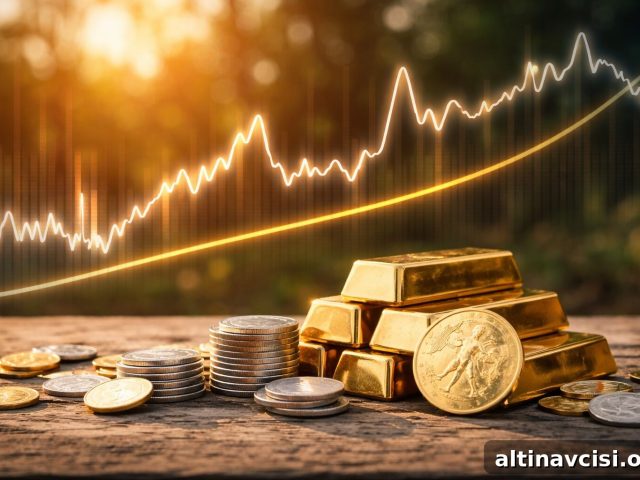
Gold vaulted to a new record on Monday, topping $5,100 per ounce and reaching an all-time peak of $5,110.50. Silver rose in tandem, trading near $117.69. These historic moves mark a sharp and broad-based rally across the precious metals complex, driven by growing investor concern about global debt, currency stability and the potential for inflation to re-accelerate.
Gold and Silver, Six Month Chart
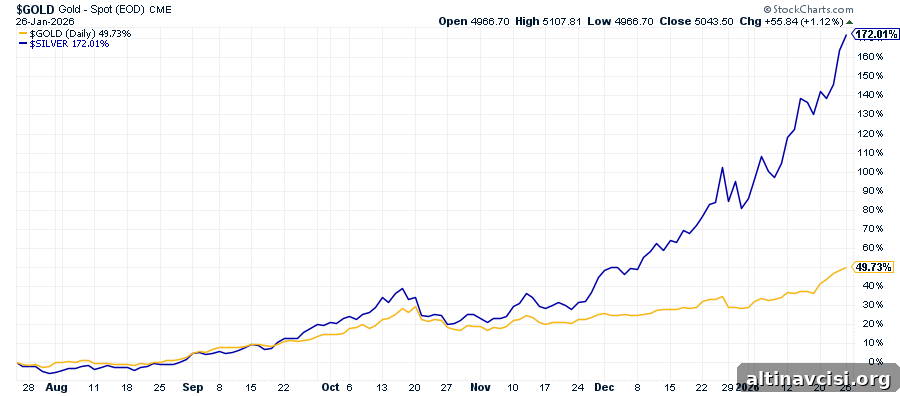
Analysts say the surge reflects rising anxiety about the ability of governments to manage expanding debt burdens without resorting to aggressive monetary or fiscal measures. As markets price in the risk that policymakers may try to “inflate away” debts, investors are increasingly turning to gold and silver as protection against currency depreciation and loss of purchasing power. Robin Brooks, a senior fellow at the Brookings Institution, described the move as “breathtaking and profoundly scary,” capturing how quickly sentiment can shift toward safe-haven assets when structural risks become visible.
Gold and silver serve distinct, complementary roles in portfolios: gold is often viewed as a long-term store of value and portfolio diversifier, while silver combines industrial demand with monetary characteristics, making its price action particularly sensitive to rapid changes in market sentiment. The current rally is being interpreted as a market signal that confidence in fiat currencies is eroding and that demand for tangible, non‑sovereign stores of value is rising.
The Financial System Isn’t Safer — And You Know It
As geopolitical and fiscal risks rise, learn why gold and silver could remain attractive through 2026 and beyond.
Markets Navigate Fed Meeting and Rising Uncertainty
U.S. equity markets opened mixed Tuesday as investors positioned ahead of the Federal Reserve’s rate decision. The Fed is widely expected to hold policy steady amid a difficult trade-off: inflation remains above the 2% objective while rates that are restrictive enough to cool prices could hurt growth. That policy jitter, combined with fresh trade tensions, the risk of a government shutdown affecting corporate earnings, and sector-specific shocks such as declines in health insurer stocks, creates a volatile backdrop.
When markets confront conflicting signals from monetary policy, trade, fiscal stimulus and geopolitics, demand for safe-haven assets typically rises. The core message for investors: uncertainty itself often fuels interest in assets that do not rely on stable policy outcomes or predictable economic growth.
Former Fed Official Warns Inflation Likely to Accelerate
Thomas Hoenig, the former president of the Federal Reserve Bank of Kansas City, warned that inflation pressures could increase after midterm political cycles as past stimulus measures work through the economy. Hoenig argued that current policy settings — real interest rates still below 1% and ongoing balance-sheet support through sizeable monthly asset purchases — risk creating a persistent inflation impulse if left unchanged.
His view underscores a key worry for markets: if fiscal stimulus and accommodative monetary policy combine for longer than expected, inflation can rise gradually but then become difficult and costly to bring back down. That prospect has already been reflected in markets by higher precious metals prices and a softer dollar in some trading windows, signaling that investors are pricing in greater inflation risk.
Yen Strengthens as Dollar Comes Under Pressure
The Japanese yen has strengthened recently against the U.S. dollar, prompting speculation that Japanese authorities could intervene if the move accelerates. Large swings in the yen are noteworthy because they affect Japan’s export competitiveness and can force policy responses when currency moves are too abrupt.
More broadly, a weakening dollar tends to support precious metals. When the greenback declines, gold and silver become cheaper for buyers using other currencies, increasing global demand. A softer dollar also signals doubts about the currency’s reliability as a store of value, reinforcing the appeal of tangible assets when debt worries and inflation risks grow.
Stay On Top of Gold & Silver Prices
Receive timely market alerts delivered to your inbox.
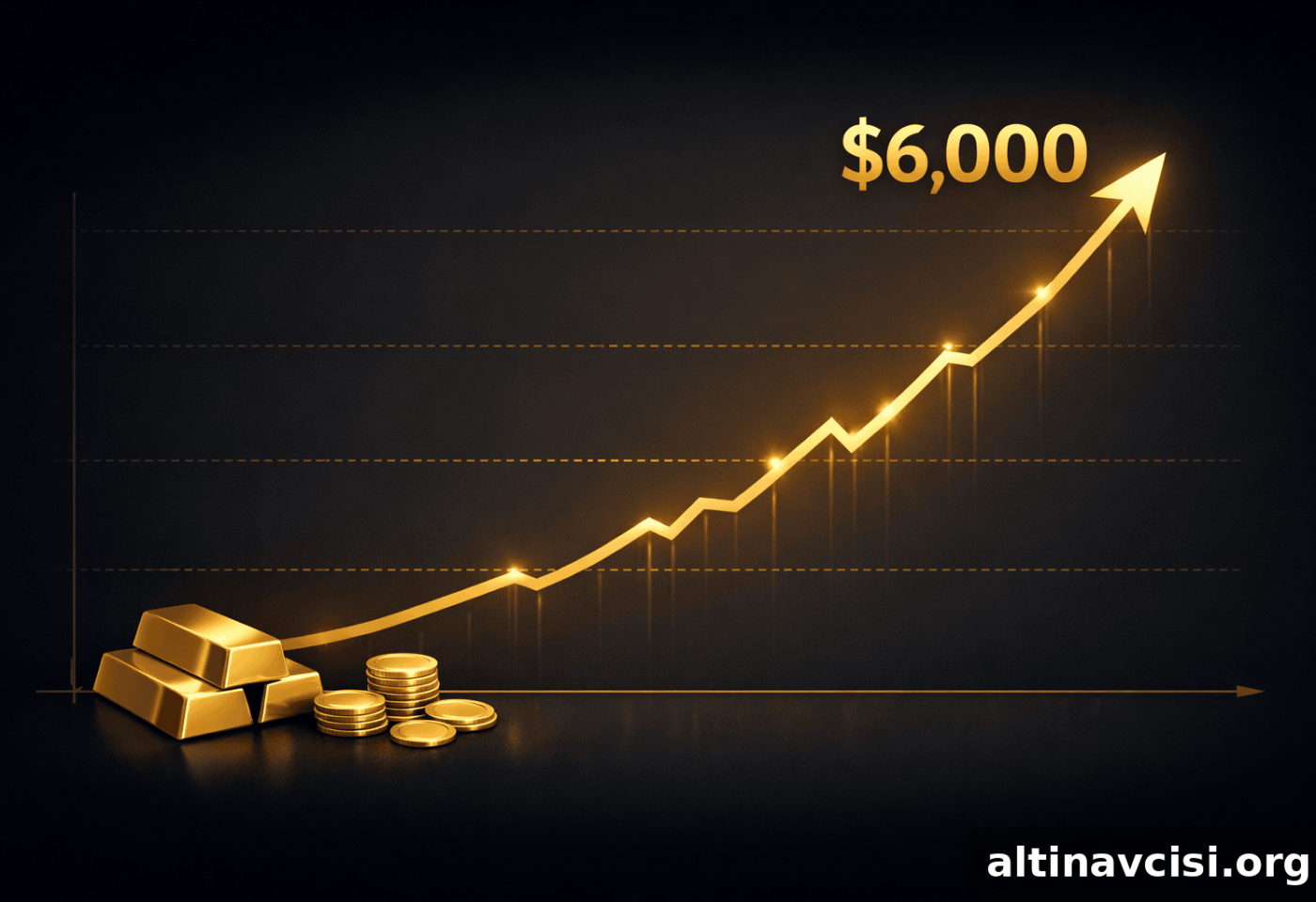
Deutsche Bank Raises Gold Target to $6,000
Deutsche Bank has raised its long-term gold price target to $6,000 per ounce, citing the risk of underestimating gold’s momentum in past cycles. The bank’s revised outlook signals that some large institutional investors now view structural drivers — rising global debt, fears of currency debasement, and heightened geopolitical risk — as powerful enough to propel prices materially higher over time.
Institutional calls like this can widen the buyer base for gold beyond traditional precious-metals investors, drawing in asset managers and macro traders who respond to shifts in long-term risk assessments. As mainstream financial firms acknowledge these structural factors, momentum in the metals market can accelerate, reinforcing the safe-haven narrative.
You May Also Like
- Gold Breaks $5,000 as Bond Markets Crack
- Gold Price Eyes $5,000, Silver Nears $100
- Gold Eases on Greenland News, But Banks See $5,400+
- Gold Hits New Record; $5,000 Target in Sight
- Gold Clears $4,700 on Global Turmoil
Popular Topics
Picked from the archive
-
01
 Topics
Job Market Falters as Gold Nears $3,600
-
02
Topics
Trump Threatens EU With 250% Tariffs on Pharmaceuticals
-
03
Topics
US Treasury Yields Rise Ahead of Major Bond Auction
-
04
Topics
Trump $2,000 Stimulus Checks, Auto Loan Crisis and Silver Rally
-
05
Topics
10-Year Treasury Yield Falls Below 4.21% During Holiday Week
-
06
Topics
Gold and Silver Prices: Short-Term Volatility, Long-Term Trend
-
07
Topics
Gold Prices Rise on Fed Policy, Debt Concerns and Asian Demand
-
08
Topics
Gold at $3,400 as Markets Await Aug 28, 2025 PCE Data