Half of Central Banks Plan to Increase Gold Reserves by 2028
Central Banks Move to Boost Gold Reserves as Trade Uncertainty Rises
Nearly half of the world’s central banks are planning to increase their gold reserves over the next three years, according to recent research. The trend is being driven largely by heightened economic and political uncertainty tied to tariff-driven trade policies announced by President Trump, which have amplified concerns about global trade stability and long-term monetary risk.
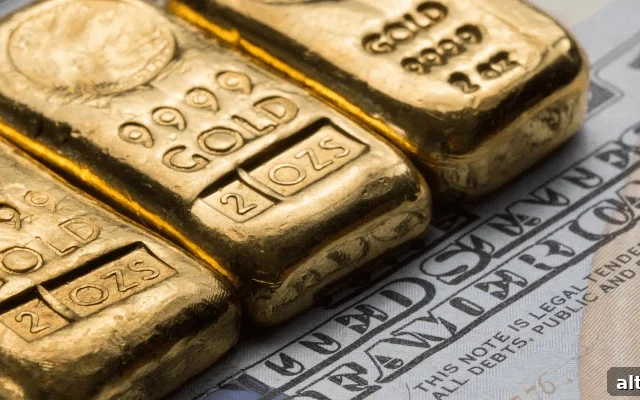
Research from Invesco highlights that 50% of monetary authorities now consider gold a key “reserve of resilience.” Central banks value gold for its historical role as a safe-haven asset and for its political neutrality relative to fiat currencies. At the same time, a World Gold Council survey reports that 43% of central banks expect to add to their gold holdings in the coming year, up from 29% a year earlier—a significant shift that underscores how perceptions of risk and the role of gold in diversified reserves have evolved.
The renewed appetite for gold among official institutions reflects several overlapping concerns. First, gold is viewed as a hedge against currency volatility. When trade conflicts or geopolitical tensions create uncertainty around exchange rates and capital flows, central banks often turn to non-sovereign assets that do not carry the same counterparty or policy risk as foreign currency reserves.
Second, political neutrality is an important factor. Unlike bonds denominated in a specific foreign currency, or assets tied to individual government policies, gold carries no issuer risk. That characteristic makes it attractive during periods when geopolitical disputes or trade restrictions could cause sudden stresses in global financial markets.
Third, diversification remains a core objective of reserve management. Central banks manage portfolios to preserve purchasing power and maintain liquidity under adverse scenarios. Adding gold can improve a reserve portfolio’s resilience across a range of potential shocks—from rapid currency depreciation to restrictions on cross-border capital movements—without relying solely on other countries’ monetary policy decisions.
These shifts in reserve strategy come against a broader backdrop of debate over the balance between domestic policy goals and global economic cooperation. Tariff-driven trade measures can create ripple effects across multiple economies, raising questions about supply chains, export revenue, and the stability of trade-dependent currencies. Central banks, responsible for safeguarding national financial stability, appear to be responding by reallocating at least part of their store of value into gold.
Operationally, increasing gold reserves can take several forms: purchasing physical bullion, acquiring gold ETFs or other financial instruments linked to the metal, and in some cases increasing on-site holdings to reduce counterparty exposures. The specific approach varies by country, depending on factors such as market access, storage capabilities, regulatory frameworks, and the central bank’s risk tolerance.
Market observers note that rising central bank demand can have ripple effects across global precious metals markets. Sustained buying by official institutions can tighten physical supply and influence investor sentiment, reinforcing gold’s role as part of a broader risk-mitigation strategy among private investors as well as public entities.
While the move toward larger gold reserves is notable, it is not without trade-offs. Gold does not generate interest or dividends, and holding larger quantities of bullion means foregoing potential returns from interest-bearing assets. Central banks must therefore weigh the insurance value of gold against the opportunity cost within the context of their overall reserve goals.
In summary, the combination of tariff-driven trade uncertainty and broader geopolitical concerns has prompted many central banks to reassess the composition of their reserves. Invesco’s finding that half of monetary authorities now regard gold as a “reserve of resilience,” together with the World Gold Council’s rising share of institutions planning to increase holdings, points to a sustained strategic shift toward incorporating more gold as a stabilizing element in national reserve portfolios.
Popular Topics
Picked from the archive
-
01
 Topics
June Inflation Rises to 4-Month High as Import Costs Surge
-
02
Topics
Trump Imposes 35% Tariffs on Canadian Imports: Economic Impact
-
03
Topics
Sub-Saharan Gold Hoarding Sparks Price and Liquidity Risks
-
04
Topics
Dollar Falls After Moody’s Downgrade and New Tax Bill
-
05
Topics
Gold Climbs Ahead of Key US Inflation Report
-
06
Topics
Shanghai Futures Exchange Opens Commodities Market to Global Investors
-
07
Topics
Russia Moves to Seize Top Gold Mining Company from Billionaire
-
08
Topics
How Inflation and Tariffs Are Reshaping U.S. Retail Spending