World Gold Council: Gold Nears Technical Break as Markets Stall

Weekly Economic Snapshot: Inflation, Retail Sales, Industrial Output, and Market Reactions
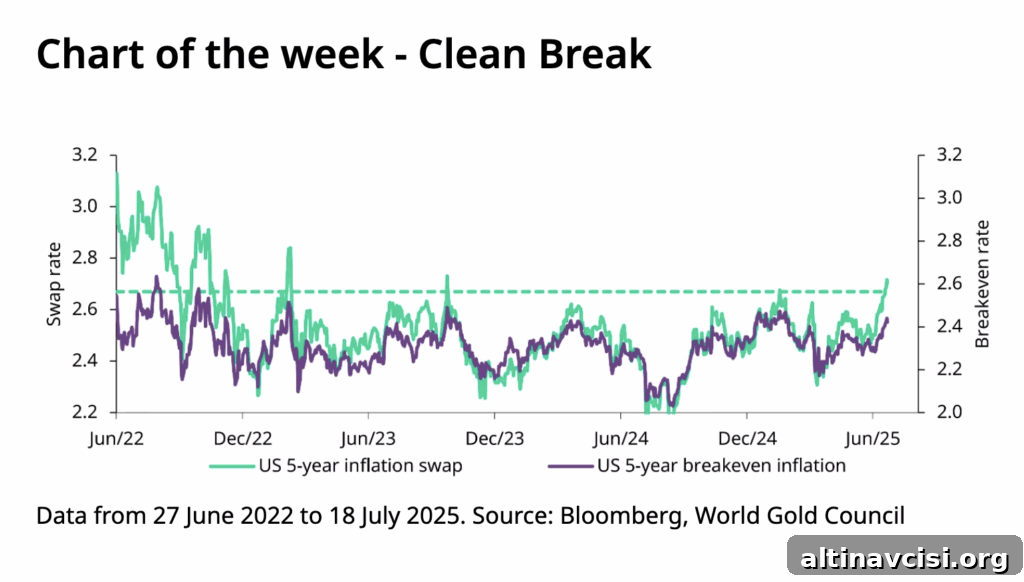
Last week’s economic reports delivered a mixed but informative picture for global markets. Data showed solid retail sales and corporate earnings in the United States despite persistent inflationary pressures, while Europe benefited from an uptick in industrial output. China’s growth indicators suggested a pickup in activity, and inflation trends diverged across major economies: cooling in Japan and India but rising pressures in the United Kingdom. Financial markets reacted with limited stock movement, softer bond yields, a firmer U.S. dollar, and lower oil prices. At the same time, gold remained in consolidation territory and appears positioned close to a technical breakout. Emerging effects from tariff changes are becoming visible in inflation readings, prompting investors to reassess policy and risk expectations.
United States: Resilient Consumer Spending and Earnings Amid Inflation
U.S. retail sales and corporate earnings reported last week pointed to continued consumer resilience and corporate profitability. While inflation remains above comfortable targets in many regions, the persistence of consumer demand is supporting revenues and helping many firms deliver positive results. These dynamics create a delicate balance for policymakers: stronger economic activity can justify a tighter stance against inflation, but resilient spending also supports broader growth prospects.
Europe and China: Industrial Output and Growth Momentum
Europe showed signs of improvement as industrial output strengthened, which could help stabilize regional manufacturing and trade. Increased industrial activity typically feeds into employment and business confidence, supporting the broader recovery. Meanwhile, China’s growth indicators suggested an acceleration compared with recent trends, reflecting a combination of domestic demand and policy support. The interplay between European industrial recovery and Chinese growth is important for global supply chains and commodity demand.
Inflation Divergence: Japan, India, and the UK
Inflation trends diverged across major economies last week. Japan and India experienced cooling inflation pressures, which may ease some immediate concerns about pricing and give central banks more room to calibrate monetary policy. By contrast, inflationary pressures rose in the United Kingdom, raising the risk of tighter policy or a prolonged period of higher rates there. These regional differences in inflation create varied implications for exchange rates, rates expectations, and capital flows.
Market Reaction: Stocks, Bonds, Dollar, Oil and Gold
Global equities were mostly unchanged, reflecting an equilibrium between positive data and lingering macro uncertainties. Bond yields eased, which can signal diminished near-term rate-hike expectations or increased demand for safe assets. The U.S. dollar strengthened against several peers, likely driven by a combination of economic resilience and relative policy expectations. Oil prices fell, influenced by a mix of demand concerns and supply considerations, while gold continued to consolidate. Technical indicators suggest gold may be near a breakout point, which could attract additional investor interest if momentum shifts upward.
Tariffs, Inflation, and Investor Sentiment
The influence of tariffs is beginning to show up in inflation data, with higher import costs filtering through to consumer prices in some categories. As these effects become clearer, investors are adjusting their inflation outlooks and portfolio allocations. Tariff-driven inflation can complicate central bank responses because it may be more persistent in specific sectors while not uniformly affecting broader demand.
What This Means for Investors
Investors should consider a few practical takeaways from last week’s reports. First, resilience in U.S. retail sales and earnings suggests ongoing support for risk assets, but inflation remains a key risk to monitor. Second, divergent inflation trends across economies imply varied monetary policy paths—active positioning by region may be warranted. Third, softer bond yields and a stronger dollar indicate shifting risk and carry considerations. Finally, commodities such as oil and gold remain sensitive to growth expectations, technical patterns, and policy signals; gold’s consolidation near a potential breakout is one technical element that may draw interest if momentum increases.
Looking Ahead
In the coming weeks, markets will likely focus on additional economic releases, central bank communications, and data that further clarify the impact of tariffs on prices. Monitoring these developments—alongside corporate earnings and regional growth indicators—will help market participants assess the balance between growth and inflation and adjust strategies accordingly. While the near-term outlook contains uncertainty, the recent reports provide useful signals for positioning across equities, fixed income, currencies, and commodities.
Popular Topics
Picked from the archive
-
01
 Topics
Silver Prices Jump 35% YTD as Rally Accelerates
-
02
Topics
David Einhorn: Why Gold Prices Keep Rising – Not Inflation
-
03
Topics
Survey Predicts Silver Price Could Reach $41 Despite Volatility
-
04
Topics
US-EU Deal Sets 15% Tariffs; China Truce to Continue
-
05
Topics
Wall Street Reacts to Inflation, Earnings and Trade Policy
-
06
Topics
Gold Drops 1.5% After Fed Holds Rates Steady
-
07
Topics
Fed Rate-Cut Bets Lift Gold as Silver Tops 13-Year High
-
08
Topics
Gold Price Jumps 1% as Investors Seek Safe-Haven Assets