
Last verified: September 23, 2026.
Two days ago, silver was the metal holding its ground while gold eased. Silver hovered near a two-week high and the gold‑to‑silver ratio tightened. On Wednesday, with Chinese President Xi Jinping arriving in Washington for a state visit, that relationship not only stopped — it reversed, and silver led the decline.
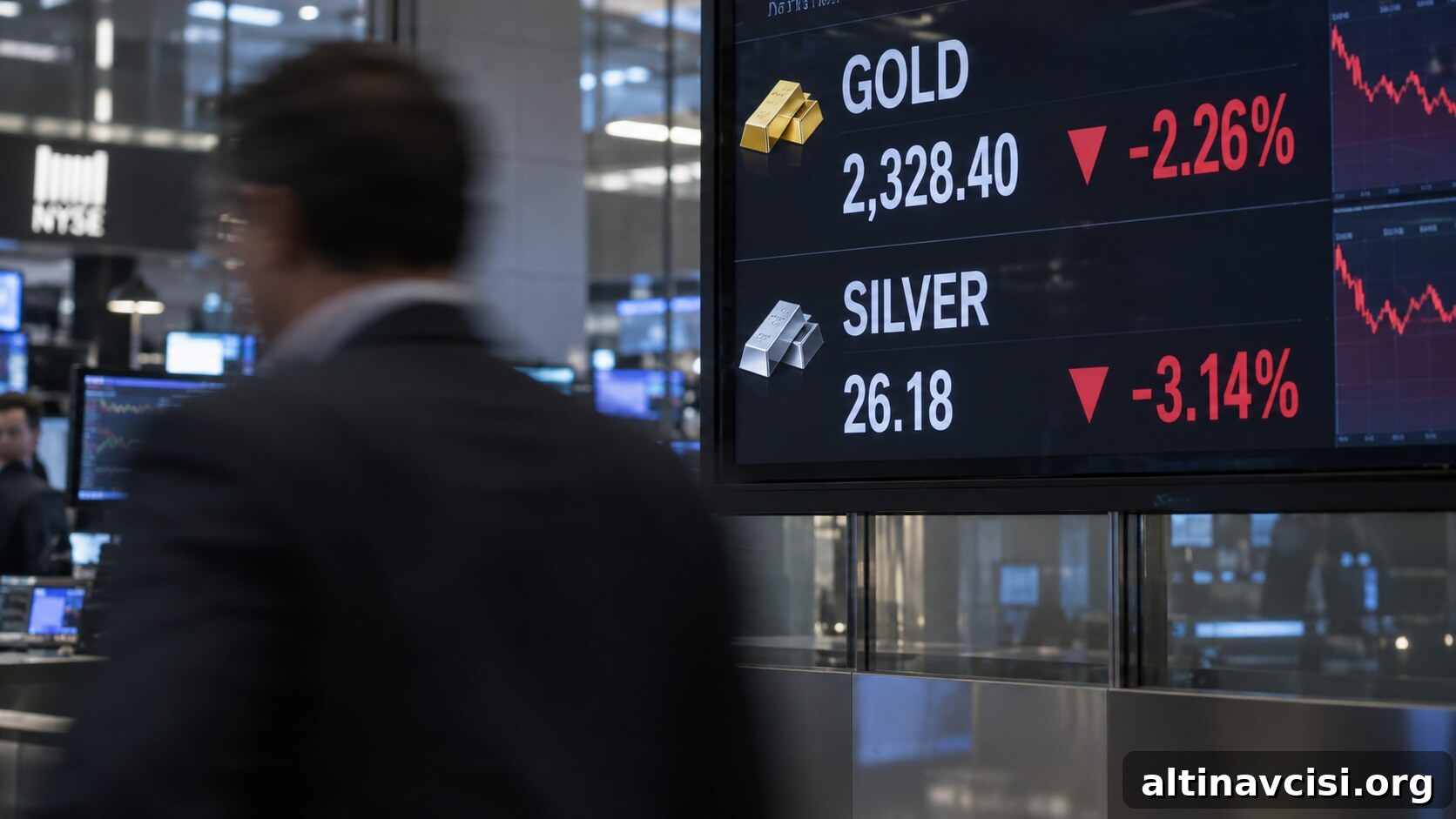
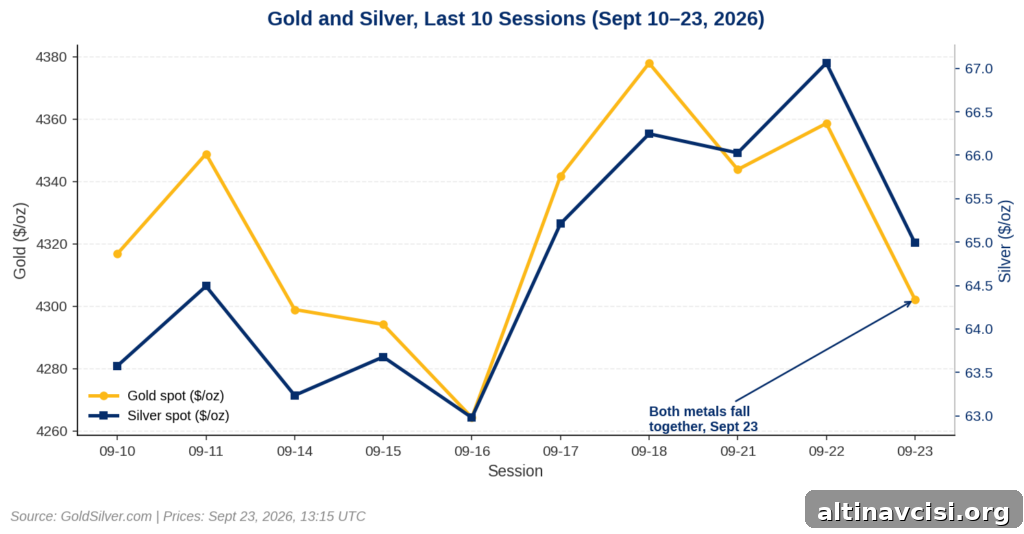
As of this writing, gold is trading around $4,302.15, down roughly 1.3% from the morning open. Silver has fallen more sharply, down about 3.1% to $64.99, more than twice gold’s percentage decline. The gold‑silver ratio, which had compressed to the mid‑65s, has widened back into the mid‑66s.
Key takeaways:
- Gold is down about 1.3% today; silver is down roughly 3.1%, a substantially larger move.
- Xi Jinping arrived in Washington for the first Chinese state visit to the U.S. since 2015. Formal talks and a state dinner are scheduled this week.
- Fed officials reiterated a hawkish message ahead of the summit, reinforcing expectations for further tightening.
- The split seen earlier in the week — silver holding while gold dipped — has reversed as summit-related risks have come into focus.
Why Is the Split From Monday Reversing?
On Monday the market narrative favored silver: optimism around Iran diplomacy eased gold’s safe‑haven premium, while silver remained supported by elevated real yields and a still‑resilient industrial outlook. That divergence compressed the gold‑silver ratio and left investors watching two separate drivers.
By Wednesday, the diplomatic headlines had less influence. Traders were treating renewed U.S.‑Iran contact as incremental rather than market moving. The bigger story became the in‑person summit: tariffs, rare‑earth export controls, and a U.S. arms package for Taiwan are explicitly on the agenda. Those negotiations directly affect industries that consume large amounts of silver, and key temporary measures — including a tariff truce and a suspension on certain rare‑earth restrictions — are set to expire November 10 unless extended.
Because roughly half of annual silver demand is industrial — from solar cells to electronics and advanced computing hardware — a summit that could alter trade and export rules places silver’s industrial demand profile at greater risk in the near term. Gold, by contrast, trades more as a pure monetary hedge with no counterparty risk and so is less sensitive to the resolution of any single negotiation. That difference helps explain why silver fell more sharply when the summit moved from prospect to reality.
What Is the Fed Signaling Ahead of the Summit?
U.S. central bank messaging added another layer to the move. Two Fed presidents reiterated a hawkish tilt ahead of the summit, arguing that inflation risks remain elevated and that policy needs to prioritize price stability. Those signals followed the Fed’s own September summary of economic projections, which showed most policy makers anticipating at least one more quarter‑point hike before year‑end.
On the data front, preliminary S&P Global PMI readings were expected to show a modest easing in both manufacturing and services. Normally a softer PMI would temper hawkish pricing and relieve some upward pressure on yields, but the market reaction suggests that summit‑week industrial‑demand uncertainty is outweighing near‑term domestic growth signals for silver this morning.
The Structural Case Underneath Both Numbers
None of the short‑term moves change the multi‑year story for precious metals. Central banks have been major buyers of gold in recent years, and global reserve diversification has slowly reduced the dollar’s dominance. Those structural trends support the long‑term case for gold and, to a different extent, silver.
Importantly, the metals often move together but can price different risks simultaneously. In a summit week where trade and export rules are on the table, silver’s industrial exposure introduces more variables and makes its price more sensitive to geopolitical and trade developments. A larger intra‑week swing in silver does not mean its fundamental case is weaker — it simply reflects a greater number of near‑term factors that directly affect industrial demand.
What Should Investors Watch Next?
Key events to monitor this week include the formal bilateral talks and the state dinner, where technology and AI export rules are expected to be discussed alongside tariffs and Taiwan policy. Several major tech CEOs are scheduled to attend, signaling that export controls on critical technologies could be a central focus.
From a price perspective, gold testing the $4,300 level is the immediate technical watch; whether it holds will matter for short‑term sentiment. For silver, the $65 area is a nearby support level to monitor. If the summit produces extensions to the tariff truce or the rare‑earth suspension, industrial‑demand risk could ease; if talks break down, silver may remain under pressure.
Stay On Top of Gold & Silver Prices
Get important market alerts sent straight to your inbox.
SOURCES
1. Reuters – Fed official comments on inflation and policy.
2. Reuters – Fed official remarks on the economy and risks.
3. South China Morning Post – Announcement of Chinese state visit.
4. The National – Coverage of the Washington summit agenda and participants.
5. FXStreet – Market analysis of gold ahead of the summit.
6. Federal Reserve – Summary of Economic Projections, September 2026.
7. GoldSilver – Live gold and silver price charts.
Disclaimer: This article is for informational purposes only and does not constitute investment advice. Past performance is not indicative of future results. Consult a qualified financial advisor before making investment decisions.
You May Also Like:
- UBS Holds Its Silver Target. The Market Already Got There First.
- China Imported 1,000+ Tonnes of Gold in Eight Months. Its Central Bank Bought Only 80.
- Fed Officials Turn Hawkish. Gold’s Iran‑Diplomacy Bounce Can’t Hold.
- Bernstein Just Cut Its Gold Forecast — By Breaking Gold’s Oldest Rule to Defend It.
- The Fed Just Hiked. Wall Street Keeps Getting More Bullish on Gold Anyway.
- Gold Dips, Silver Holds as Iran Diplomacy Hopes Sink Oil Before a Bigger Week.
- Silver Round‑Tripped a 6.8% Shock in Nine Days. Real Yields Did It, Not Inflation.
- Iran Hit a Tanker in Hormuz and Trump Threatened Iran. Oil Isn’t Reacting.