Key Takeaways
- The American Gold Buffalo is the U.S. Mint’s only .9999 fine (24‑karat) gold bullion coin, introduced in 2006 under the Presidential $1 Coin Act of 2005.
- It carries a $50 legal‑tender face value and is backed by the U.S. government for weight and purity.
- The Buffalo meets the IRS purity requirement for inclusion in a precious metals IRA on its own merits under IRS standards.
- Bullion strikes of the Buffalo are issued only in the 1 oz denomination; by contrast, the American Gold Eagle is also available in fractional sizes.
- The Buffalo’s .9999 purity means it contains slightly more pure gold per coin than the 22‑karat Gold Eagle, a factor important to investors focused on maximum intrinsic metal content.
In 2006 the U.S. Mint added a pure 24‑karat gold bullion coin to its product line for the first time. Unlike the American Gold Eagle, which uses a 22‑karat alloy for durability, the new American Gold Buffalo is struck in .9999 fine gold — the same purity standard used for flagship coins from other sovereign mints. The Buffalo remains the U.S. Mint coin that delivers this highest level of fineness.
To understand why the Buffalo was created and which investors it best serves, it helps to look at the gap the Mint wanted to close in the bullion market.
Why Did the U.S. Mint Create the American Gold Buffalo?
The American Gold Buffalo was authorized by the Presidential $1 Coin Act of 2005. The Mint introduced the coin in response to growing demand from buyers who preferred fully refined 24‑karat coins. At the time, the Gold Eagle’s 22‑karat composition meant some international and institutional buyers chose foreign coins that met the .9999 standard. The Buffalo was intended as an American alternative that matched international expectations for fineness.
The first Buffalo coins were struck at the West Point Mint in June 2006 and quickly found a receptive market. Early sales showed the Buffalo meeting strong demand from investors and collectors seeking a pure‑gold U.S. bullion option.
The Knowledge That Changes Everything

Two essential guides — yours free. Learn why gold matters and how fiat currencies typically behave over the long term.
What Are the American Gold Buffalo’s Specifications?
Key specifications:
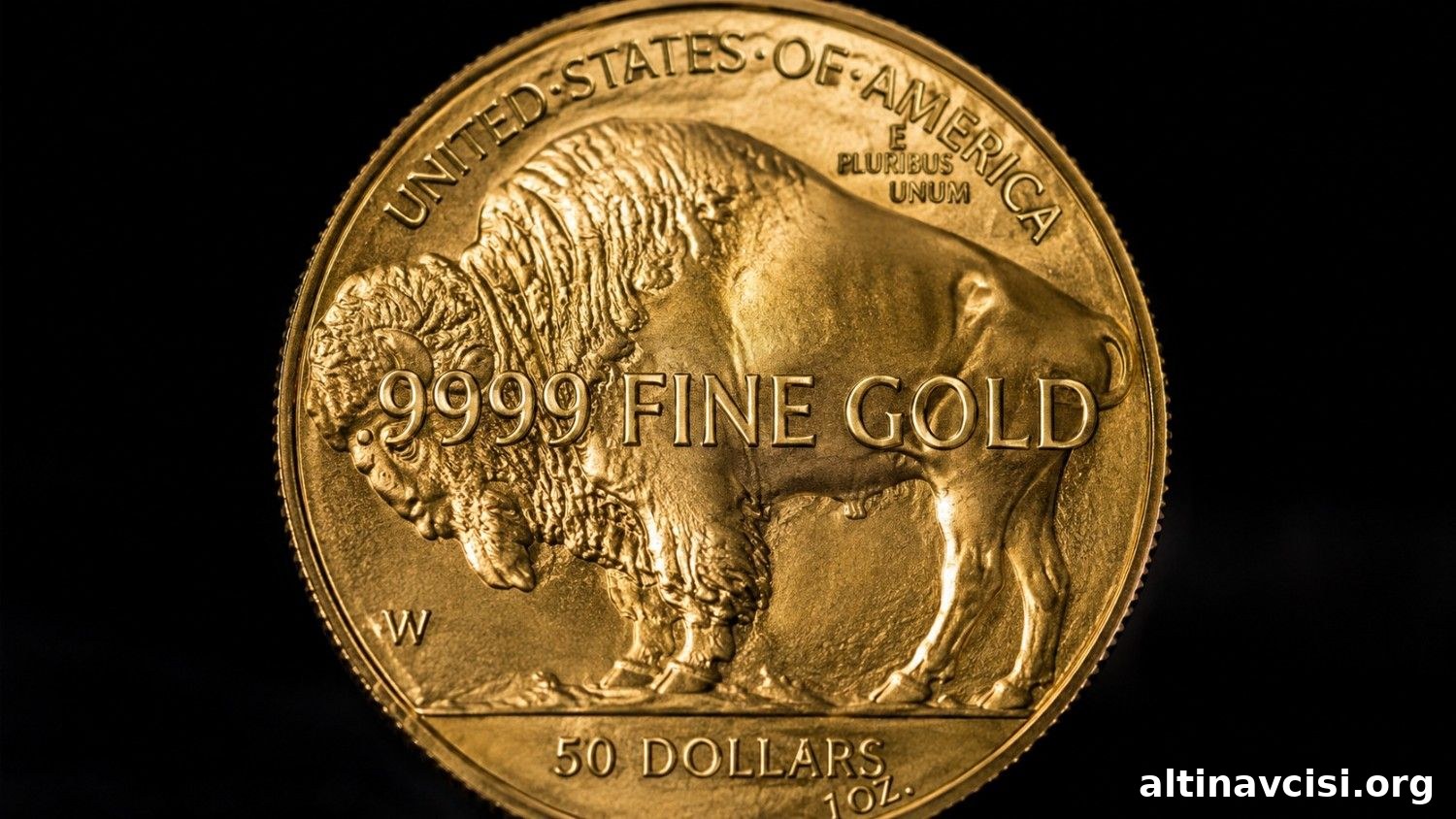
- Purity: .9999 fine gold (24‑karat)
- Weight: 1 troy ounce (31.1 grams)
- Diameter: 32.7 mm
- Thickness: 2.95 mm
- Face value: $50 (U.S. legal tender)
- Mint: West Point Mint (bullion strikes typically carry no visible mintmark; proof versions may bear a mintmark)
- Design: Adaptation of James Earle Fraser’s 1913 Buffalo Nickel artwork — a Native American profile on the obverse and an American bison on the reverse
The obverse portrait used by Fraser is a composite based on several Native American chiefs, while the reverse bison is commonly believed to have been modeled after a well‑known zoo animal of the era. The design ties the coin to classic American numismatic imagery and has proven popular with collectors and investors alike.
How Does the American Gold Buffalo Differ From the American Gold Eagle?
Both coins are produced by the U.S. Mint and each contains exactly one troy ounce of gold. Both carry U.S. government backing for weight and purity. The essential difference is composition: the Gold Eagle is a 22‑karat coin (91.67% gold) alloyed with small amounts of silver and copper to improve durability; the Gold Buffalo is .9999 fine gold with no alloying metals.
That composition difference has practical implications. The Eagle’s alloy makes it more durable in circulation or frequent handling, while the Buffalo’s pure gold content appeals to buyers focused on maximum intrinsic metal per coin. Institutional and international buyers that demand a .9999 fineness often prefer the Buffalo for that reason.
Another distinction is denomination availability. The Buffalo bullion coin is issued only as a 1 oz piece, while the Eagle is offered in fractional sizes (1/2 oz, 1/4 oz, 1/10 oz) in addition to the 1 oz, providing flexibility for investors who want smaller increments.
Is the American Gold Buffalo IRA‑Eligible?
Yes. The American Gold Buffalo meets the minimum fineness required for self‑directed precious metals IRAs. Because the coin is .9999 fine, it exceeds the minimum fineness standard commonly applied to IRA‑eligible gold. Investors should confirm with their IRA custodian whether bullion strikes are accepted, since custodians commonly accept bullion pieces but may exclude proof versions.
Important: IRA‑held precious metals must be stored in an approved depository. Personal or home storage of IRA assets is prohibited and can lead to tax consequences if rules are not followed.
What Premium Does the American Gold Buffalo Carry Over Spot?
Dealer premiums on the Gold Buffalo vary with market conditions, available inventory, and the coin’s year of issue. Premiums may be comparable to those of the Gold Eagle for current‑year coins, though the Buffalo often carries a small premium premium reflecting its higher fineness and typically lower production volumes. Premiums can widen during periods of elevated demand or supply constraints.
Who Is the American Gold Buffalo Best Suited For?
The Buffalo is a strong choice for investors who prioritize the highest purity in a U.S. government‑backed coin. If your objective is to hold the maximum amount of pure gold per coin and you value the clarity of a .9999 fine standard, the Buffalo is an efficient expression of that strategy.
It is also appropriate for inclusion in a precious metals IRA where fineness is a consideration. For investors planning to sell into international or institutional markets, the Buffalo’s fineness may help meet buyer requirements more directly than a 22‑karat coin.
By contrast, if you prefer to accumulate gold in smaller, incremental amounts or want fractional denominations for greater flexibility, the American Gold Eagle’s range of sizes may be preferable. Liquidity and dealer familiarity with the Eagle can also make it more convenient for some retail investors.
Stay On Top of Gold & Silver Prices
Get important market alerts sent straight to your inbox.
People Also Ask
What is the American Gold Buffalo coin?
The American Gold Buffalo is a one‑troy‑ounce .9999 fine (24‑karat) gold bullion coin produced by the U.S. Mint since 2006. It is authorized by federal law and carries a $50 face value as legal tender, though its market value is driven by its gold content and dealer premiums.
How does the American Gold Buffalo differ from the American Gold Eagle?
The main difference is purity and composition. The Buffalo is .9999 fine gold with no alloying metals. The Gold Eagle is struck in 22‑karat gold with silver and copper added for durability. Both contain a full troy ounce of gold, but the Eagle is also offered in fractional sizes, while the Buffalo bullion coin is issued only as a 1 oz piece.
Is the American Gold Buffalo eligible for a gold IRA?
Yes. The Buffalo’s .9999 fineness exceeds the minimum fineness required for precious metals IRAs. Prospective buyers should confirm acceptance of specific coin types with their IRA custodian and ensure proper depository storage.
When did the U.S. Mint first produce the American Gold Buffalo?
The first American Gold Buffalo coins were produced in June 2006, struck at the U.S. Mint’s West Point facility and released to the public that year.
What is the face value of the American Gold Buffalo coin?
The coin carries a $50 face value as U.S. legal tender. Its true market value, however, is the value of one troy ounce of .9999 fine gold plus any applicable dealer premium.
SOURCES
United States Mint — American Buffalo coin program and specifications; IRS guidance on allowable precious metals for IRAs; industry reporting and numismatic references.
Disclaimer: This article is for informational purposes only and does not constitute investment advice. Past performance is not indicative of future results. Consult a qualified financial advisor before making investment decisions.
You May Also Like:
- The Fed Printed $7 Trillion. Velocity Kept It Quiet. That’s Changing.
- Most 401(k)-to-Gold-IRA Rollovers Lose 20% Immediately. Here Is Why — and How to Avoid It.
- Gold Just Climbed to a 7‑Week High. One Number Changed Everything.
- The Jobs Report Did What Geopolitics Couldn’t: Move Gold and Policy in the Same Direction
- China Has Been Buying Gold for Months. Now It’s Moving It.
- How Tariffs and Trade Policy Can Affect Silver’s Industrial Demand
- Gold Rallied Significantly This Week. One Economic Release Will Determine Whether It Holds.