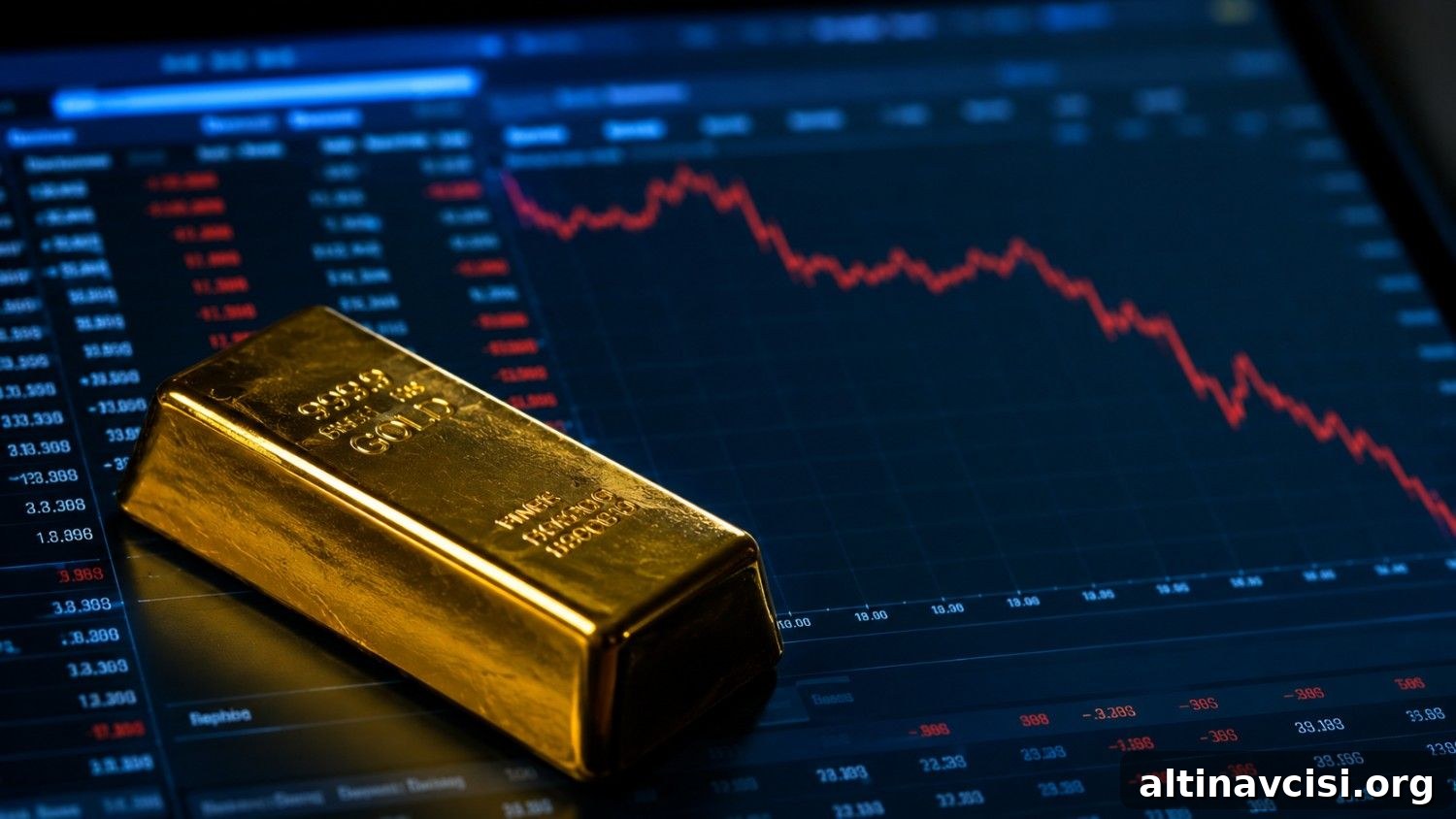
At 8:30 AM ET on Thursday, the U.S. Labor Department reported that initial jobless claims dropped to 187,000 for the week ending July 18. Economists had been expecting about 212,000. That difference mattered to financial markets: within minutes, gold prices fell to the session low. Gold now trades near $4,051, roughly 2% below Wednesday’s opening price of $4,130. Silver also moved lower, down about 4% to near $57.48.
Strong jobs data is good news for the economy. But why did gold fall on that report?
Why Did Gold Fall on Strong Jobs Data?
The link between a tight labor market and falling gold prices becomes clear when you follow how markets interpret economic signals. Strong employment numbers suggest the Federal Reserve can maintain or raise interest rates. Higher expected policy rates push up real Treasury yields — the return investors receive after accounting for inflation. Because gold yields nothing, rising real yields increase the opportunity cost of holding gold, encouraging capital to move into yield-bearing assets instead.
On Thursday the 10-year Treasury yield climbed to 4.714%, the highest level in the recent move. At the same time, market-implied odds for a September Fed rate hike rose to roughly 78% on Thursday morning, up from about 68% the day before, according to CME FedWatch data. Geopolitical events — such as recent Houthi attacks on tankers in the Red Sea, which have pushed oil prices higher — also reinforced expectations that the Fed may keep policy tighter for longer.
The European Central Bank’s decision to hold its deposit rate at 2.25% in a widely expected move further supported the view that major central banks remain cautious and data-driven. ECB leadership described policy as meeting-by-meeting and data-dependent, a stance that keeps the possibility of additional action on the table. That global hawkish tone adds to the pressure on precious metals.
In short: fewer layoffs mean the Fed can stay hawkish, which keeps real yields elevated and creates a headwind for gold.
The Edge Every Investor Needs
Smarter precious metals investing starts with timely market insights, Fed updates, global trends, and clear educational content.
What Does a 78% September Hike Probability Actually Mean for Gold?
Market prices reflect expectations as much as outcomes. A roughly 78% market-implied probability for a September hike means investors are pricing a substantial chance of tighter policy, and that expectation is already influencing asset prices today.
At the June 17 FOMC meeting, the Fed’s median projections and participants’ “dot plot” indicated there was room for further tightening. Since that meeting, expectations have swung with events: the probability of a September hike moved from near 20% after the June FOMC to higher levels following a series of economic and geopolitical shocks. Market-implied odds have been sensitive to job reports, CPI and PCE inflation data, and geopolitical risks that affect energy markets.
Because the Federal Reserve is now in its pre-meeting blackout period ahead of the July 28–29 meeting, officials are constrained from commenting publicly. That means markets are interpreting the latest data without official guidance, so today’s jobless-claims print carried outsized influence. A hold at the July meeting is widely expected, with market odds indicating a high probability of no change in July. The debate centers on whether September will bring another hike.
An implied probability is not a certainty. It expresses market pricing of risk. If upcoming releases — for example, the June PCE inflation report published July 30 — come in softer than expected, or if the FOMC’s post-meeting language tilts dovish, those odds could fall quickly. When tightening odds ease, gold often rebounds.
Does Today’s Drop Change the Long-Term Case for Physical Gold?
No. The short-term price reaction to stronger data does not overturn the long-term case for physical gold.
The Federal Reserve’s effort to combat inflation through higher rates is occurring against a backdrop of large and rising public debt. The U.S. national debt has exceeded $39 trillion, and annual interest payments have climbed above $1 trillion. Higher interest rates raise the government’s borrowing costs, constraining fiscal flexibility and making extended, deep tightening politically and economically difficult.
Put simply, the Fed can lift rates enough to temporarily weigh on gold, but it cannot realistically raise rates so far or for so long that it resolves the structural fiscal pressures that support gold’s long-term appeal. That dynamic — periodic bouts of higher yields versus structural monetary and fiscal pressures — is why many long-term investors view short-term dips as expected volatility rather than a broken investment thesis.
June’s CPI release showed headline inflation cooling to 3.5% year-over-year from 4.2% in May, a sign that inflation is moderating. That moderation, together with fiscal constraints, points to a likely path of a shallow, time-limited hiking cycle rather than a prolonged surge in rates. Investors should watch the June PCE release on July 30 and the FOMC statement on July 29 for the next clear directional signals for gold and silver.
Stay On Top of Gold & Silver Prices
Get important market alerts sent straight to your inbox.
SOURCES
1. US Department of Labor — Unemployment Insurance Weekly Claims, week ending July 18, 2026
2. CME Group — FedWatch Tool, September 2026 rate-hike probabilities, July 23, 2026
3. News coverage of gold and oil market moves, July 23, 2026
4. European Central Bank — Monetary Policy Decision, July 23, 2026
5. Federal Reserve — FOMC Summary of Economic Projections, June 17, 2026
6. Bureau of Labor Statistics — Consumer Price Index, June 2026 (release July 14, 2026)
7. US Treasury — Fiscal data on national debt and interest payments, July 2026
8. Live precious metals price services and industry price charts, July 23, 2026
Disclaimer: This article is for informational purposes only and does not constitute financial or investment advice. Consult a qualified financial adviser before making investment decisions.
You May Also Like:
- A War Just Expanded Into a New Shipping Lane. Gold Fell. Here Is Exactly Why.
- Gold Is About to Trade 24/7. A Prediction Market Just Filed to Make It Never Expire.
- Gold Hit a Two-Week High This Morning. Three Forces Arrived at Once.
- The Fed Meets July 29. Gold Says Hold Is Already Priced In. Silver Says Something Else.
- Silver Is Up Nearly 5% This Morning. Here Is Exactly Why.
- China Ends Paper Gold Trading July 24. For Physical Holders, That’s a Confirmation.