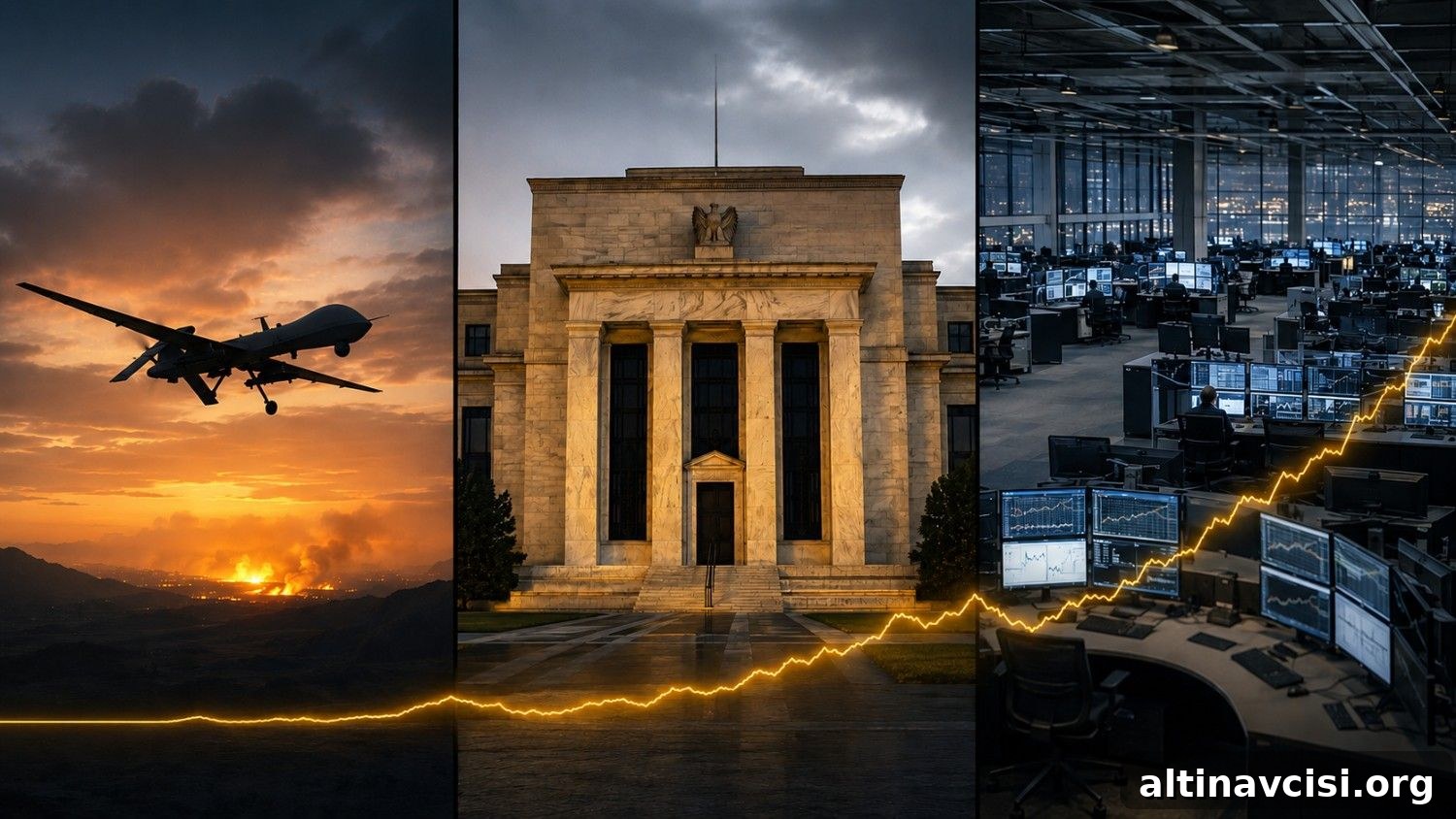
Gold is trading near $4,130 this morning — its highest level in two weeks — after rising more than 1% from Tuesday’s close. The move is driven by three separate factors that coincided on Wednesday, and each one played a distinct role in pushing prices higher.
To appreciate why the combination matters more than any single factor, it helps to review how gold pricing reacts to multiple simultaneous forces.
Gold intraday line chart for July 22, 2026 — opened $4,077.88, rallied to a session high of $4,141.78, and is currently trading at $4,126.45, up 1.20% on the day.
Source: goldsilver.com/price-charts/ · Price as of ~9:17 AM ET
Why Did Iran Strikes Push Gold Higher Today?
The US military completed its 11th consecutive night of strikes against Iran early Wednesday, CENTCOM announced, targeting military operations centers, aircraft hangars, drone storage facilities, and maritime infrastructure around the Strait of Hormuz. In response, Iran struck US-linked sites in Kuwait, Jordan, and Bahrain.
This conflict began on February 28, 2026, but recent escalation matters for markets because investors had begun to price in a possible de-escalation after a mid-June ceasefire. That assumption was undermined when hostilities resumed in early July, and each new night of strikes makes a return to de-escalation less certain.
Geopolitical uncertainty raises the probability of tail-risk events that traditional fiat assets may not hedge well. When investors cannot assess whether a conflict will widen, they shift into assets that store value independently of any single government’s monetary system. Gold is the primary vehicle for that allocation. Continued strikes also help keep oil prices elevated, which supports inflation expectations and puts additional pressure on real purchasing power.
The Edge Every Investor Needs
Smarter precious metals investing starts here. The Nuggets Newsletter brings essential market insights, Fed updates, global trends, educational videos, and more.
How Does the Fed’s Blackout Period Affect the Gold Price?
This week the Federal Reserve entered its blackout period ahead of the July 28–29 FOMC meeting. During a blackout, committee members refrain from public comment on monetary policy. That restriction remains in effect until July 30.
For gold investors, the blackout matters because it temporarily removes a recurring intraday headwind. Throughout July, hawkish remarks from Fed officials often pressured gold during trading sessions. Each speech that reinforced a possible September rate hike pushed 10-year real yields higher, increasing the opportunity cost of holding non-yielding gold. Those remarks repeatedly stalled rallies when they appeared.
With the blackout in place, that mechanism is silenced for several trading days. The blackout does not change the underlying rate outlook, but it reduces the chance of sudden intraday moves driven by Fed commentary. Fiscal constraints also limit how aggressively the Fed can raise rates: US federal gross interest costs have crossed $1 trillion annually and continue to climb, which increases the government’s sensitivity to higher interest rates. That fiscal backdrop supports a structural floor under gold prices. Market tools at the time priced a high probability of the Fed holding rates at 3.50–3.75% at the July meeting.
Why Is Thin Summer Positioning Amplifying the Gold Rally?
The third force is less visible but equally important. Global gold ETF holdings remain well below their pandemic-era peak. After months of outflows during the correction from January’s all-time high, institutional positioning in gold is relatively light.
Summer trading typically brings thinner liquidity and fewer active desks. When safe-haven demand enters a market with lean positioning and thin order books, the price impact per dollar of inflow increases. In practical terms, the same amount of buying that might move gold a few dollars in a heavy autumn market can move it substantially more in late July.
As a result, the geopolitical and Fed-blackout catalysts generated outsized price movement because resistance in the market was relatively light.
What Does This Rally Mean for Gold’s Structural Case?
Today’s move is easier to interpret when you stop treating gold as responding to a single variable. Gold reacts to a mix of drivers — the dollar, yields, geopolitics, liquidity and positioning — and the interaction between them. Two forces aligned produce a modest move; three aligned, against light resistance, can unlock a larger rally.
That said, the structural case for gold does not hinge on one day’s move. The Federal Reserve meeting and June PCE inflation data arriving before the meeting will be the next major catalysts that determine whether this recovery accelerates or consolidates. For longer-term holders, the broader fiscal picture remains unchanged: national debt continues expanding (exceeding $39 trillion at the time), and rising gross interest costs create persistent pressure on real returns. That fiscal reality underpins gold’s role as a store of value beyond short-term market moves.
For context on the correction that pulled gold down from January highs and other market commentary, consult recent industry commentary and price monitoring resources.
SOURCES
1. US Central Command (CENTCOM) — Official statement, July 22, 2026: 11th consecutive night of strikes confirmed
2. NPR — U.S.-Iran attacks continue as tensions mount on the Red Sea, July 22, 2026
3. Federal Reserve — FOMC blackout policy and July 28–29 meeting calendar
4. CME Group — FedWatch Tool, July 2026 hold probability, July 22, 2026
5. State Street Global Advisors — July 2026 Monthly Gold Monitor
6. Congressional Budget Office — Federal interest expense projections, 2026
7. GoldSilver — Live Gold & Silver Spot Prices, July 22, 2026
Disclaimer: This article is for informational purposes only and does not constitute financial or investment advice. Consult a qualified financial adviser before making investment decisions.
You May Also Like:
- The Fed Meets July 29. Gold Says Hold Is Already Priced In. Silver Says Something Else.
- Silver Is Up Nearly 5% This Morning. Here Is Exactly Why.
- China Ends Paper Gold Trading July 24. For Physical Holders, That’s a Confirmation.
- Silver Is Up 1.5% Today. Oil Is Up 3%. Those Two Moves Shouldn’t Coexist. Here’s Why They Do.
- Hong Kong Just Ran Its First Gold Settlement. The Banks Who Did It Also Run London’s.
- Consumer Inflation Expectations Just Fell to 4.2%. Gold Fell Too. The Survey Missed the Oil Spike.