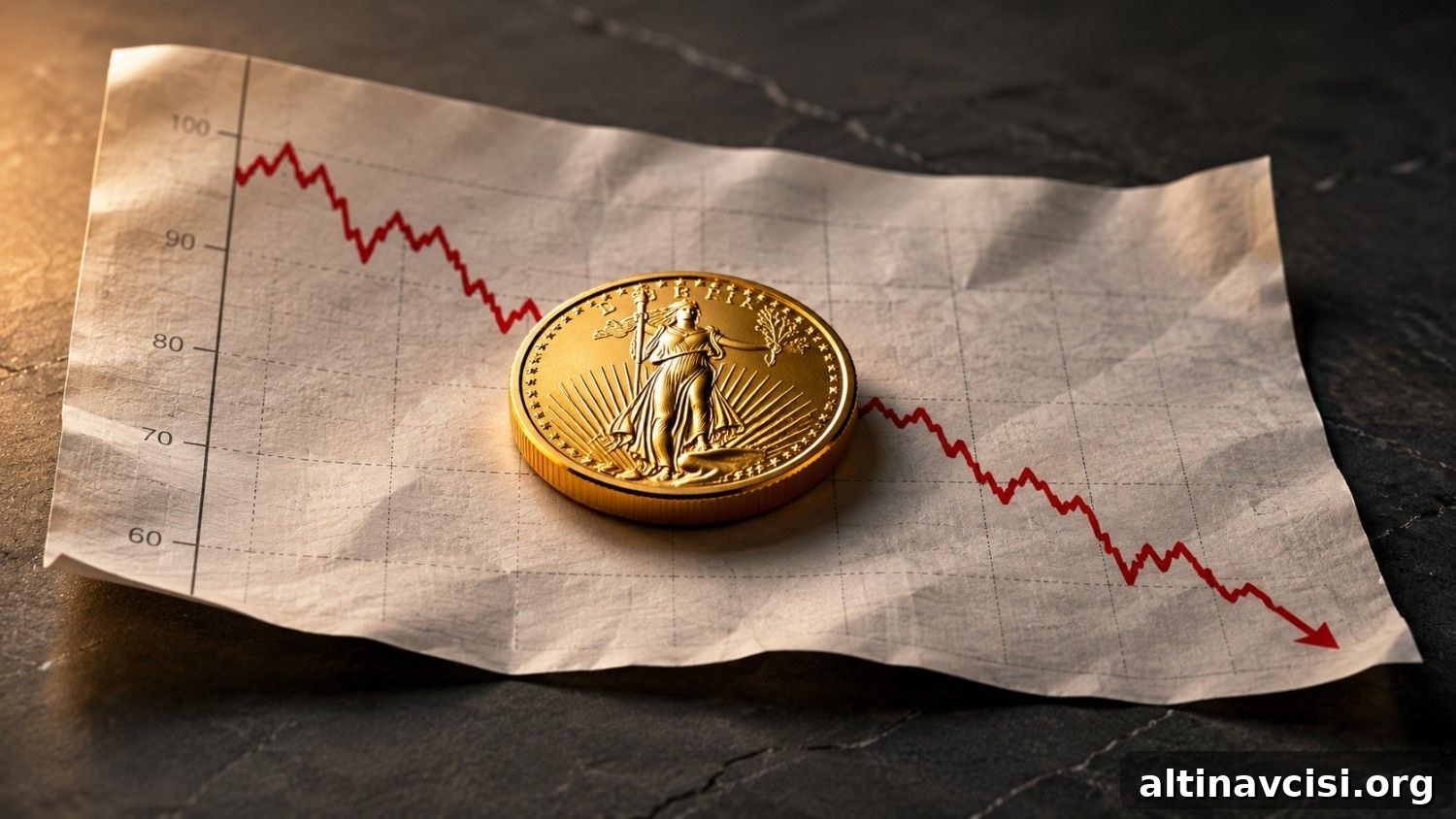
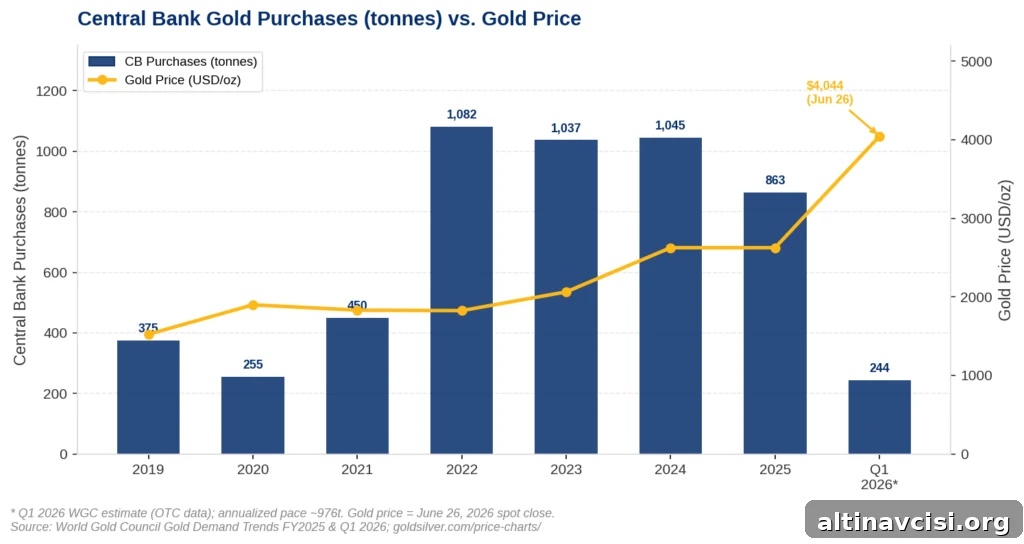
Gold fell about 5% this week to $4,044 per ounce, marking its steepest weekly decline of 2026. That move, however, contrasts sharply with central bank behaviour this year. The World Gold Council’s Central Bank Gold Reserves Survey, published June 16, 2026 and covering 76 institutions, found that 89% of reserve managers expect their gold holdings to grow over the next 12 months, and a record 45% plan to increase their own reserves. Those survey results are the strongest in the report’s nine-year history.
Two numbers in a single week point in opposite directions. Understanding why they diverge makes the longer-term picture for gold clearer than any single price chart can.
Why the Paper Market Sold Off
This week’s sell-off was largely mechanical. The Bureau of Economic Analysis reported May PCE inflation at 4.1% year-over-year — the highest print since April 2023. The report landed on Thursday, June 25. Strong Q1 GDP data and a persistently tight jobs market reinforced a narrative that keeps the Federal Reserve’s rate-hike path alive. The CME FedWatch Tool shifted pricing toward a higher chance of more hikes later in the year.
When the market prices in higher policy rates, the opportunity cost of holding gold — which pays no yield — rises. Futures traders and other paper-market participants who had positioned for rate cuts suddenly found themselves on the wrong side of that repricing and sold holdings. The dollar strengthened toward yearly highs, and gold moved lower alongside it.
This is a familiar mechanism rather than a structural change. The paper gold market reacts swiftly whenever the expected rate trajectory shifts. Short-term selling by leveraged traders can move the spot price rapidly.
A nuance in the data limited the downside. Core PCE, which excludes food and energy, came in at 3.4% — the highest since October 2023 but roughly in line with consensus expectations. After markets digested the release, the probability of a September hike eased slightly. Gold recovered some ground on Friday, retreating from session lows near $3,970.
What the Survey Actually Says
The World Gold Council’s Central Bank Gold Reserves Survey is released annually and is not sensitive to weekly market moves. Central banks manage reserve portfolios over decades, not around a single FOMC meeting.
This year’s survey highlights three important themes.
First: Participation reached a record. Seventy-six central banks responded — more than ever in the survey’s history. That breadth indicates gold is a mainstream consideration in reserve management, rather than a niche allocation.
Second: Conviction about gold is accelerating. A record 45% of respondents plan to increase gold holdings over the next 12 months, up from 43% in 2025. That steady trend points to growing strategic preference for gold, while only 1% expect reductions.
Third: The dollar’s role in official reserve portfolios is expected to decline. Seventy-four percent of respondents anticipate the US dollar’s share of global reserves will fall moderately or significantly over the next five years, while gold’s share is expected to rise. This reflects deliberate reserve policy decisions rather than short-term currency forecasts.
The Edge Every Investor Needs
Smarter precious metals investing starts here. The Nuggets Newsletter delivers concise market insights, Fed updates, global trends, educational content, and timely alerts.
Gold Now Outranks US Treasuries as the World’s Largest Reserve Asset
The survey coincides with a notable milestone: gold has, for the first time since 1996, surpassed US Treasuries as the largest reserve asset held by foreign official institutions. The European Central Bank reported in early June 2026 that foreign central banks hold roughly $4.5 trillion in gold compared with about $3.5 trillion in US government bonds.
That shift reflects two forces. First, rising gold prices increased the market value of existing holdings. Second, sovereign institutions continued active purchases. The People’s Bank of China has added to its gold reserves for 20 consecutive months. The World Gold Council’s Gold Demand Trends projects central bank purchases of roughly 850 tonnes in 2026, similar to 2025’s 863 tonnes and well above the 2010–2021 annual average of 473 tonnes.
Two Markets, One Metal
There are effectively two gold markets operating at once, and they follow different time horizons. Recognizing that difference resolves the apparent contradiction between a falling spot price and a record bullish central bank survey.
The paper gold market — futures, ETFs and options — is driven by institutional traders, hedge funds and systematic strategies that focus on near-term indicators: the Fed’s rate path, dollar movement and yield opportunities. When expectations shift toward higher rates, these players sell quickly and often with leverage, pushing the spot price down in the short term.
The central bank market is governed by long-term reserve policy. Sovereign reserve managers are allocating gold to diversify national assets, not trading for quick gains. Their mandates and time horizons are measured in years and decades, not days. As such, weekly inflation prints or short-term market moves do not typically alter their strategic decisions.
Data supports that distinction. The World Gold Council estimated central bank net purchases at around 244 tonnes in Q1 2026, based on London OTC market data — a figure that exceeded Q4 2025 and the five-year average. Those purchases took place near record price levels, showing that sovereign buyers are willing to buy despite elevated spot prices because their objectives are structural and long-term.
In short: while paper-market participants sold over a couple of sessions, central banks across dozens of institutions signalled they plan to add to reserves regardless of short-term volatility.
What It Means for the Long-Term Holder
If you own physical gold — bars, coins or stored metal — the short-term price swing does not change the nature of what you hold. Physical ounces carry no counterparty risk, are not subject to margin calls, and do not depend on futures rate expectations. Your metal remains the same holding it was last week.
The paper price is approximately 28% below the January 28 all-time high of $5,589. That current price level sits where sovereign reserve managers collectively see value. The WGC survey does not predict the price in three months, nor does today’s quotation. But it clearly distinguishes who is acting on a five-year horizon and who is trading on a five-day horizon.
The 76 institutions responding to the survey are focused on large structural issues — rising global debt levels, currency composition of reserves, and the role of gold as a long-term store of value across multiple monetary cycles. Those considerations help explain why central bank demand can set a durable floor beneath price volatility driven by short-term trading.
Put simply: the paper market moves the short-term price; the central bank market influences the long-term floor.
SOURCES
1. World Gold Council — Central Bank Gold Reserves Survey 2026; Central Banks Set to Step Up Gold Buying Over Next Year; Gold Demand Trends Full Year 2025; Central Banks, Gold Demand Trends Q1 2026.
2. Bureau of Economic Analysis — Personal Income and Outlays, May 2026 (PCE data).
3. CME Group — FedWatch Tool (rates probabilities and market pricing).
4. Federal Reserve — FOMC Statement and Summary of Economic Projections, June 17, 2026.
5. GoldSilver — Live Gold & Silver Spot Prices (price reference).
6. US Treasury Fiscal Data — Debt to the Penny (US national debt figures).
Disclaimer: This article is for informational purposes only and does not constitute financial or investment advice. Consult a qualified financial adviser before making investment decisions.
You May Also like:
- Silver Looks Like It’s Losing. The Ratio Says It’s Loading.
- Q1 GDP Beat. Jobless Claims Beat. Gold Rose. Here’s Why.
- PCE Hit 4.1%. Gold Went Up. Here’s Why.
- 298 Tonnes of ETF Gold Is Underwater. Central Banks Aren’t.
- Hawkish Fed, Gold Below $4,000, Silver Below $60 — and a Market That Disagrees.
- Gold Just Broke $4,000. The Mainstream Called the Debasement Trade Dead. They’re Wrong.
- Two Things Are Hitting Gold Simultaneously. Only One Is About Gold.