
KEY TAKEAWAYS
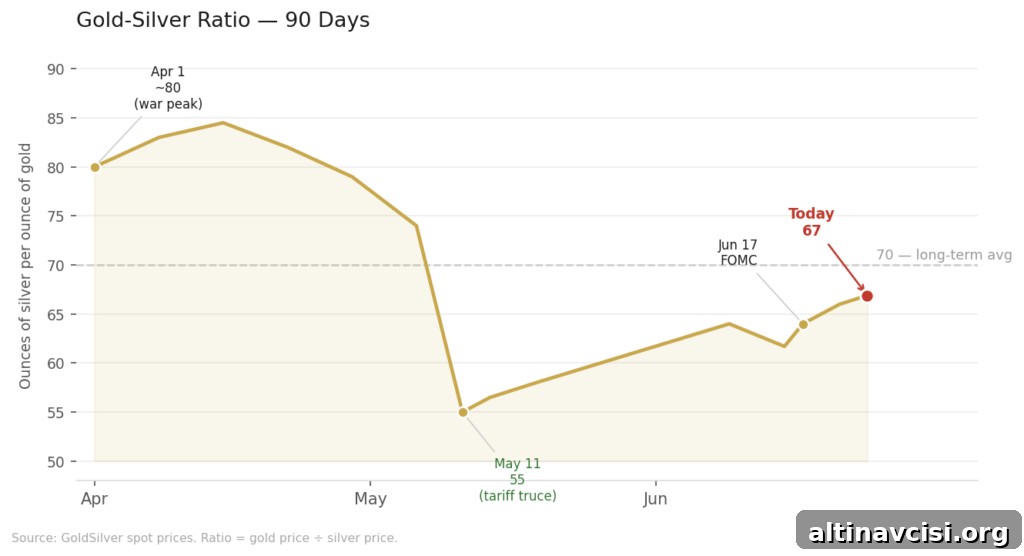
- The gold-silver ratio reached about 67:1 on June 24, 2026 — the widest level since the peak weeks of the Iran conflict.
- Gold is down roughly 1.7% and silver down about 5.4%; the divergence reflects rate-hike concerns outweighing the Iran peace dividend for metals.
- Nine of 18 FOMC officials project at least one rate hike before year-end; CME FedWatch prices about a two-thirds chance of a hike. Central-bank buying supports gold and helps absorb pressure that is more sharply affecting silver.
- May PCE data is released Thursday, June 25, at 8:30am EDT. Consensus expects 4.1% year-over-year; this print will influence whether rate-hike odds extend or reprice.
- The structural case for silver — recurring supply deficits, industrial demand, and fiscal dynamics — remains intact. The ratio is reflecting short-term monetary headwinds, not long-term fundamentals.
Gold is down about 1.7% today while silver has slipped roughly 5.4%. That gap is visible in the gold-silver ratio, which reached approximately 67:1 on June 24, 2026. Rather than being a pure value signal, the ratio is acting as a diagnostic: it reveals which forces are dominating the precious-metals complex right now. The Iran peace developments should have favored silver, but near-term monetary dynamics are overriding that benefit — and Thursday’s PCE print is a key reason.
This article explains why silver is falling more than gold today, what a 67 gold-silver ratio is signaling, and how Thursday’s PCE report could change the picture.
Why Are Gold and Silver Moving in Opposite Directions?
Many investors use the gold-silver ratio as a valuation tool to judge whether silver is cheap relative to gold. That remains useful. But in the current market the ratio is primarily signaling a monetary-versus-industrial tension. It takes about 67 ounces of silver to buy one ounce of gold at present, and that figure is revealing which narrative is winning in real time.
Two forces are pulling the metals in different directions. On one side is the Iran peace dividend — lower oil, improved shipping through the Strait of Hormuz, and easing geopolitical risk. On the other side are higher inflation projections and renewed rate-hike expectations from the Federal Reserve. The relative strength of those forces determines why silver is underperforming gold.
The Edge Every Investor Needs
Smarter precious metals investing starts here. The Nuggets Newsletter brings essential market insights, Fed updates, global trends, educational videos, and more.
What Happened to the Iran Peace Deal — and Why Didn’t It Help Silver?
The positive developments are clear: the US and Iran agreed to a 60-day roadmap and the US granted Iran a license to sell oil internationally. Shipping through the Strait of Hormuz has begun to normalize and oil prices have eased as a result. Lower oil should, in theory, reduce inflationary pressures, ease central-bank tightening expectations, compress real yields, and favor non-yielding assets such as silver.
But the Federal Reserve’s mid-June projections altered that outlook. The FOMC raised its inflation projections, and a meaningful portion of officials now expect at least one rate hike before the end of the year. Several major banks have updated forecasts to incorporate a hike and market pricing reflects roughly a two-thirds chance of a year-end increase. In short, the rate-hike narrative has gained traction and is offsetting the near-term benefits of the Iran deal for silver.
Why Is Silver Falling More Than Gold?
Silver is driven by two distinct engines: a monetary component tied to inflation expectations, real yields and dollar direction (which it shares with gold), and an industrial component driven by demand for solar panels, electric vehicles, semiconductors, and data-center equipment. When rate-hike fears strengthen, silver’s monetary engine stalls because holding silver carries a higher opportunity cost versus interest-bearing instruments.
Currently, stronger rate expectations and elevated Treasury yields make holding non-yielding silver less attractive in the near term. Gold benefits from sustained central-bank buying and reserve demand, which provides a structural floor. Central banks hold gold, not silver, and many continue to add to reserves. That institutional, long-term demand cushions gold more than silver, producing the observed divergence in performance and driving the ratio toward 67.
What Does Thursday’s PCE Report Mean for Silver?
May’s PCE inflation figures will be released Thursday morning. Consensus estimates point to a 4.1% year-over-year print, with core PCE expected near 3.3–3.4%. Importantly, the May data capture a period when oil was still elevated due to the Iran conflict; the peace-related relief is likelier to show up in June data released in July. Thus, Thursday’s report is backward-looking and could appear relatively hot even as underlying pressures are easing.
If the print is stronger than expected, rate-hike odds are likely to firm, the dollar may remain strong, and the gold-silver ratio could stay elevated or widen further. If the core reading is softer than anticipated, markets may quickly reprice year-end expectations, relieving some pressure on silver and allowing it to recover more rapidly than gold.
What the Gold-Silver Ratio at 67 Does Not Tell You
A ratio at 67 does not negate silver’s long-term structural case. Multi-year supply deficits and robust industrial demand are not undone by a Fed dot plot. The ratio is signalling short-term, rate-driven pressure that is suppressing silver more than gold. For physical holders, ounces retain their non-counterparty attributes regardless of paper-price moves.
Historically, a widening ratio driven by rate concerns is not necessarily a cue to sell silver. It often indicates the Fed is temporarily the dominant force; when that force shifts, silver tends to reprice faster than gold. Thursday’s PCE release will offer a first read on how long that force may persist.
Stay On Top of Gold & Silver Prices
Get important market alerts sent straight to your inbox.
SOURCES
1. Gold and silver spot price data, June 2026; Trading and market data sources.
2. Federal Reserve — Summary of Economic Projections and FOMC statements, June 17, 2026.
3. US Treasury yields and related market data, June 2026.
4. CME FedWatch probability estimates, June 2026.
5. Consensus forecasts and PCE expectations, June 2026.
6. World Gold Council central bank gold reserves survey, 2026.
7. News reports on the US–Iran 60-day roadmap and oil market developments, June 2026.
Disclaimer: This article is for informational purposes only and does not constitute financial or investment advice. Consult a qualified financial adviser before making investment decisions.
You May Also Like:
- BofA Says Three Rate Hikes. Silver Just Priced In the First One.
- Iran Deal. Oil Falling. A PM Out. Gold Still Above $4,100.
- PCE Drops Thursday. Here’s What It Means for Gold.
- Goldman Sachs Gold Target Cut: What the $1,400 Gap Means
- Gold Price Today, June 19: What Juneteenth Trading Tells You
- Half the Fed Wants a Hike. 45% of Central Banks Are Buying More Gold.
- Silver Hit $69.85 This Morning. Then the FOMC Took It All Back.
- The Fed Went Silent. Gold Holders Don’t Need It to Speak.