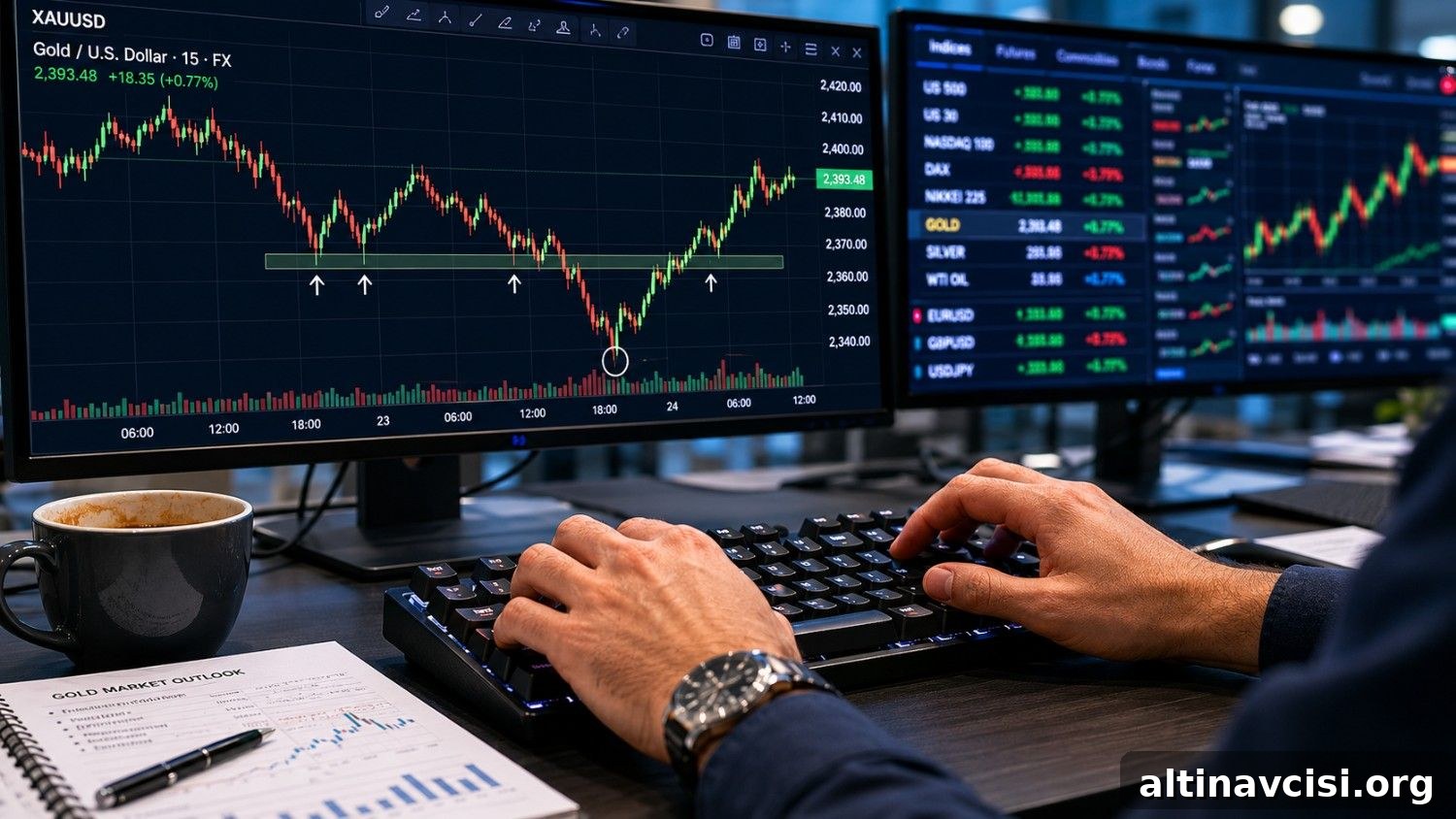
In today’s update: Gold’s support remains intact — despite intraday dips to $4,455 and silver to $74.90 on thin post-holiday volume. Central banks added 244 tonnes in Q1, and the $4,440 zone has held three times in five sessions. Here’s what the data actually shows.
The real story today is that gold’s price floor is holding. Markets reopened after Memorial Day with a sharp selloff: gold slid more than $50 from the open and silver fell nearly $2, extending losses into a second session. The headlines look alarming, but the underlying data paints a different picture. Below are the five points that matter most.
Why Is Silver Falling Faster Than Gold Today?
Silver fell about 2.79% while gold declined roughly 1.18% — a greater than 2-to-1 move often called a ratio expansion. That pattern appears during broad selloffs when traders reprice silver’s industrial premium before they adjust positions in gold, which functions primarily as a monetary asset. Keep perspective: 48 hours earlier silver had been outperforming gold by a similar margin on the upside.
Physical demand remains strong. The World Gold Council’s Q1 2026 report showed bar and coin demand up 42% year-over-year to 474 tonnes — one of the largest quarterly totals on record. Such buying does not vanish in a single session. Historically, when silver underperforms gold during a bull market, it usually reflects liquidity-driven selling rather than a structural change in the multi-year supply deficit that has reduced global silver inventories.
The Edge Every Investor Needs
Smarter precious metals investing starts here. The Nuggets Newsletter delivers market insights, Fed updates, global trends, educational videos, and timely alerts.
What Is the Gold Price Floor Right Now — and Is It Holding?
Gold briefly touched $4,440 intraday before institutional buyers stepped in. That support has held on three of the last five sessions. When a price level repeatedly draws bids during selling pressure, it becomes a structural support floor — evidence that large, price-sensitive buyers are actively defending it. In short, real money is allocating at this zone.
Q1 2026 data helps explain the behavior. Central banks purchased a net 244 tonnes of gold in Q1, a 3% increase year-over-year and above the five-year average, according to the World Gold Council. China’s central bank added 7 tonnes, more than double its prior quarter. Total gold demand reached record value levels. With the largest institutional buyers accumulating at these prices, a short holiday selloff does not alter the broader structural picture.
What Causes Gold Prices to Drop After a Holiday Weekend?
US desks were closed for Memorial Day, so Tuesday opened into thin order books that amplify price moves. Holiday-shortened weeks commonly produce outsized intraday swings on low volume. These moves usually fade as normal liquidity returns later in the week. Put simply, the size of the drop reflects calendar-driven liquidity conditions rather than an abrupt shift in fundamentals.
The structural backdrop remains consistent with Friday’s picture: central bank buying in Q1, no Fed rate cuts so far in 2026, and traders now pricing a higher chance of additional rate tightening by year-end. The Iran conflict also continues to influence markets with intermittent strikes and diplomatic talks. None of these factors were fundamentally changed by a multi-day holiday.
Why Didn’t Gold Rise on the Iran Strikes?
The US struck Iranian positions over the weekend, yet gold did not rally. That muted reaction is itself a meaningful signal: geopolitical risk appears to be embedded in gold’s base demand rather than sitting as a short-term premium on top of prices. When escalation headlines stop producing strong one-off rallies, it suggests the market has already priced the war-related risk into the floor.
From here, further upside in gold is more likely to come from second-order effects such as sustained energy disruptions that push inflation higher than central banks can contain. Recent data supports this: US headline CPI was 3.8% in April, its highest level since May 2023, with energy contributing a sizable portion of the increase. In other words, ongoing inflationary pressure from geopolitical-driven energy shocks matters more for gold’s long-term case than any single military action.
What Does Tomorrow’s GDP Report Mean for Gold and Silver Prices?
The Bureau of Economic Analysis will publish its second estimate of Q1 2026 GDP. The initial reading showed 2.0% annualized growth, a rebound from Q4’s 0.5%, while the PCE price index rose sharply. That mix — moderate growth alongside elevated inflation — resembles a stagflationary setup, which historically benefits precious metals.
How the revision reads will influence near-term price action. If growth is revised lower or inflation revised higher, markets may price additional rate hikes and a stronger dollar, pressuring gold in the short term. If growth holds while inflation stays elevated, the Federal Reserve faces a dilemma: cutting risks reigniting inflation, while hiking risks suppressing growth. Either outcome reinforces the long-term case for gold and silver as hedges against policy and inflation risk.
Stay On Top of Gold & Silver Prices
Get important market alerts sent straight to your inbox.
SOURCES
1. nFusion Solutions — Spot Price API
2. World Gold Council — Gold Demand Trends Q1 2026
3. World Gold Council — Central Banks Q1 2026
4. Bureau of Labor Statistics — Consumer Price Index Summary, April 2026
5. Bureau of Economic Analysis — GDP Advance Estimate, Q1 2026
6. CME Group — FedWatch Tool, 30-Day Federal Funds Futures
7. NPR — Iran and U.S. coverage, May 25 2026
Disclaimer: This article is for informational purposes only and does not constitute financial or investment advice. Consult a qualified financial adviser before making investment decisions.
You May Also Like:
- UBS Just Cut Its Gold Target by $400. The Part They Kept Is the Real Story.
- Why Gold Is Falling Today — And Why $4,500 Is Holding.
- Gold Is Down Today. Here’s Why Smart Money Is Still Buying.
- Silver Up 3%. Gold Up 1.3%. The Ratio Tells You Everything.
- Iran News Sent Gold Price Both Ways. The Driver Was Never Iran.
- Gold Falls 0.5% on Iran Deal: The Floor Holds
- Is Gold Being Repriced? 5 Major Institutions Say Yes.
- Silver Dropped 12%. Gold Dropped 3%. That Gap Is the Story.