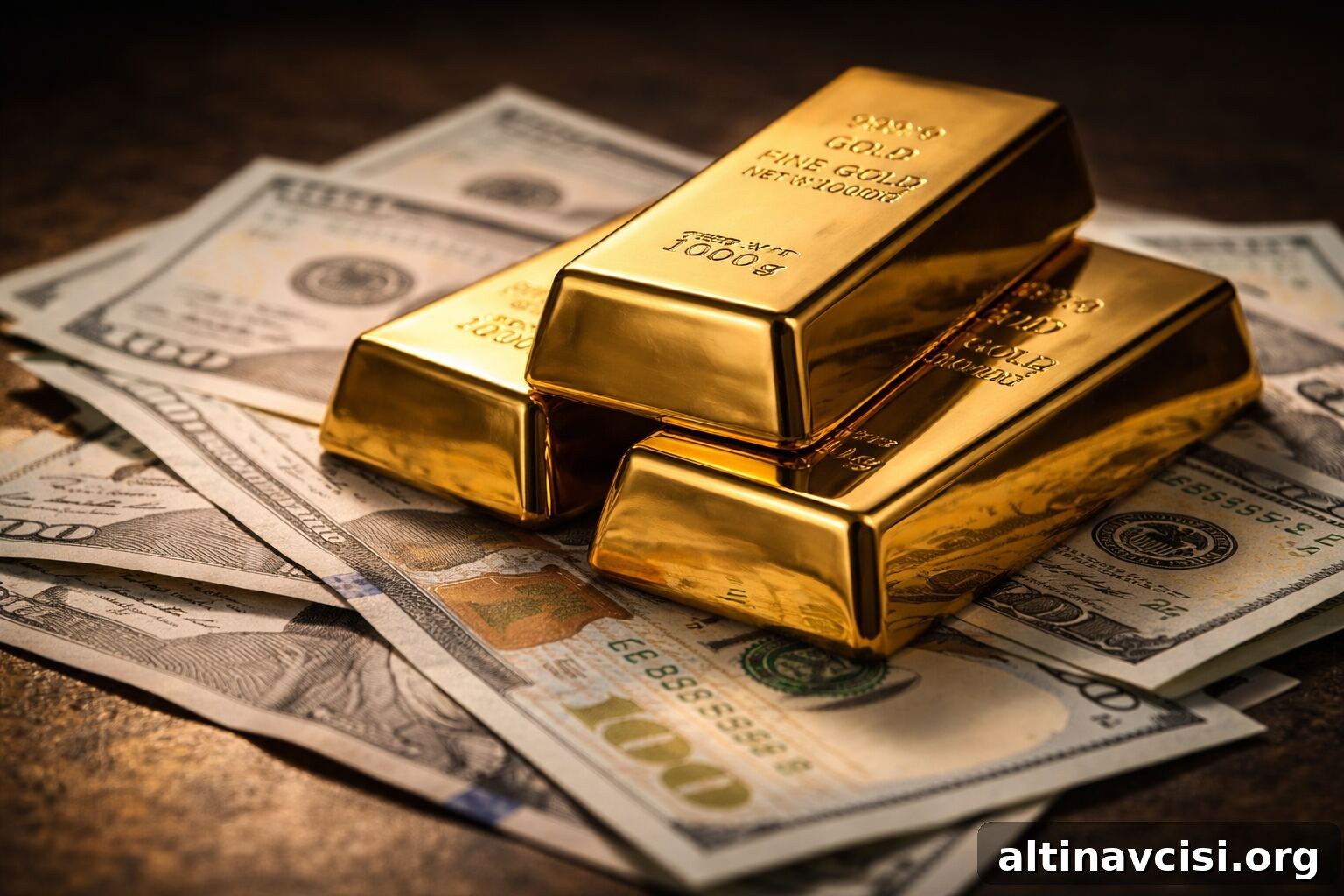
Central banks usually operate quietly, but when the Federal Reserve starts a new round of quantitative easing, global markets take notice.
QE influences the dollar, alters interest rates, and reinforces the long-term case for precious metals. It is one of the most consequential tools in modern finance — and yet many people would struggle to explain how it works.
Gold has climbed from roughly $255 an ounce in 2001 to nearly $4,750 today. That rise did not occur in isolation. To understand it, you need to understand QE.
What Is Quantitative Easing in Simple Terms?
Quantitative easing is an unconventional monetary policy used when conventional tools — mainly cutting short-term interest rates — are exhausted.
In practice, the Federal Reserve creates bank reserves electronically and uses them to buy financial assets, primarily U.S. Treasury securities and mortgage-backed securities, from banks and other institutions. That process increases liquidity in the banking system and raises the amount of reserves banks hold. By purchasing large quantities of bonds, the Fed bids up prices and pushes yields lower, which reduces long-term interest rates for mortgages, corporate borrowing, and other credit instruments.
The stated aim is to lower borrowing costs and support economic growth. A common side effect is a much-expanded money supply and a Fed balance sheet that grows by trillions of dollars.
How Did Quantitative Easing Start?
The Bank of Japan experimented with QE in the early 2000s to fight deflation, but the approach became global during the 2008 financial crisis. The U.S. Federal Reserve adopted QE at a scale unseen in modern central banking, marking a new era in monetary policy.
The U.S. Timeline:
The Rise of Quantitative Easing
How the Fed’s balance sheet grew from $800 billion to $8.9 trillion — and never fully returned to its previous scale.
COVID Peak
Today (~21% GDP)
Nov 2008 – Mar 2010
The Fed’s first large-scale asset purchase program, buying mortgage-backed securities, agency debt, and Treasuries at an unprecedented scale.
Source: Federal Reserve Bank of San Francisco
Nov 2010 – Jun 2011
Growth remained sluggish, so the Fed added another round of Treasury purchases to lower long-term rates and encourage investment.
Source: Federal Reserve Bank of New York
Sep 2012 – Oct 2014
An open-ended program with no fixed end date. It began with MBS purchases and later included Treasuries, continuing until officials judged the recovery secure.
Source: Federal Reserve Bank of St. Louis
Mar 2020 – 2022
The most aggressive round to date, featuring effectively unlimited asset purchases. Holdings peaked at $8.93 trillion in June 2022 — more than ten times the pre-crisis balance sheet.
Source: Federal Reserve
The Ratchet Effect
Before 2008, the Fed’s balance sheet was roughly $800 billion — ~6% of GDP. At its COVID-era peak it surpassed $8.9 trillion. Even after reductions, it remains around $6.7 trillion — ~21% of GDP.
Each crisis pushes the balance sheet higher; each recovery only partially brings it back down.
Even during the tightening that followed, the Fed returned to the market when pressures emerged. After the failures of Silicon Valley Bank and Signature Bank in March 2023, the Fed launched the Bank Term Funding Program (BTFP), an emergency facility allowing banks to borrow against depressed bond values at par. While not labeled QE, the program injected over $160 billion in liquidity at its peak and temporarily reversed the balance-sheet shrinkage. The pattern of expansion before and after crises was already reasserting itself before quantitative tightening officially ended.
That is the ratchet effect: crises raise the balance sheet, recoveries reduce it only partially, and the baseline climbs higher with each episode.
What Happened in 1971?The guide that explains the moment our financial system changed.
What Has Gold Done During Past QE Programs?
The record is clear but not uniform — context matters. QE often supports gold, but the timing and magnitude depend on investor perceptions about fragility and inflation.
QE1 (2008–2010): Gold rose from about $750 to $1,100 per ounce, a gain near 50% during severe stress.
Through QE2 (2010–2011): The rally continued: gold peaked near $1,900 in September 2011, more than doubling from pre-crisis levels amid zero rates, rising money supply, and persistent uncertainty.
QE3 (2012–2014): A counterexample: gold fell as confidence returned and inflation expectations remained muted. Markets interpreted QE3 as a sign the recovery was progressing, and safe-haven demand eased; gold slipped from above $1,700 to below $1,200.
COVID-era QE (2020–2022): Gold climbed from roughly $1,550 to over $2,000 as trillions of dollars in liquidity entered the system.
The current cycle (2022–present): Gold dipped during aggressive rate hikes, then resumed an upward trend amid sticky inflation, record central bank purchases, and geopolitical risk. As of early April 2026, it trades near $4,750 per ounce — up substantially year over year.
QE3 is particularly instructive: it demonstrates that QE does not guarantee short-term gains for gold. Investor sentiment — whether markets see fragility or recovery — often determines immediate price action. Over the long run, however, major balance-sheet expansions have coincided with secular gains in gold.
How Does Silver Respond to Quantitative Easing?
Silver benefits from the same macro drivers as gold — a weaker dollar, falling real rates, and higher inflation expectations — but its price tends to be more volatile.
That volatility stems from silver’s dual role as both a monetary and an industrial metal. Industrial demand reached record levels in recent years, driven by solar panels, electronics, electric vehicles, and AI infrastructure. That industrial exposure amplifies silver’s moves: it can fall more sharply in downturns and rally more strongly in recoveries.
After 2008, silver surged from below $9 to nearly $50 by April 2011. The current cycle has been dramatic as well: silver rose sharply as monetary expansion combined with a persistent supply deficit and rising green-energy demand.
One useful indicator is the gold-to-silver ratio. When that ratio is historically high, it can signal that silver is undervalued relative to gold; aggressive monetary easing has often compressed the ratio as silver rallies.
Why Does the Fed Keep Returning to QE?
This is a structural question. The Fed’s balance sheet has expanded from about $800 billion in 2005 to roughly $6.7 trillion today, a rise from about 6% of GDP to around 21%. Each attempt to shrink the balance sheet has met with market stresses that forced a pause or reversal.
Quantitative tightening after 2008 was interrupted in 2019 when funding markets strained. QT following the COVID expansion ended in late 2025 for similar reasons. Each crisis resets the baseline higher.
Longer-term forces reinforce this dynamic: rising federal interest payments, a growing national debt, and a Fed framework that operates with ample reserves. Those structural realities make the balance sheet likely to remain larger than pre-2008 norms and make QE-like operations more frequent.
Critics argue this is a core flaw of fiat systems: ongoing money creation to service rising debt. Historically, those holding hard assets have tended to benefit when monetary expansion accelerates.
Is the Fed Doing QE Right Now?
It depends on definitions. In December 2025 the Fed began “Reserve Management Purchases,” buying $40 billion per month in Treasury bills as a technical measure to maintain adequate reserves. Officials described it as maintenance rather than a policy shift or signal about interest rates.
Yet numbers matter: between early December 2025 and late February 2026 the Fed added nearly $90 billion in securities, and total assets have been rising. Whether labeled QE or reserve management, the balance sheet expansion and increased liquidity produce effects similar to past QE programs.
Your Gold Buying GuideMost investors overpay when they buy gold and again when they sell. This guide explains what to own and why.
What Should Precious Metals Investors Take Away?
QE is not a one-off event; it has become a structural feature of modern central banking. The Fed reaches for balance-sheet tools more frequently, and the exit ramp from those policies tends to shorten. Over time, the dollar’s purchasing power erodes slightly each cycle.
Gold and silver contrast with fiat money because they cannot be created by committee votes. Global mine supply grows only about 1–2% per year, while central-bank-driven liquidity can expand rapidly. That supply/monetary contrast underpins the long-term investment thesis for precious metals.
Current conditions — renewed balance-sheet expansion, elevated energy prices, and inflation above target — resemble the environment that preceded major precious-metals rallies in recent decades. That does not predict short-term price moves, but it helps explain why gold at $4,750 looks more like a waypoint than a definitive peak.
Stay On Top of Gold & Silver Prices
Get important market alerts sent straight to your inbox.
People Also Ask
What is quantitative easing in simple terms?
QE is when a central bank creates new money to purchase government bonds and other assets. The goal is to lower long-term interest rates and add liquidity to the financial system when cutting short-term rates is insufficient.
How does quantitative easing affect gold prices?
QE tends to weaken the dollar, reduce real interest rates, and highlight economic fragility — factors that support gold. During the first U.S. QE rounds (2008–2011), gold rose sharply as rates fell and liquidity expanded.
Is the Federal Reserve doing quantitative easing in 2026?
In December 2025 the Fed started monthly Reserve Management Purchases of Treasury bills. Officially this is a technical reserve-management step, not a policy shift. Still, the balance sheet has expanded and liquidity has increased, producing effects similar to past QE programs.
Why does gold go up when the Fed prints money?
Gold’s supply is limited: annual mine production adds only a small percentage to the total above-ground stock. When the Fed creates large quantities of dollars, each dollar’s purchasing power can decline. Gold cannot be created by fiat, so it often retains value as the money supply expands.
SOURCES
1. Federal Reserve Board of Governors — The Central Bank Balance-Sheet Trilemma
2. Federal Reserve Bank of San Francisco — Fed Asset Buying and Private Borrowing Rates
3. Federal Reserve Bank of St. Louis — Quantitative Easing: How Well Does This Tool Work?
4. Federal Reserve Bank of New York — Ten Years Later: Did QE Work?
5. Federal Reserve Board — Bank Term Funding Program
6. U.S. Department of the Treasury — Report from the Treasury Borrowing Advisory Committee
7. American Action Forum — Tracker: The Federal Reserve’s Balance Sheet Assets
8. World Gold Council — Gold Price Performance and Supply Data
9. The Silver Institute — Silver Industrial Demand and Market Deficits
10. Trading data and market reporting up to April 2026
This article is for informational purposes only and does not constitute financial or investment advice. Consult a qualified financial advisor before making investment decisions.
You May Also Like:
- Gold Coins vs. Gold Bars — Which is Better for Investors
- Is Gold Jewelry a Good Investment? What Most Buyers Get Wrong
- How to Spot Fake Gold and Silver
- Numismatic vs. Bullion Coins: Know What You’re Buying
- Silver in AI Infrastructure: The Hidden Metal Behind Every AI Model
- Gold Price Forecasts for 2026, Revisited After Q1
- Gold ETFs Are Booming. But Do You Actually Own Gold?