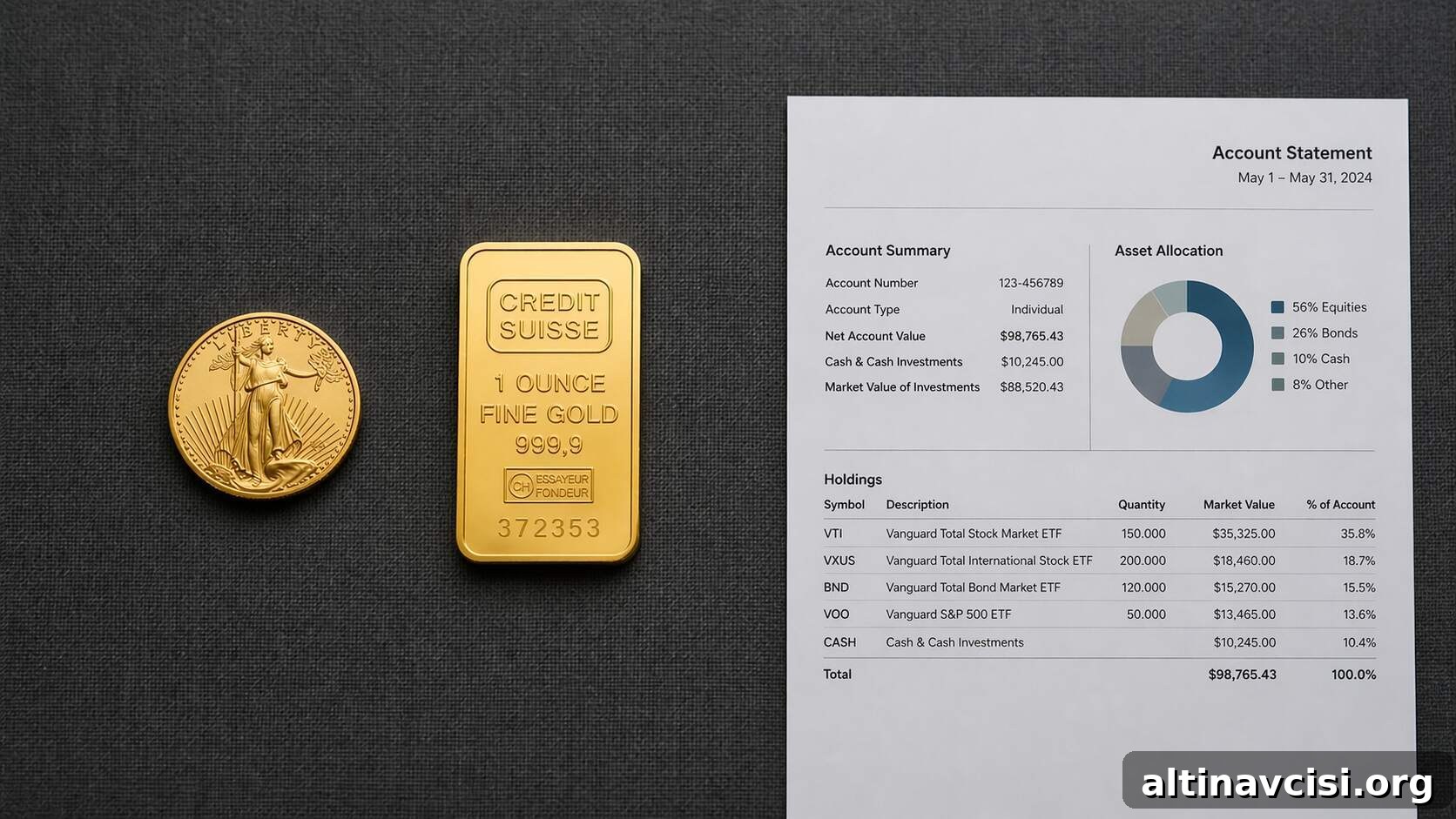
The best gold investment in 2026 depends on your priorities. Physical bars deliver the lowest ongoing costs and no counterparty risk, making them ideal for long-term capital preservation. Coins add liquidity and flexibility at a modest premium. A gold IRA places physical metal inside a tax-advantaged retirement account. ETFs provide immediate, storage-free market exposure but incur annual fees and don’t grant ownership of allocated metal. The most robust portfolios typically combine formats — a physical core for direct ownership and a gold IRA for tax efficiency.
Gold has risen roughly 41% over the past year, peaking at $5,589 per ounce in January 2026 and trading near $4,720 at the time of writing — about 15% below the peak but still more than 40% up year-over-year. Several major banks, revising forecasts on ongoing central bank purchases and investor demand, expect continued strong interest through the year. The case for owning gold is clear; the harder question is which format suits your goals, because that choice materially affects costs, liquidity, and tax treatment.
What is the best way to invest in gold in 2026?
Choosing the right gold investment in 2026 comes down to three considerations: your investment horizon, whether you require direct physical ownership, and how important tax-advantaged account structures are to you. No single format wins on every front. Physical bars and coins give you direct ownership with no counterparty exposure. ETFs offer frictionless access through a brokerage account. A gold IRA places physical metal in a retirement wrapper for tax purposes. Most investors make their best — or worst — decisions by overlooking the structural differences and the long-term cost implications of each option.
Your Gold Buying Guide Most investors overpay when they buy gold and again when they sell. This guide explains what to own and why.
Are gold bars the cheapest way to buy gold?
Gold bars are generally the most cost-efficient way to own physical gold. Bars from reputable refiners typically carry lower premiums than other formats, often in the 1–3% range over spot. You pay a one-time premium, hold the metal outright, and avoid annual fees that erode returns.
The trade-off is liquidity and logistics. Even a 1-oz bar requires secure storage, insurance, and planning when you sell. Larger bars (10 oz, kilo) reduce premiums further but are harder to divide and sell in small amounts. Bars suit buy-and-hold investors seeking capital efficiency. They are also eligible for gold IRAs if they meet the IRS minimum fineness standard, which adds practical versatility.
Are gold coins better than gold bars for most investors?
Coins cost more upfront, but that extra cost buys flexibility. Government-minted bullion coins—such as American Gold Eagles, Canadian Maple Leafs, and South African Krugerrands—typically carry higher premiums, reflecting their recognisability and ease of resale. Dealers worldwide instantly recognise common coin types, which speeds and simplifies selling.
Fractional coins (1/4 oz, 1/10 oz) let you dollar-cost average in smaller increments, though premiums rise as size falls. The American Gold Eagle has a unique IRS exception that allows it in IRAs despite a lower fineness, making it one of the most versatile physical gold options. For many individual investors, a mix of 1-oz coins across a few mint varieties is a sensible starting point.
Gold ETFs: low friction, but what’s the real long-term cost?
ETFs provide the simplest and fastest way to add gold exposure. You can buy shares in seconds through any brokerage, and no physical storage is required. Major physically-backed funds hold allocated bullion in institutional vaults and charge modest annual fees. For many investors, those fees are more than a convenience charge — they accumulate over time.
Small expense ratios compound into meaningful costs over decades. A fund with a 0.40% annual fee, for example, can cost roughly 4% of your position over ten years through gradual dilution. Over longer horizons, the cumulative drag can exceed the one-time premium paid for physical coins. Additionally, some funds are taxed like collectibles, which can reduce the tax advantage relative to holding physical metal.
ETFs suit tactical allocations, quick rebalancing, and accounts where storage would be impractical. For long-term wealth preservation, carefully compare the fee drag and tax treatment against the benefits of owning metal outright.
How does a gold IRA work — and is it worth the complexity?
A gold IRA is a self-directed retirement account that holds IRS-approved physical gold rather than conventional securities. It wraps the protective features of physical ownership in the tax structure of a Traditional or Roth IRA.
Rules are specific: most eligible gold must meet a minimum purity standard and be held at an approved third-party depository; home storage is prohibited. Annual contribution caps and custodian, storage, and setup fees apply. Those fees make small gold IRAs less efficient, but for larger accounts the tax-deferred or tax-free compounding can justify the costs. Traditional gold IRAs require required minimum distributions (RMDs) in retirement, while Roth gold IRAs do not — an important distinction for estate planning and tax strategy.
Which gold investment format is right for you?
Your ideal format depends on your priorities:
You want maximum purchasing power protection with no ongoing fees: Choose physical bars or coins stored securely. The one-time premium is your only acquisition cost — no counterparty and no annual drag.
You want gold inside a retirement account with tax benefits: Consider a gold IRA, preferably a Roth structure if you qualify. Custodial and storage fees are the cost of the tax wrapper; for long-term holdings, the tax advantages can outweigh those expenses.
You want gold exposure with zero storage friction inside a brokerage: ETFs deliver convenience. For long-term holders, prefer funds with the lowest expense ratio; active traders may prioritise deeper liquidity.
You want flexibility to start small and scale: Coins offer divisibility and wide recognisability. 1-oz government-minted coins are the most liquid and practical physical option for most investors.
Many investors blend formats: retain a physical core for direct ownership, use a gold IRA for tax-advantaged compounding, and add ETFs for tactical exposure or ease of rebalancing. Match format to timeline, liquidity needs, and how much of your gold you want held entirely outside the financial system.
Stay On Top of Gold & Silver Prices
Get important market alerts sent straight to your inbox.
People also ask
Is gold a good investment in 2026?
Gold has posted strong gains over the past year, supported by central bank buying, persistent inflation, and geopolitical uncertainty. Analysts have revised price targets upward amid sustained demand. For long-term investors, gold remains a meaningful portfolio diversifier and store of value.
What is the safest way to invest in gold?
Physical gold—bars or coins you own outright and store securely—carries the least counterparty risk. ETFs and IRAs add institutional layers that introduce additional counterparties and operational requirements.
Are gold coins better than gold bars?
Coins have higher premiums but greater liquidity and divisibility. A 1-oz government coin is easy to sell and widely recognised. Bars offer lower per-ounce cost but are less divisible, which can hinder small sales.
Can I hold physical gold in an IRA?
Yes. A self-directed gold IRA can hold IRS-approved bars and coins through an approved custodian and depository. Home storage for IRA gold is not permitted and may trigger taxable distributions.
What is the minimum investment for a gold IRA?
Custodial minimums vary; many custodians expect initial balances in the low five-figure range to make fees cost-effective. The IRS does not set a minimum account size, only annual contribution limits.
Format first: the gold decision that actually determines your returns
Owning gold in 2026 is straightforward; deciding how to own it is the pivotal choice. The format you select drives the portion of gold’s gains you retain after fees, taxes, and selling friction. Physical ownership removes annual drag. A gold IRA preserves tax advantages. ETFs offer convenience but introduce ongoing costs. Start by matching format to your timeline, liquidity needs, and how much of your position you want insulated from the financial system.
SOURCES
1. Trading and price performance data, recent analyst forecasts, and institutional demand reports.
2. Market references for premiums, fund expense ratios, and tax considerations.
3. IRS guidance on retirement account rules and contribution limits.
Disclaimer: This article is informational and educational only. It is not investment advice. Consult a qualified financial adviser before making investment decisions.
You may also like:
- What Happens to Gold When the Dollar Crashes?
- Gold Fell During a War. So Is It Really a Safe Haven?
- Is Gold at Fair Value? What Three Models Say — and Where They Disagree
- Silver Price Predictions for the Next 5 Years: Data-Backed Scenarios
- Tariff Refunds, Dollar Weakness, the AI Bust: Gold’s Case
- How to Buy Gold for Beginners: Step-by-Step Guide (2026)
- Silver Price Forecast 2026-2027: The bull case and bear case laid out
- How to Buy Silver Bars: The Investor’s Guide
- Why Silver Falls While Gold Rises: What It Means for You