
Gold climbed to its highest level in more than a month, trading at $2,719.49 per ounce, as a range of economic signals suggested the possibility of looser monetary policy ahead.
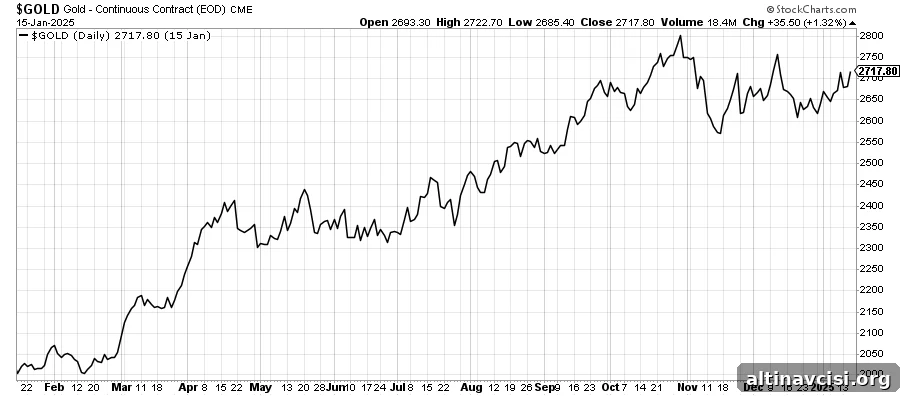
The recent rally reflects several contributing factors. U.S. economic data came in softer than many had expected: weekly jobless claims rose to 217,000 compared with the projected 210,000, and core consumer prices in December increased by just 0.2% after four straight months of 0.3% gains. These readings reduced pressure on policymakers to tighten further and bolstered hopes for rate cuts later in the year.
Market pricing shifted quickly in response. Traders now expect roughly 37 basis points of Federal Reserve rate reductions by year-end, up from about 31 basis points before the latest inflation report. Such a change in expectations tends to lift non-yielding assets like gold, which often benefit when real yields fall.
Declining Treasury yields have reinforced gold’s attraction as an alternative store of value. When bond returns are lower, investors often turn to precious metals to preserve purchasing power and hedge against uncertainty.
Geopolitical tensions have also supported the price move. Ongoing conflict in Gaza and recent airstrikes—reported to have caused significant casualties despite ceasefire announcements—have heightened risk perceptions, prompting some investors to seek safe-haven assets. Gold frequently gains during periods of international instability, adding further momentum to the rally.
Taken together, softer U.S. data, shifting Fed expectations, lower Treasury yields and geopolitical risk created a favorable backdrop for gold’s advance. Market participants will watch incoming economic releases and central bank commentary closely for signals about the timing and scale of any future policy easing, which will likely continue to influence gold’s path in coming weeks.