
Daily News Nuggets | Today’s top stories for gold and silver investors
March 2nd, 2026 | Brandon Sauerwein, Editor
Safe-Haven Demand Returns as Middle East War Fears Grow
Gold jumped on renewed Middle East tensions, trading near $5,390/oz (+2.10%) as military action involving the U.S., Israel and Iran rattled global markets. Silver rallied as well, rising above $95/oz (+1.5%), underscoring broad strength across precious metals.
The strikes and subsequent reprisals increased the risk of regional escalation and potential supply disruptions. Investors shifted toward tangible assets that carry no counterparty risk, following a familiar risk-off pattern.
This reaction fits historical behavior: military conflicts layered on an uncertain macro backdrop tend to reinforce gold’s role as a safe-haven. That backdrop already includes persistent inflationary pressures, elevated sovereign debt and fragile confidence in policy direction.
Structural demand remains intact. Central banks continue to add to reserves and markets still expect eventual monetary easing. Those forces provide a durable foundation for prices even as volatility rises.

Stocks Tumble as War Risk Hits Equities
U.S. stock futures fell sharply ahead of Monday’s open, signaling broad risk aversion. Sectors sensitive to growth and consumer activity declined, while defense and energy stocks outperformed.
The selloff reflects a swift repricing of geopolitical risk. Weekend military action prompted investors to reduce exposure to risk assets and seek shelter in safer, tangible investments. Airlines, travel-related stocks and discretionary names led losses, while more defensive areas held up better.
Markets had been trading near record highs with low volatility and compressed risk premiums, leaving limited room for sudden shocks. The move suggests investors are less confident that regional conflicts will remain contained.
An associated rise in oil prices added pressure to equities and raised the prospect of renewed inflationary headwinds, which could have implications for monetary policy moving forward.
War-Driven Oil Surge Complicates the Fed’s Path
Crude oil climbed as markets priced in risks to supply after strikes and counterstrikes in the region. Concerns centered on possible disruptions to shipping through the Strait of Hormuz, a chokepoint for a meaningful share of global oil flows.
Both Brent and U.S. benchmark crude registered sharp gains, reflecting a renewed geopolitical risk premium that may persist if tensions continue. Because oil is a core input for the global economy, sustained price increases tend to push transportation costs and producer margins higher and can filter through to consumer prices over time.
That dynamic places upward pressure on headline inflation at an inopportune moment. Central banks had been moving toward eventual policy easing in some markets, but a sustained energy shock could delay rate cuts even if growth softens.
For the Federal Reserve, higher energy costs complicate the outlook: inflation expectations are sensitive to energy shocks, and policymakers must weigh those risks against domestic growth conditions and labor market resilience.
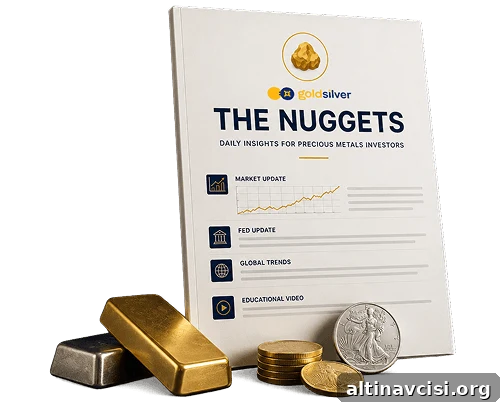
The Edge Every Investor Needs
Smarter precious metals investing starts here. The Nuggets Newsletter delivers essential market insights, Fed updates, global trends, educational videos and timely analysis.
Artificial Intelligence Is Forcing the Fed to Rethink Monetary Policy
The Federal Reserve has accelerated work to evaluate how artificial intelligence could reshape the U.S. economy. Officials are studying AI’s potential effects on productivity, wage dynamics and long-term inflation trends.
If AI drives substantial productivity gains, the economy could expand faster without reigniting inflation—a favorable outcome for policymakers. Yet uncertainty remains: corporate capital spending on AI infrastructure is rising, tech valuations are elevated, and the longer-term labor market impact is still unclear.
The Fed’s established models, grounded in decades of economic history, may not fully capture the pace and scale of technological change. Timing is a key challenge: measurable productivity improvements may take years to appear, while financial markets are already pricing in transformation today.
That mismatch creates risk. If AI-driven optimism outpaces real-world gains, asset prices could correct sharply. Conversely, if productivity benefits arrive sooner than expected, policy assumptions and guidance may need rapid revision.
Baby Boomers Are Still Driving the U.S. Economy
Despite recession fears, Baby Boomers remain an important stabilizing force in the U.S. economy. Americans aged 60 and older hold a large share of national wealth and continue to spend on travel, housing, healthcare and lifestyle services, supporting GDP even as higher borrowing costs strain younger households.
Many Boomers are working longer—by choice or necessity—helping to alleviate labor shortages and sustain consumer demand. That ongoing participation in the labor force and persistent spending patterns have bolstered economic resilience.
Economists warn, however, that this demographic cushion may diminish over time. As Boomers move further into retirement, priorities typically shift toward capital preservation and steady income rather than risk-taking and high-growth investments.
For markets, that transition matters: an older, wealth-heavy population often favors lower-volatility assets and tangible stores of value. Over time, demographic trends could lift structural demand for defensive allocations—including precious metals—as investors prioritize stability and purchasing-power protection.
Stay On Top of Gold & Silver Prices
Get important market alerts sent straight to your inbox.
You May Also Like
- Gold Above $5,200, Silver Above $90 — as Inflation Refuses to Fade
- Gold Price Rally Nears Record Streak as Tariffs Return
- Metals Rise, Confidence Cracks, and the Affordability Gap Widens
- Gold Up 21%, Silver 25% YTD as AI and Inflation Risks Build
- Gold Hits $5,000. Is This the Next Leg Higher?