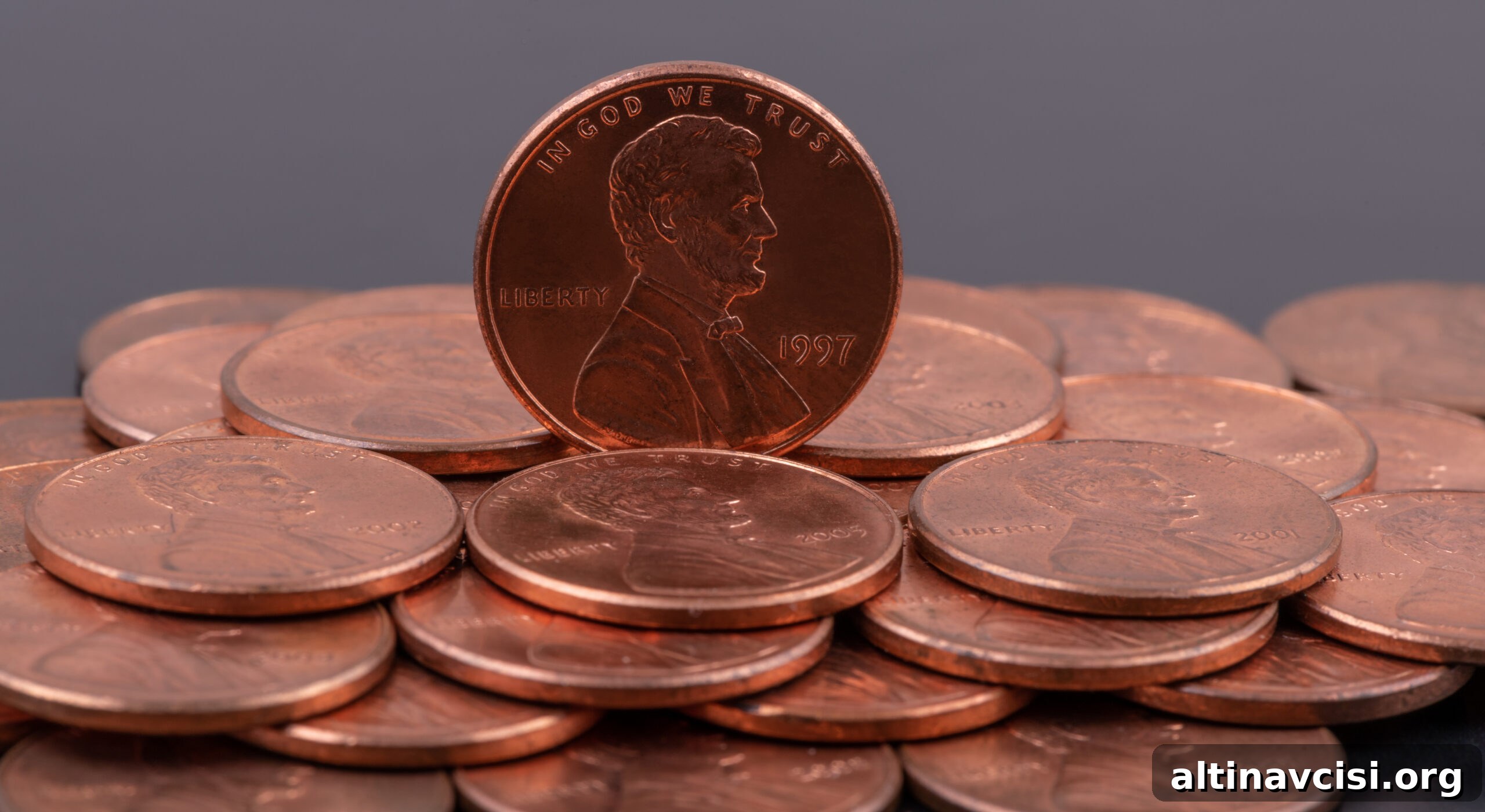
The U.S. Mint is actively reviewing whether to stop producing the penny, noting that the cost of making each coin has risen well above its face value. With production expenses exceeding three cents per coin, the mint’s current penny program operates at a net loss that is ultimately borne by taxpayers.
Rising material and manufacturing costs have driven the decision to re-evaluate the role of the one-cent piece. Copper and zinc price volatility, combined with labor and facility costs, mean the mint spends more to produce a penny than the coin can be used to purchase. This creates an ongoing imbalance between the coin’s nominal value and the real expense of its circulation.
Public and political reaction to the proposal is mixed. Some opponents warn that eliminating the penny could trigger subtle rounding effects at the retail level, potentially nudging prices upward in small increments when cash transactions are involved. They argue that even minimal rounding, applied repeatedly across everyday purchases, could add up for consumers and disproportionately affect those who rely on cash.
Supporters of discontinuing the penny point to international precedents for guidance. Countries such as Canada and Australia removed their lowest-denomination coins after careful studies and rounds of public consultation. In those cases, governments implemented rounding rules for cash transactions while maintaining exact pricing for electronic payments. The transition in those countries has generally proceeded without widespread disruption, and studies suggest no measurable long-term inflationary effect resulting directly from rounding practices.
Aside from production costs, the penny debate raises broader questions about how societies manage physical currency in an increasingly digital economy. The decline in the penny’s utility is tied to shifts in payment behavior: consumers and businesses increasingly prefer credit and debit cards, mobile payment apps, and contactless transactions, which render very small denominations less relevant. As more transactions become electronic, the administrative and logistical burden of producing and handling pennies becomes harder to justify.
There are also practical considerations for businesses and governments. Cash-handling and reconciliation processes can be simplified without low-denomination coins, reducing time spent on counting and transporting small-change inventory. Retailers and banks might need to adjust cash-register systems and update customer-facing rounding policies, but these changes are typically procedural rather than structural, and can be phased in with public guidance to minimize confusion.
Ethical and equity concerns figure in the conversation as well. Any move to eliminate the penny would need to consider how rounding rules are implemented so that low-income and cash-reliant populations are not unfairly affected. Policymakers can mitigate such risks by mandating rounding methods that average out over time and by protecting exact pricing for non-cash payments. Public education campaigns and a transition period could help ensure everyone understands how the change affects day-to-day purchases.
Fiscal implications extend beyond the immediate savings on coin production. Eliminating the penny could reduce the mint’s losses and lower the distribution and handling costs for federal and private entities. However, lawmakers must balance those savings against any potential administrative costs of changing currency systems and the political weight of altering a familiar national symbol. The penny carries cultural and historical significance for many Americans, which factors into public sentiment and the political calculus.
Regardless of the outcome, the discussion about the penny is part of a larger conversation about modernizing the nation’s monetary infrastructure. Policymakers must weigh empirical evidence, international experiences, fairness considerations, and public opinion. If the decision moves forward, officials will need to design transparent rounding rules, provide clear guidance to businesses and consumers, and monitor the effects closely to ensure the transition is smooth and equitable.
As the U.S. Mint continues its evaluation, stakeholders from consumers to retailers to lawmakers will contribute to the debate. The eventual decision will reflect not only costs and convenience but also broader values about currency, equity, and how society adapts to a predominantly digital commerce environment.