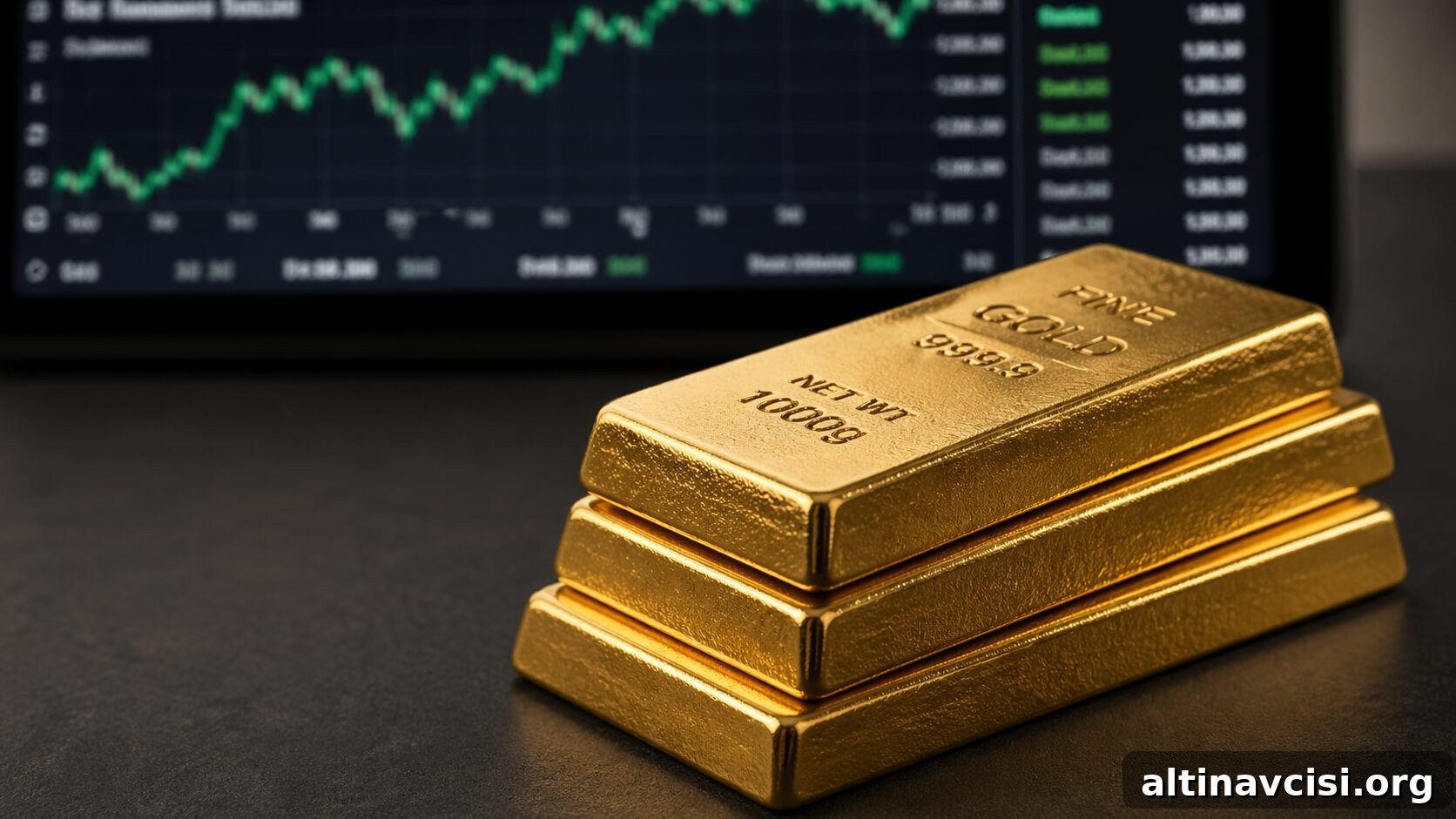
Gold and silver market update — April 21, 2026
Key Takeaways
- Gold is trading at $4,680.96 as of April 22, 2026, down roughly 10–12% since the Iran war began on February 28. The decline reflects an unusual dynamic: energy-driven inflation is increasing pressure on central banks to tighten, which weighs on non-yielding assets such as gold.
- The US-Iran ceasefire expires today. President Trump has said he will not extend it without a deal. Iran has not confirmed renewed talks. Two distinct price scenarios for gold remain possible depending on how diplomacy and conflict unfold.
- Kevin Warsh’s Fed nomination is stalled in the Senate Banking Committee. Senator Thom Tillis is blocking it until the Department of Justice drops its investigation into Chair Jerome Powell — a standoff with no clear resolution before Powell’s term expires on May 15.
- Silver is trading near $74–$79 per ounce, down 15%+ since the war began. Silver’s larger industrial demand base makes it more exposed to the energy shock and therefore more sensitive to any genuine de-escalation.
- Major banks still project higher year-end targets. JPMorgan targeted $6,300 and Deutsche Bank $6,000 for gold before the recent Fed leadership uncertainty emerged; those structural forecasts have not been broadly revised.
The US-Iran ceasefire expires today. The next Fed chair still can’t get confirmed. And gold — down roughly 10–12% since the war began — is signaling something important.
That signal is not panic and it is not a structural breakdown. It reflects a market mechanism that is often misunderstood: oil-driven inflation increases the odds of tighter monetary policy, raising real yields and thus the opportunity cost of holding non-yielding assets like gold.
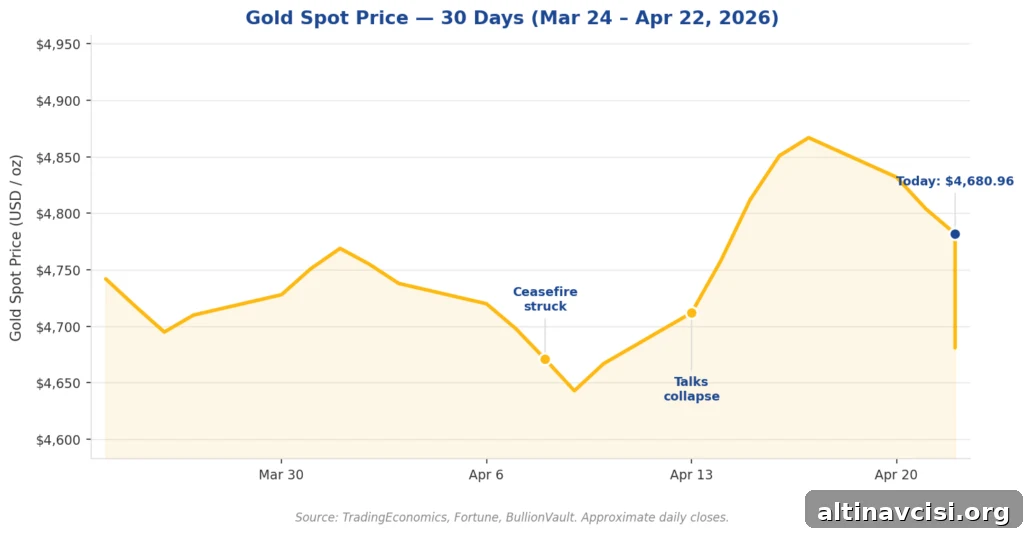
As of April 22, 2026, gold is trading at $4,680.96, down from recent session ranges of $4,750–$4,900 and well below its all-time high of $5,595 reached on January 29. Brent crude has moved back toward $95–$97 a barrel and the 10-year Treasury yield is near 4.25%.
Why Is Gold Falling During a Middle East War?
Investors are asking why a geopolitical shock that typically boosts safe-haven assets has coincided with a significant gold selloff. The core explanation is the inflation-tightening dynamic. When energy prices spike, inflation expectations rise. Central banks respond to rising inflation by tightening policy, which pushes up real yields. Higher real yields increase the cost of holding a non-yielding asset such as gold, creating headwinds for prices.
That mechanism explains why, after an initial surge when the US and Israel launched strikes on Iran on February 28, gold reversed. Oil spiked, inflation expectations rose, the dollar strengthened, and yields moved higher. Traders prioritized a stronger dollar and higher yields over the geopolitical risk trade, producing a reflexive selloff in non-yielding assets.
Gold then found a range for several weeks, which is important: it shows the market digesting competing pressures rather than breaking down decisively.
The Edge Every Investor Needs
Smarter precious metals investing starts here. The Nuggets Newsletter brings essential market insights, Fed updates, global trends, educational videos, and more.
What Does the Ceasefire Expiration Mean for Gold?
The ceasefire agreed on April 8 briefly pushed gold toward $4,850–$4,867 while oil eased under $100 a barrel. But events reversed quickly: tensions returned, the Strait of Hormuz saw disruptions, and incidents at sea raised the risk premium for energy. Despite those developments, gold maintained a trading range for weeks until renewed pressure appeared as the ceasefire expired.
Two scenarios are most relevant:
If talks resume and the ceasefire holds: oil prices would likely ease, near-term inflation expectations would decline, and a path back toward $5,000 becomes more plausible. The recent pullback could, in hindsight, look like a buying opportunity.
If hostilities resume and the Strait stays closed: oil could spike, inflation fears would intensify, and the Fed would face upward pressure to stay restrictive. That combination creates a challenging environment for gold in the near term: higher inflation that simultaneously increases tightening pressure raises real yields, which are a headwind for prices. Over the long run, persistent geopolitical risk and inflation support the case for physical gold, even if the near-term price struggles.
Macro data already complicate the picture. The IMF’s April 2026 World Economic Outlook projects global headline inflation around 4.4% and growth near 3.1% for 2026 — outcomes tied to the energy shock. With the Fed funds rate at 3.50–3.75% and FedWatch implying little chance of cuts this year, markets have priced a tighter-for-longer Fed. New disruptions in the Middle East therefore have different implications now than they did in early March.
What Did Kevin Warsh Say at His Fed Hearing?
At his April 21 Senate Banking Committee hearing, Kevin Warsh, President Trump’s nominee to replace Jerome Powell, emphasized independence and declined to pre-commit to lower rates. He suggested a new framework for tackling persistent inflation but provided few specifics and said the Fed must “stay in its lane.”
More materially for markets, the nomination process itself is stalled. Senator Thom Tillis is withholding committee approval until the Department of Justice drops its inquiry into Chair Powell related to the Fed headquarters renovation. The DOJ is appealing a judge’s decision that found little evidence of wrongdoing, and the dispute adds political and institutional uncertainty ahead of May 15, when Powell’s term ends.
Why Is the Fed Chair Confirmation Fight Bullish for Gold?
When Warsh’s nomination was announced in January, markets reacted to the perceived hawkish tilt and gold fell sharply on that day. Since then some of the decline reversed, but the present uncertainty — no confirmed successor, an investigation into the sitting chair, and no clear path to stimulus — highlights structural risks that support demand for physical gold. Gold’s appeal in this environment stems partly from its lack of counterparty risk and independence from political processes that can destabilize confidence in fiat arrangements.
What Physical Gold Offers That the Fed Cannot
Physical gold carries no counterparty obligations, no balance-sheet issues tied to policy decisions, and is not subject to a confirmation process. That permanence helps explain why major institutions have maintained elevated year-end targets despite near-term volatility: JPMorgan and Deutsche Bank published targets well above current prices earlier in the year and have not formally walked them back.
What Is the Gold-to-Silver Ratio Telling Us?
Silver peaked at a nominal high of $121.67 per ounce on January 29, 2026, the same day gold peaked. Since the conflict began, silver has fallen more than 15%, trading near $76–$79 per ounce as of April 21. The gold-to-silver ratio sits around 63, reflecting gold at $4,681 and silver near $74. For perspective, the ratio was below 50 at silver’s January peak, and it has typically traded between 70 and 100 over much of the past decade. Historically, ratios above 70 have often signaled relative undervaluation in silver versus gold and preceded periods of silver outperformance.
Why Is Silver Underperforming Gold Right Now?
Silver’s underperformance is largely tied to its industrial demand, which accounts for roughly 60% of annual consumption. Higher oil and energy costs increase manufacturing expenses and weigh on industrial demand, hurting silver more than gold. That means silver is likely to rebound more sharply than gold if a genuine ceasefire reduces energy prices and restores industrial activity.
The Structural Case Hasn’t Changed
While gold at $4,681 is about 16% below its January high, the longer-term drivers remain intact: persistent inflation pressures, an unresolved Fed leadership transition, a large central-bank balance sheet, and a dollar that has eroded purchasing power over many decades. The war has made those forces more visible and immediate, but it has not removed the structural factors that support higher gold prices over time. Short-term outcomes hinge on the ceasefire and oil prices; longer-term forecasts from major institutions still point to substantially higher levels by year-end.
SOURCES
1. TradingEconomics — Gold Spot Price
2. Fortune — Current Price of Gold, April 20, 2026
3. CNBC — Gold Nears $5,600 as Safe-Haven Rush Intensifies, Silver Blazes Past $120
4. Fortune — Current Price of Silver, April 21, 2026
5. Silver Institute — Global Silver Investment to Remain Strong in 2026
6. CNBC — Gold on Track for Worst Month Since 2008 as Iran War Drags On
7. CNBC — Gold Falls as Markets Assess Prospects of Iran Ceasefire
8. IMF — World Economic Outlook, April 2026
9. CME Group — FedWatch Tool
10. CNBC — Kevin Warsh Fed Confirmation Hearing: Live Updates
11. NPR — Takeaways from Warsh’s Hearing
12. Federal Reserve — Jerome H. Powell Sworn In for Second Term
13. J.P. Morgan Private Bank — Is It a Golden Era for Gold?
14. Reuters via Mining Weekly — Deutsche Bank Sees Gold Reaching $6,000 Per Ounce in 2026
15. Wikipedia — 2026 Iran War
16. Al Jazeera — US and Iran Exchange Threats as Fragile Ceasefire Set to Expire
By the GoldSilver Editorial Team — helping investors understand sound money since 2005. This article is for informational purposes only and does not constitute financial, investment, or tax advice. Always consult a qualified financial advisor before making investment decisions.
You May Also Like:
- Tariff Refunds, Dollar Weakness, the AI Bust: Gold’s Case
- The Real Reason Gold Is Down During an Oil War
- What the Warsh Hearing Means for Gold Prices
- IMF Says Treasuries Aren’t Safe Anymore. Gold Noticed First.
- Gold Price After Ceasefire Violation: The Floor Has Moved
- Oil Crashed 11%. Gold Went Up. That Tells You Everything.
- $1 Trillion in Debt Interest Is Why Gold Keeps Climbing
- 5 Signals That Say Gold’s Bull Case Just Got Stronger