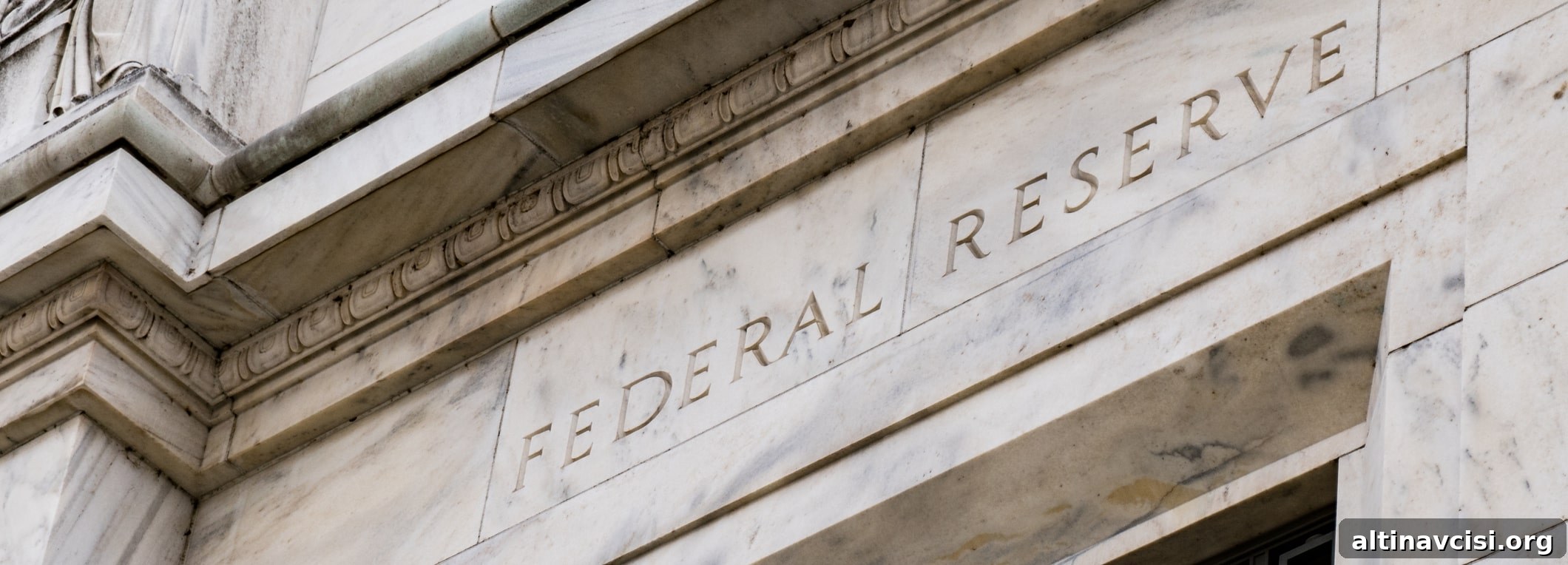
President Trump’s newly announced tariffs—described as the steepest in more than a century—have placed the Federal Reserve in a delicate position. By raising import costs, the tariffs risk pushing consumer prices higher while simultaneously slowing growth, a combination that could force policymakers to balance inflation control against supporting the economy. Some economists warn that these pressures increase the likelihood of a recession.
Market participants on Wall Street are pricing in an expectation that the Fed will respond to a slowing economy by reducing interest rates up to four times this year, with traders anticipating the first cut as early as June. That view assumes that growth concerns will outweigh inflationary ones. However, forecasts among economists are far from uniform. For example, Morgan Stanley has suggested there may be no rate cuts this year, citing persistent inflation risks, while other analysts outline a range of scenarios depending on how prices, employment, and growth evolve.
Federal Reserve officials are signaling caution. Vice Chair Philip Jefferson and other leaders say they are “in no hurry” to alter policy and will monitor the effects of Trump’s trade actions alongside immigration and fiscal policies. Their current guidance is conditional: if the labor market remains robust and inflation does not ease, the Fed is likely to maintain the current federal funds rate target of 4.25%–4.50%. Conversely, if job growth softens or inflation meaningfully declines, policymakers stand ready to adjust rates to support economic stability.
In short, the tariffs have complicated the Fed’s outlook by introducing opposing forces—upward pressure on prices from higher import costs and potential downward pressure on growth from reduced trade and investment. How the Fed ultimately acts will depend on incoming data on inflation, employment, and economic activity, as well as how persistent the tariffs’ effects prove to be. For now, officials emphasize a data-driven approach and a willingness to adapt policy as conditions change.