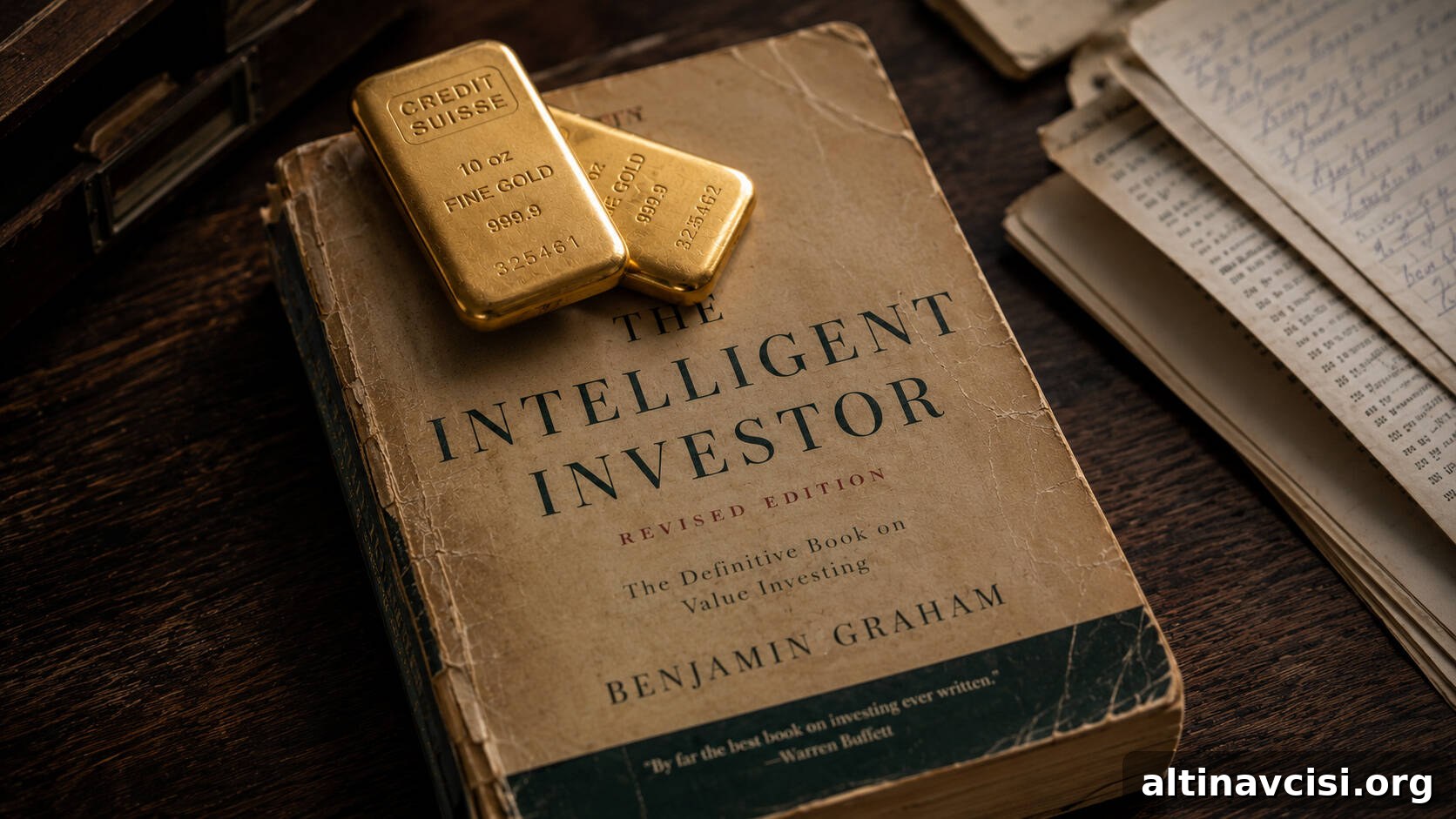
Warren Buffett has spent six decades avoiding gold. Yet his investor principles — patience, conviction, independent thinking and the discipline to say no — align closely with the case for owning physical gold and silver. His preference for productive businesses is personal; his rules for thinking as an investor are universal.
Gold set 53 new all-time highs in 2025, topping $4,000/oz for the first time and reaching a record $5,589.38/oz on January 28, 2026. Invoking Buffett alongside that performance may seem counterintuitive given his famous comment that gold “doesn’t produce anything.” Still, it helps to separate his timeless investing rules from his chosen asset class.
Buffett’s rules for disciplined investing, developed over 60+ years, apply beyond equities. For investors building a position in physical gold and silver, those rules remain highly relevant.
Rule 1 — What Does It Mean to Stay in Your Circle of Competence?
Buffett’s first rule is simple: invest only in what you understand. He focuses on businesses he can explain and puts everything else in a “too hard” pile. That boundary is a strength, not a limitation.
For precious metals investors, the relevant competence is monetary history. Gold has functioned as money or a monetary anchor for roughly 5,000 years, surviving empires and multiple currency crises. Silver has served as a medium of exchange across major civilizations. Knowing why these metals retain value — finite supply, absence of counterparty risk, global recognition — defines a clear, defensible area of expertise.
You don’t need to master every commodity market or macro variable. You need to grasp what money is, how it can be debased, and what has historically protected purchasing power. That focused knowledge is sufficient.
Your Gold Buying Guide Most investors overpay when they buy gold. Then overpay again when they sell. This guide shows you exactly what to own — and why.
Rule 2 — Why Does Focused Thinking Beat Constant Reaction?
Buffett spends much of his time reading and thinking rather than reacting to short-term noise. He built his success on deep analysis, not rapid trading. As he put it, “The stock market is a device for transferring money from the impatient to the patient.”
Gold and silver reward the patient investor. These metals favour those who understand long-cycle fundamentals and hold through volatility, not those who chase hourly price moves. Central banks bought 863 tonnes of gold in 2025 — nearly double the 2010–2021 annual average — a decision rooted in long-term reserve strategy, not short-term trading.
Retail investors who do the same work, then hold with discipline, often reach similar outcomes: better returns and less emotional turmoil along the way.
Rule 3 — What Is the “Inner Scorecard” and Why Does It Matter?
The “Inner Scorecard” is Buffett’s phrase for judging yourself by your own standards rather than seeking market approval. Investors who act on genuine conviction tend to outperform those waiting for consensus, because crowd sentiment often arrives after prices have already moved.
Precious metals investors face this test frequently. When mainstream media labels gold “dead money,” a grounded thesis removes the need for external validation. Conviction arises from analysis: finite supply, no counterparty risk, and a hedge against persistent deficit spending and monetary expansion.
Gold rose roughly 65% in 2025, its sharpest annual gain since 1979. Those who captured that performance trusted their research long before the broader market followed.
Rule 4 — How Does Saying No Protect Your Capital?
Buffett has observed that highly successful people say no to almost everything. In investing, saying no translates to capital discipline: avoiding fads, overleveraged plays and speculative mania preserves capital for high-conviction opportunities.
Owning physical gold and silver embodies that discipline. These assets require no active management, avoid earnings surprises and remove the need to trust third-party management decisions. Holding metal through speculative bubbles without capitulating is among the most demanding but potentially rewarding trades.
Rule 5 — Can Emotional Discipline Actually Change Investment Outcomes?
Buffett credits emotional temperament—controlling impulses that ensnare others—as a major component of his success. Markets provoke fear, greed and restlessness; the ability to endure discomfort without acting is a competitive advantage.
Gold and silver naturally reinforce that temperament. They carry no corporate headline risk and reward steady, patient ownership. Forecasts such as J.P. Morgan’s projection of gold averaging about $5,055/oz by Q4 2026 matter less to an investor who bought at $2,000/oz and understands why they hold metal: structural drivers like central bank buying and demand for dollar diversification remain intact regardless of short-term forecasts.
Rule 6 — Why Does the Quality of Your Information Sources Matter So Much?
Buffett surrounds himself with people who improve his thinking rather than simply confirming it. Charlie Munger reshaped his framework, and Buffett credits that influence. What you read and who you listen to shape how well you think.
In the precious metals space, quality sources separate useful analysis from promotional noise. The right research helps you understand why you own metal; the wrong sources push you to buy more without improving your thesis.
Buffett’s 1997–1998 silver purchases illustrate the point: Berkshire Hathaway accumulated 129.7 million ounces because an independent, data-driven analysis identified a structural supply shortage. That position generated a substantial pre-tax gain that year because the decision was grounded in research, not hype.
Rule 7 — Is There a Right Time to Sell, or Is Holding the Real Strategy?
Buffett’s preferred holding period is essentially forever. His wealth compounded through long-term ownership rather than frequent exits. “When in doubt, keep holding,” he advises; early sellers often hand returns to those who stay.
Gold has demonstrated that power: since 2000 it has risen from roughly $280/oz to well above $3,000/oz across recessions, bull and bear markets. That return required relatively little action—mainly patience.
Silver makes a similar structural case. Global industrial demand reached a record in 2024, driven by solar panels, electric vehicles and semiconductor expansion, and the market recorded consecutive years of structural supply deficits through 2025. Those imbalances resolve over years, not quarters, rewarding investors who remain committed.
Stay On Top of Gold & Silver Prices
Get important market alerts sent straight to your inbox.
People Also Ask
How do Warren Buffett’s investment rules apply to gold and silver investing?
Buffett’s core principles — knowing your circle of competence, thinking long-term, trusting your own analysis and staying disciplined under pressure — describe the mindset required to hold physical gold and silver. The asset class differs from his preferred stocks, but the thinking required is the same.
What is Warren Buffett’s “Inner Scorecard” and how does it apply to precious metals?
The Inner Scorecard means judging your decisions by your own analysis, not by popular opinion. For metals investors, it means holding a position grounded in monetary fundamentals even when the crowd dismisses the idea.
Why did Warren Buffett buy silver in the late 1990s?
Between 1997 and early 1998, Buffett accumulated 129.7 million ounces of silver because independent analysis indicated global demand exceeded supply by a significant margin. That structural imbalance and silver’s industrial uses met his criteria for a value opportunity.
What does “circle of competence” mean for precious metals investors?
It means investing only in what you truly understand: monetary history, supply and demand dynamics, and the role of gold and silver as stores of value. Depth of knowledge in those areas beats superficial diversification into unfamiliar assets.
What are the risks and rewards of applying Buffett’s rules to gold and silver?
The reward is a disciplined, conviction-based position in assets with long monetary history and structural demand. The main risk is patience: precious metals can underperform for extended periods, testing emotional discipline and conviction.
You Don’t Need to Think Like Buffett. You Already Do.
Buffett will likely never buy your gold, and he’s said as much. Yet the traits that make someone a strong gold or silver investor — patience, conviction, the ability to ignore noise and the discipline to avoid chasing—are the same principles he has promoted for decades. The instruments differ; the temperament does not.
Most owners of physical metal bought because they understood aspects of money that the market overlooked. They held because the thesis was sound, not because the price was convenient; they refused distractions and did the reading. That approach mirrors Buffett’s playbook, applied to a different asset.
The work of evaluation never ends. Markets evolve and data changes, so revisiting the case for gold and silver is prudent—not from doubt, but from the same intellectual discipline that justified the initial decision.
SOURCES
1. World Gold Council — Central Banks, Gold Demand Trends Full Year 2025
2. World Gold Council — Gold Outlook 2026
3. J.P. Morgan Global Research — Gold Price Predictions
4. Berkshire Hathaway — 1997 Letter to Shareholders
5. Silver Institute — World Silver Survey 2025
Disclaimer: This article is for informational and educational purposes only. It does not constitute investment advice. Please consult a qualified financial adviser before making any investment decisions.
You may also like:
- Gold vs. Bitcoin: Which Hard Asset Will Protect Your Wealth?
- Why Central Banks Sell Gold — And What It Means for Prices
- Why Gold Deserves a Permanent Spot in Your Portfolio
- Silver vs. Gold: A Clear 5-Year Investment Guide (2026–2031)
- $5,500 Gold by Q1 2027? The Central Bank Risk Driving It
- Why Gold Stabilizes — and Silver Amplifies
- COMEX Silver Coverage Ratio: Is Your Paper Silver Real?
- What the Gold Price Per Ounce Really Tells You