
Gold and silver market update — April 23, 2026
Key Takeaways
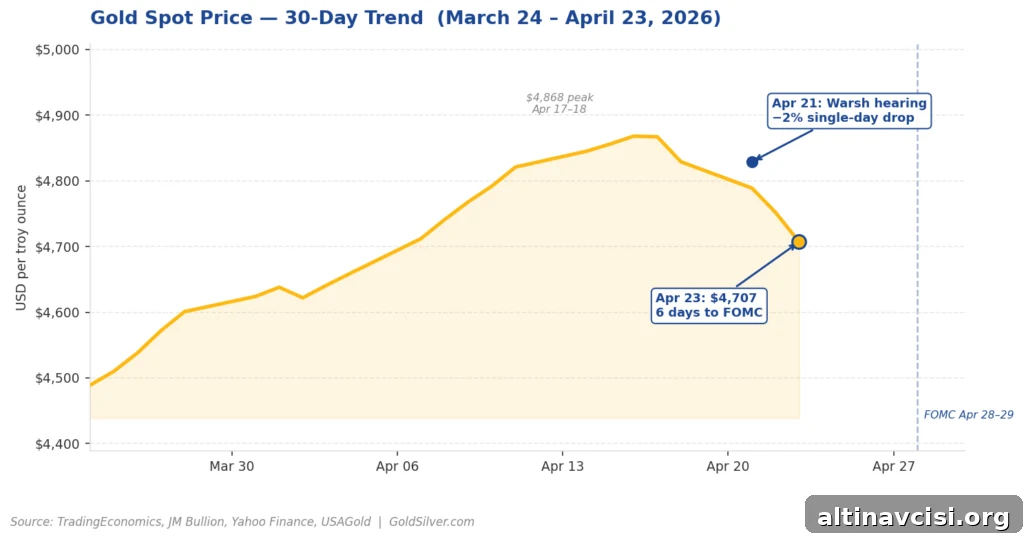
- Gold trades near $4,707 per ounce on Thursday, April 23, down from intraday highs around $4,740. Silver eased from the high $70s toward $75.
- A firmer dollar at one-week highs and rising inflation expectations pressured both metals.
- Initial jobless claims rose to 214,000 for the week ending April 18 — an increase of 6,000 from the prior week and slightly above forecasts.
- The FOMC meets April 28–29; the CME FedWatch tool shows a 99.5% probability the Fed holds the target range at 3.50%–3.75%. The University of Michigan final sentiment reading on Friday is the last major data point before the decision.
As of Thursday, April 23, 2026, gold trades near $4,707 per ounce. The Federal Reserve meeting is six days away.
This week’s data — Thursday’s jobless claims and Friday’s final University of Michigan consumer sentiment release — are the final market inputs before the April 28–29 FOMC decision. Market pricing overwhelmingly expects a hold at 3.50%–3.75%, shifting focus to the Federal Reserve’s tone about the rest of 2026.
What Did Today’s Jobless Claims Data Mean for Gold?
Weekly initial jobless claims rose to 214,000 for the week ending April 18, up 6,000 from the revised 208,000 the prior week and slightly above consensus. The print itself is not alarming, but it reinforces a resilient labor market — and that has consequences for monetary policy and precious metals.
A strong labor market reduces the Fed’s urgency to cut rates. When the Fed remains on hold, real yields tend to stay elevated, increasing the opportunity cost of holding non-yielding assets like gold. Each week of firm claims gives the Fed more reason to stay patient.
The dollar index held around 98.5 on Thursday, a one-week high. A stronger dollar makes dollar-priced gold relatively more expensive for foreign buyers, so the simultaneous rise in yields and dollar strength created a two-sided headwind for bullion.
“Elevated oil is anchoring inflation expectations and reinforcing the case for a higher interest rate environment, with markets pricing in no rate cuts through 2026, posing a headwind for non-yielding bullion,” said Kaynat Chainwala, AVP Commodity Research at Kotak Securities.
The Edge Every Investor Needs
Smarter precious metals investing starts here. The Nuggets Newsletter brings essential market insights, Fed updates, global trends, educational videos, and more.
What Did the Warsh Hearing Confirm — and Why Did Gold Drop 2%?
The April 21 gold selloff, a drop exceeding 2%, was the largest single-day decline since March 26. Market commentary attributed the move to hawkish signals from Federal Reserve Chair nominee Kevin Warsh. At his Senate Banking Committee hearing, Warsh declined to pre-commit to specific rate actions and described inflation’s trajectory as improving but still requiring work.
Markets interpreted that testimony as confirmation of a more hawkish stance and priced it immediately, producing the sharp selloff. The hearing fell into the scenario investors were watching for, and the reaction was swift.
What Will the Fed Decide on April 29?
The decision to hold rates steady is widely expected. The CME FedWatch tool shows a 99.5% probability the Fed holds the target range at 3.50%–3.75% on April 28–29. This meeting will be Chair Powell’s last before Kevin Warsh assumes the role on May 15.
What Powell Says Matters More Than What He Does
Markets are focused on the wording of the statement and Powell’s press conference. Investors want to know whether Powell will leave the door open to cuts later in 2026 if inflation pressures ease, particularly with oil prices. The March dot plot pencilled in one 25-basis-point cut for 2026; a recent spike in one-year inflation expectations makes that cut conditional on improvement.
Because this is a non-SEP meeting with no new dot plot, every clue about future policy will come from the statement and the Q&A that follows.
Why Does Tomorrow’s University of Michigan Reading Matter for Gold?
The University of Michigan releases its final April consumer sentiment reading on Friday, April 24, at 10am ET. The preliminary April survey showed sentiment at a record low of 47.6 and one-year inflation expectations jumping to 4.8% from March’s reading. Those numbers captured consumer sentiment largely before an April 7 ceasefire announcement and reflected elevated war-related anxiety.
The final reading may revise those figures. A higher revision would strengthen the case for a hawkish Fed statement and keep pressure on gold. A lower revision could signal easing energy-related inflation pressure and increase the odds of policy easing later in the year. Either outcome will clarify the environment heading into the FOMC.
Is Gold’s Current Pullback a Problem — or the Setup?
Gold’s all-time high near $5,590 on January 28, 2026 sits about 16% above the current price around $4,707, though gold remains more than 40% higher year-over-year. The pullback reflects a real constraint: the Fed faces a difficult policy path because of structural fiscal pressures that predate current geopolitical events.
The U.S. fiscal deficit and rising debt service costs limit the Fed’s options. Aggressive rate increases would raise Treasury refinancing costs; premature cuts could reignite inflation. That combination leaves the Fed with fewer clean exits and reinforces why short-term movements are dominated by yields and dollar dynamics while the long-term case for gold is supported by fiscal realities.
In short: the Fed meeting is near-term noise; the persistent debt situation is the longer-term signal.
Why Are Central Banks Still Buying Gold?
Central banks purchased 863 tonnes of gold in 2025, marking the fourth consecutive year of elevated buying and roughly double the pre-2022 annual average. Those purchases reflect strategic balance-sheet decisions and concern about long-term fiscal and currency risks rather than short-term geopolitical developments.
While short-term ceilings for gold are set by real yields and central bank policy, the structural floor for gold is tied to sovereign balance sheet pressures. Many institutions continue to view physical gold as a diversifying asset and a hedge against macro fiscal and currency risks.
Key Dates to Watch
Friday April 24, 10am ET — University of Michigan final April reading. The preliminary 4.8% one-year inflation expectation is the figure to monitor; any revision will help set the tone ahead of the FOMC.
April 28–29 — FOMC meeting and Powell press conference. A hold is priced in; markets will listen for conditional language around oil and geopolitical developments that could change the policy outlook.
The Catalyst Without a Deadline — The Strait of Hormuz remains the key near-term oil-related catalyst. A credible reopening would likely lower oil prices, ease inflation expectations and remove some of the ceiling above gold. Unlike the Fed meeting, the Strait’s timeline is open-ended.
Stay On Top of Gold & Silver Prices
Get important market alerts sent straight to your inbox.
SOURCES
1. TradingEconomics — Gold Spot Price, April 23, 2026
2. TradingEconomics — Silver Spot Price, April 23, 2026
3. Federal Reserve Bank of St. Louis (FRED) — Initial Claims (ICSA), Week Ending April 18, 2026
4. Bloomberg — US Jobless Claims Rise to 214,000, Signal Low Layoffs
5. Goodreturns — Gold Rates & Silver Rates Today, April 23, 2026 (Kaynat Chainwala, Kotak Securities)
6. Yahoo Finance — Fed Confirmation Live: Kevin Warsh Testifies Before Senate, April 21, 2026
7. PBS NewsHour — Kevin Warsh Testifies in Senate Banking Confirmation Hearing
8. Heygotrade / Bloomberg — Gold Prices Rebound After Sharpest Drop Since March
9. CME Group — FedWatch Tool, April 28–29 FOMC Meeting Probability
10. CNBC — Kevin Warsh Fed Confirmation Hearing: Live Updates, April 21, 2026
11. Charles Schwab — FOMC Meeting: Fed Holds Rates Steady, Still Sees One Cut in 2026
12. Federal Reserve — FOMC Meeting Calendar 2026
13. University of Michigan Surveys of Consumers — Preliminary April 2026 Release
14. Federal Reserve Bank of St. Louis (FRED) — University of Michigan Consumer Sentiment (UMCSENT)
15. CBS News — Highest Gold Price in History: January 28, 2026 All-Time High
16. Congressional Budget Office — The Budget and Economic Outlook: 2026 to 2036
17. Committee for a Responsible Federal Budget — CBO Estimates $1 Trillion Deficit for First Five Months of FY 2026
18. World Gold Council — Gold Demand Trends Full Year 2025
By the GoldSilver Editorial Team — helping investors understand sound money since 2005. This article is for informational purposes only and does not constitute financial, investment, or tax advice. Always consult a qualified financial advisor before making investment decisions.
You May Also Like:
- What’s Driving Gold Prices? Oil, PMI, and Newmont
- Dollar Weakens, Gold Falls — and That’s Actually Bullish
- Why Chinese Silver Imports Hit a Record in 2026
- What Drives Gold Prices? 5 Forces Investors Are Watching Now
- The Gold-Silver Ratio Signal: What Silver’s Lead Means
- Gold Drops to $4,681 — Iran Ceasefire Expires Today
- The Real Reason Gold Is Down During an Oil War
- What the Warsh Hearing Means for Gold Prices