Key Takeaways
- Gold ETFs, futures, and tokenized products track the gold price but are paper claims rather than the metal itself. In a crisis that distinction can be decisive.
- Physical gold carries no counterparty risk. No custodian, fund, or institution stands between you and the asset you own.
- Professional vault storage makes owning allocated physical gold convenient and secure, similar in ease to a brokerage account.
As of May 20, 2026, gold is trading near $4,500 per troy ounce. That price is useful, but the more important question for many investors is what form of exposure they actually hold. Different products that reference gold — ETFs, futures, tokenized coins, or physical bars and coins — are not interchangeable. They may appear on a brokerage statement with a dollar amount, but what you truly own, control, and can rely on during market stress differs substantially. This discussion isn’t about expected returns; it’s about what “safe haven” actually means in practice.
What Counts as “Digital Gold”?
The phrase “digital gold” is used broadly. For clarity, it typically includes the following products.
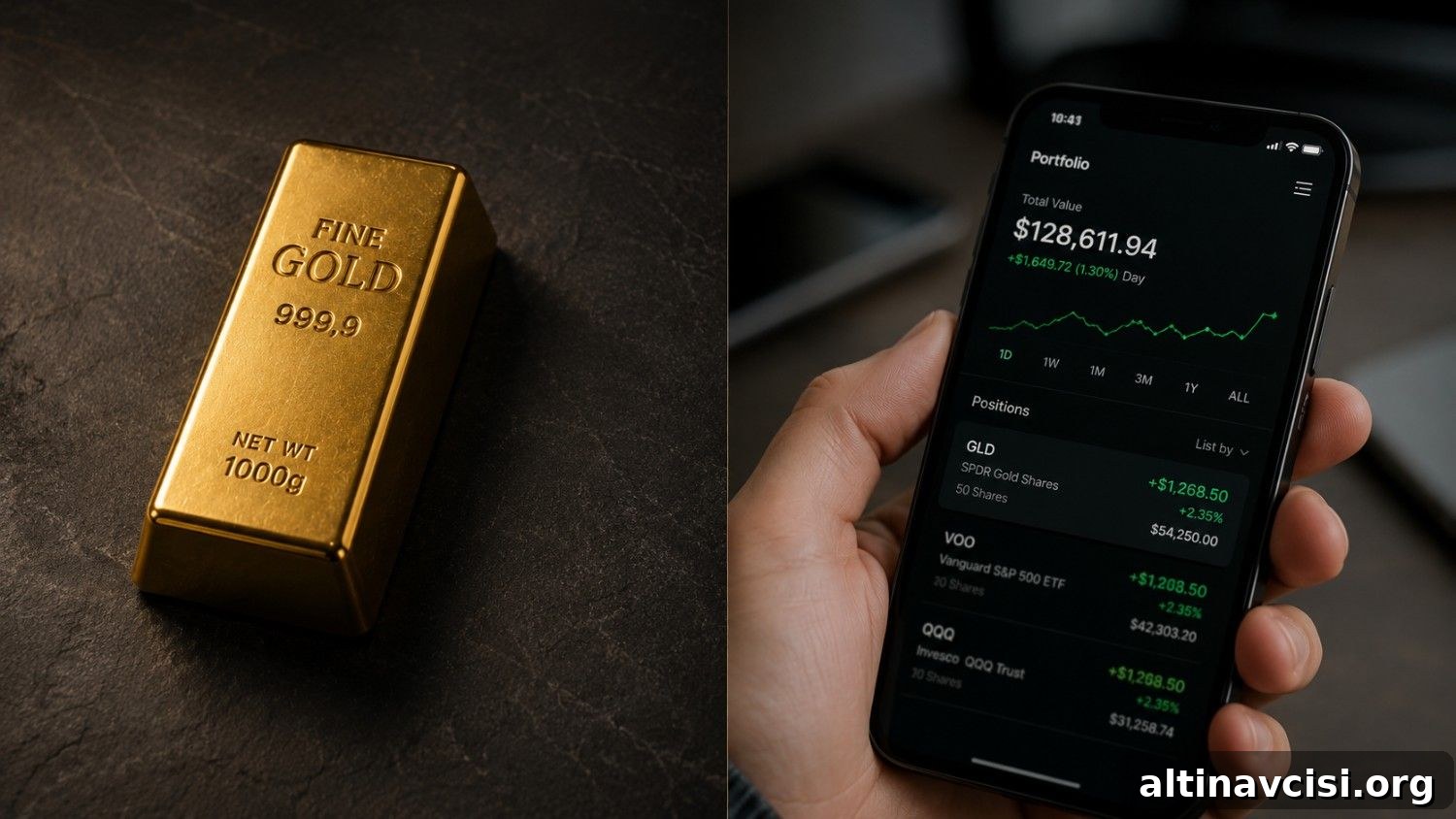
Gold ETFs such as SPDR Gold Shares (GLD) or iShares Gold Trust (IAU) hold physical gold in vaults on behalf of shareholders. However, ETF holders own shares in the fund, not specific bars. When you sell ETF shares you receive cash, not the metal itself.
Gold futures and options are derivatives tied to the gold price. Most of the time no physical metal changes hands — these contracts grant rights or obligations to settle in cash or in limited delivery circumstances.
Tokenized gold products like Paxos Gold (PAXG) and Tether Gold (XAUt) represent gold positions on a blockchain. While each token is intended to represent a certain amount of metal in a vault, providers differ in their operational setup, regulatory oversight, and redemption procedures. Retail investors often face practical limits when seeking to redeem tokens for physical metal.
Gold savings accounts from banks and fintech platforms typically provide fractional, unallocated exposure. That means you hold a proportional claim on a pooled inventory rather than ownership of individually identified bars or coins.
All of these vehicles are effectively paper claims on gold: their value tracks the metal, but they are not the metal itself.

Your Gold Buying Guide Most investors pay too much to buy gold and again when they sell. This guide explains which forms of gold to own and why.
What Physical Gold Actually Is
Physical gold refers to the metal itself: coins, bars, and rounds you can hold and possess.
A one-ounce American Gold Eagle, for example, is not a claim on another asset. It contains a guaranteed troy ounce of fine gold (alloyed for durability) and carries the backing of the minting authority for its specification. It does not depend on a custodian, a blockchain, or any third party to validate your ownership. Gold in this form has been used as money and store of value for millennia.
That difference is structural, not merely theoretical, and it becomes most important when markets and institutions come under pressure.
When Does the Physical vs Digital Gold Difference Matter?
Market stress exposes the divergence between paper claims and physical metal. In March 2020, for instance, gold ETFs fell alongside equities as investors rushed to raise cash. ETF prices dropped while dealer premiums for physical metal rose, reflecting a surge in demand for actual bars and coins even as paper prices declined.
Similar dynamics reappeared in April 2025, when forced liquidations and margin calls pushed paper prices lower while physical premiums widened significantly. Paper gold is tied to financial market flows and can suffer from leveraged selling. Physical gold responds to real-world demand for the metal, so the two can move in different directions precisely when a safe-haven is most needed.
ETFs also introduce structural dependencies: authorized participants, custodians, and clearing systems play roles in the fund’s mechanics. In extreme scenarios — a banking freeze, settlement failure, or custody dispute — your ability to convert a paper claim into cash or metal depends on those same institutions. Physical gold, when privately held or allocated in a secure vault, has no counterparty that can default on your ownership.
What Digital Gold Gets Right
Digital gold products are not inherently bad. For many investors and many uses they are practical and efficient.
ETFs provide liquidity, low transaction friction, and simple custody inside brokerage accounts and retirement plans. Their expense ratios can be modest, making them a convenient tool for tactical positions or hedges over months or quarters.
These products remove storage and insurance decisions, and they offer tax and administrative advantages that physical metal cannot match in certain accounts. For investors seeking quick market exposure or tax-advantaged retirement allocations, ETFs and similar instruments can be the optimal choice.
In short: digital gold is efficient, accessible, and designed for market exposure rather than physical possession.
Why Physical Gold Wins Long-Term
Physical gold’s strengths are structural and long-term. Four characteristics matter most:
First, ownership can be direct and absolute. When you hold allocated metal, no intermediary controls the asset for you. That matters in an era of growing financial surveillance and possible capital controls.
Second, supply is effectively fixed in the short term. While currencies can be created, gold cannot be produced on demand; annual mine production is small relative to the total above-ground stock.
Third, gold exists outside the conventional financial system. Central banks hold substantial bars because gold carries no third-party liability. It cannot be frozen, rehypothecated, or inflated away by another party’s balance-sheet decisions.
Fourth, physical gold is portable, private, and sovereign. Actions by governments and central banks — including repatriation of reserves — highlight the distinction between holding metal and holding a claim on it.
Do You Have to Choose Between Convenience and Real Ownership?
Storage is often cited as the main obstacle to owning physical gold. Specialist vault storage programs resolve that objection by offering segregated, insured, and audited storage for allocated assets.
Allocated vault services let investors own specific bars and coins that are identified and held on their behalf in secure facilities. Many providers allow low-cost storage, auditability, and the option to take physical delivery when desired. This removes much of the historical trade-off between convenience and true ownership.
Which Type of Gold Is Right for You?
The right choice depends on your objectives.
If you want a short-term hedge or efficient market exposure, a gold ETF is often the best tool: liquid, low-cost, and easy to trade.
If your goal is long-term protection of wealth against monetary debasement, capital controls, or systemic disruption, physical metal provides protections paper claims cannot. In those circumstances, owning allocated, vaulted metal offers true financial sovereignty.
Many sophisticated investors combine both approaches: paper gold for tactical exposure and physical gold for long-term security. The key is allocating proportions that reflect your risk profile and objectives.
Stay On Top of Gold & Silver Prices
Get important market alerts sent straight to your inbox.
People Also Ask
Is a gold ETF the same as owning physical gold?
No. A gold ETF represents shares in a fund that holds gold; it is a financial instrument, not direct ownership of metal. You cannot take physical delivery of a standard ETF share, and your claim depends on custodians and market infrastructure. Physical gold does not carry that counterparty risk.
What is the difference between allocated and unallocated gold?
Allocated gold consists of specific, numbered bars or coins assigned to you and held separately. Unallocated gold is a proportional claim against a pooled inventory owned by the provider. Unallocated holdings create counterparty exposure if the institution becomes insolvent.
Why do central banks hold physical gold instead of gold ETFs?
Central banks hold physical bars because gold is a reserve asset with no counterparty risk. They require an asset that cannot be frozen, rehypothecated, or defaulted on by another party. That is why reserves are held in physical form rather than as ETF shares.
Can paper gold and physical gold prices diverge?
Yes. During episodes of market stress, paper prices can fall due to forced selling while premiums on physical metal rise because of increased demand and constrained supply. Under normal conditions they track closely, but stress can create meaningful divergence.
What is the cheapest way to store physical gold securely?
Specialist allocated vault storage typically offers competitive pricing and full insurance, often at a low annual percentage of your holdings. Allocated programs provide segregation, audits, and the option for delivery, making them an efficient way to hold physical metal securely.
So Which One Should You Actually Own?
Digital gold effectively tracks the market price and is well suited for liquidity, trading, and certain tax-advantaged accounts. Physical gold is the metal itself and offers protections that paper claims cannot replicate during systemic stress. For long-term financial sovereignty, allocated physical metal is the only instrument that fully delivers.
Most prudent investors hold a mix: paper gold for tactical exposure and physical gold for long-term protection. The appropriate split depends on your goals, timeframe, and tolerance for institutional risk.
SOURCES
World Gold Council — gold price and demand data; US Mint specifications for coinage; fund details from major ETF providers; IMF data on reserves; public budget and debt sources.
Disclaimer: This article is for informational and educational purposes only and does not constitute investment advice. Consult a qualified financial professional before making investment decisions.
You may also like:
- BRICS Is Hoarding Gold. Here’s What It Means for Your Portfolio.
- Gold to Oil Ratio: The Ultimate Guide for Economic & Portfolio Analysis
- Dollar-Cost Averaging Into Gold and Silver: The Investor’s Practical Guide
- The Silver-to-Dow Ratio: How to Spot the Shift from Paper to Physical
- What Moves Gold Prices? 6 Key Gold Price Factors Explained
- World Bank: Precious Metals to Surge 42% This Year
- Silver Price Outlook May 2026: Stop Chasing the Number
- Dollar Dominance Is Fading. Gold and Silver Are Paying Attention.