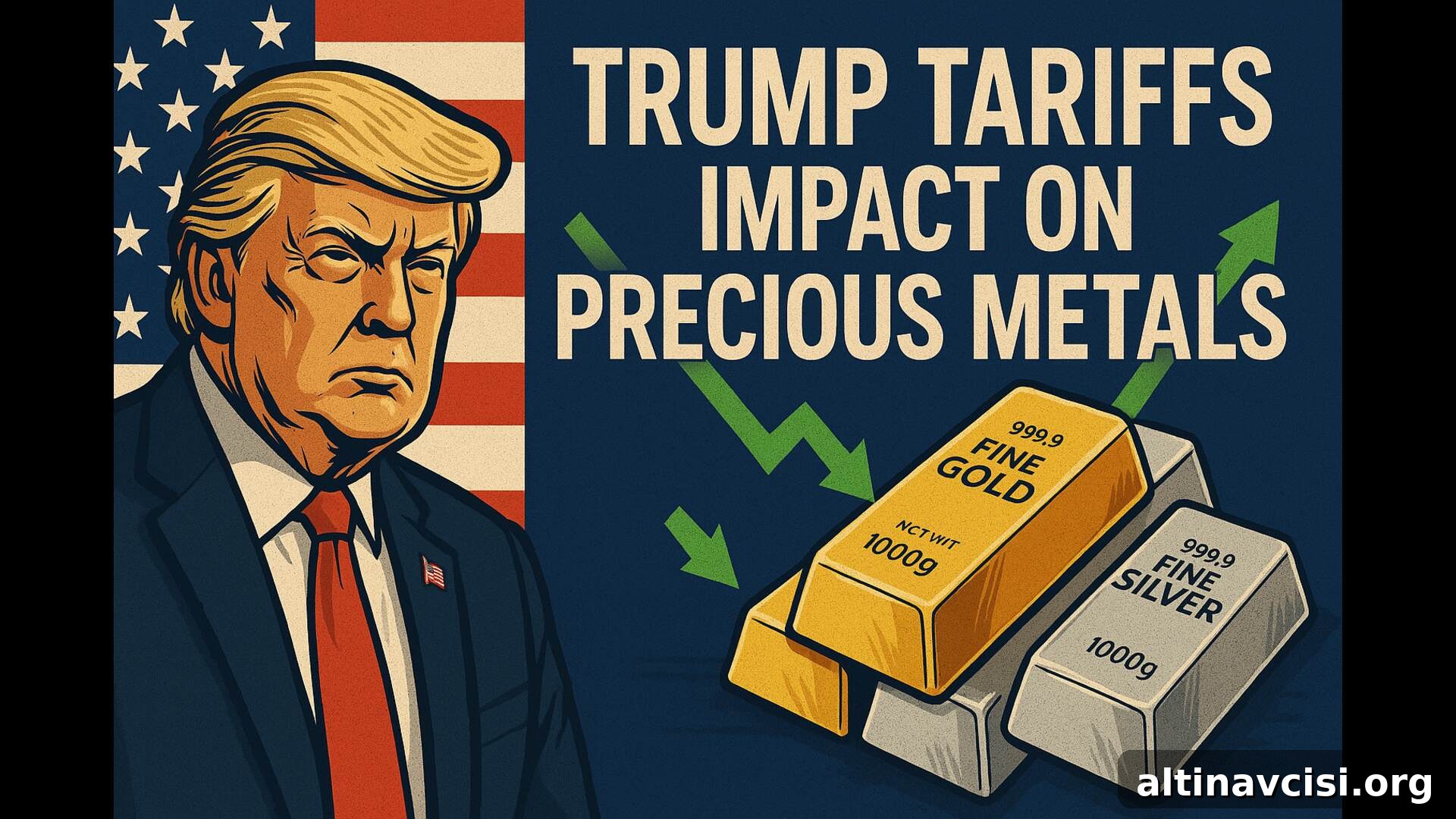
Recent U.S. tariff actions have had a noticeable effect on investor behavior, driving increased interest in precious metals as safe-haven assets amid heightened market volatility. This article examines how those trade policies are reshaping gold and silver markets and offers practical considerations for investors evaluating their portfolios.
In April 2025, the U.S. administration introduced sweeping tariffs on imports from multiple countries, including a series of escalations and temporary pauses that changed rapidly over a short period. China and other partners responded with retaliatory duties, creating an environment of elevated economic and geopolitical uncertainty. Throughout these developments, gold and silver imports were notably exempted from the new tariffs, reflecting their special status in global finance and central bank reserves.
Understanding the Current Tariff Landscape
The recent tariff measures were framed as efforts to protect domestic industry and address trade imbalances. Regardless of policy goals, such actions have broad implications: they can disrupt supply chains, alter trade flows, and affect investor confidence. That uncertainty often translates into increased demand for assets perceived as stores of value, particularly gold and, to a lesser extent, silver.
How Tariffs Influence Precious Metals Markets
Gold’s Response to Economic Uncertainty
Gold has a long history as a safe-haven asset. Tariff-driven market stress tends to produce conditions that support higher gold prices:
- Increased economic uncertainty: Disrupted trade patterns and unpredictable policy moves make forecasts harder, prompting investors to seek stability.
- Inflation concerns: Tariffs can raise import costs and contribute to inflationary pressure, which often reinforces demand for gold as an inflation hedge.
- Currency volatility: Trade tensions can cause exchange-rate swings, encouraging some investors to hold gold as a currency hedge.
These dynamics have historically supported gold’s performance during periods of trade-related stress, with notable price gains observed at past peaks of trade tension.
Silver’s Dual Nature Under Tariff Conditions
Silver behaves differently because it serves both as a precious metal and as an industrial commodity. Key factors to consider include:
- Safe-haven appeal: Silver can benefit from investor flight-to-safety flows, though typically to a smaller degree than gold.
- Industrial demand sensitivity: Tariffs that slow manufacturing or trade can dampen industrial demand for silver, adding complexity to its price movements.
Because of this dual role, silver’s reaction to tariff-induced market changes can diverge from gold, depending on the balance between investment demand and industrial consumption.
Historical Perspective and Strategic Indicators
Looking back at prior trade disputes provides useful context. For example, during past U.S.-China trade tensions, both metals saw meaningful gains as uncertainty rose. Investors often monitor the gold-to-silver ratio as a tactical indicator: when the ratio moves well above long-term norms it can signal relative undervaluation in silver, and extreme readings have historically tended to revert over time. Strategic investors may use these signals to rebalance exposures between the two metals.
The Inflation Factor
Tariffs function like taxes on imported goods and can contribute to higher consumer prices. That inflation channel is an important mechanism linking trade policy to precious metals demand. Gold has a well-documented record of preserving purchasing power across inflationary periods, while silver’s inflation protection can be more variable because industrial demand plays a larger role in its price dynamics. Central bank gold purchases and inventory moves are additional indicators that market participants watch for signs of inflation concern.
Practical Steps for Investors
Immediate Portfolio Review
- Review your current precious metals allocation relative to target ranges and overall risk tolerance.
- Decide which form of exposure suits your objectives: physical bullion, ETFs, or mining equities.
- Consider the appropriate balance between gold and silver based on expectations for inflation, industrial demand, and market volatility.
Implementation Considerations
- Use dollar-cost averaging to mitigate timing risk if increasing allocations.
- Watch premiums over spot prices—these can widen during spikes in physical demand.
- Plan for secure storage and insurance if holding physical metals.
Rising physical demand can affect availability and premiums, so investors should factor transaction costs and liquidity when adjusting positions.
Balancing Your Portfolio During Tariff Uncertainty
Tariff-driven market disruptions influence both short-term price moves and longer-term allocation choices. Historically, gold has tended to perform well in periods of elevated policy uncertainty, while silver’s mixed role can produce more varied outcomes. Rather than making abrupt, large-scale changes, measured adjustments consistent with an investor’s time horizon and risk profile are generally advisable. Maintaining a purposeful allocation to precious metals can help diversify portfolios and provide exposure to assets that often behave differently than equities and bonds during periods of trade and policy stress.
By understanding the distinct roles of gold and silver and applying disciplined allocation and implementation tactics, investors can better navigate the challenges posed by tariff-related market volatility.
Note: This article is for informational purposes only and does not constitute investment advice. Market conditions and policy outcomes are uncertain and past performance does not guarantee future results. Consult a qualified financial advisor before making investment decisions.