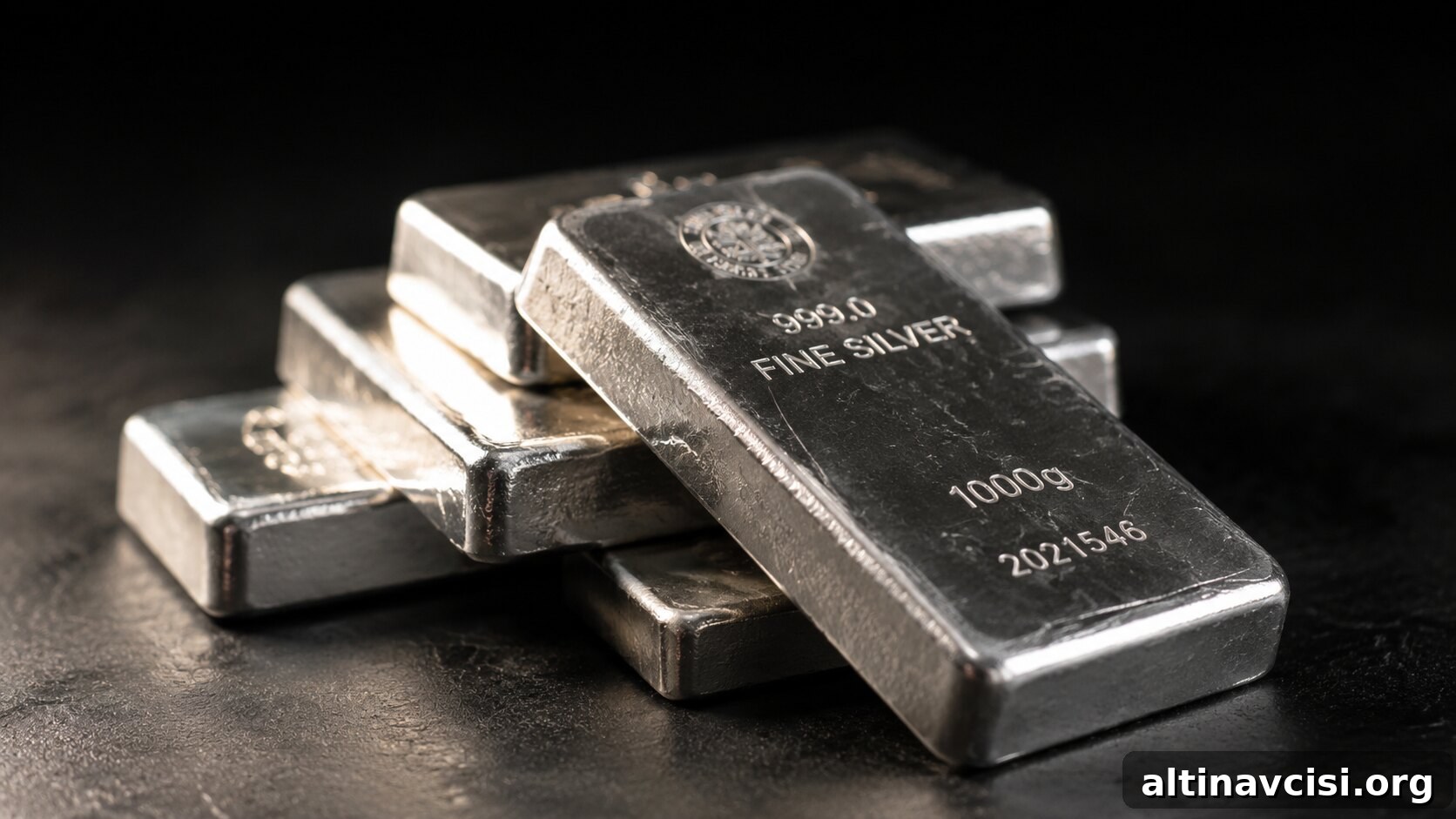
Over the past 30 days, gold has declined roughly 10%, while silver has fallen by more than twice that amount.
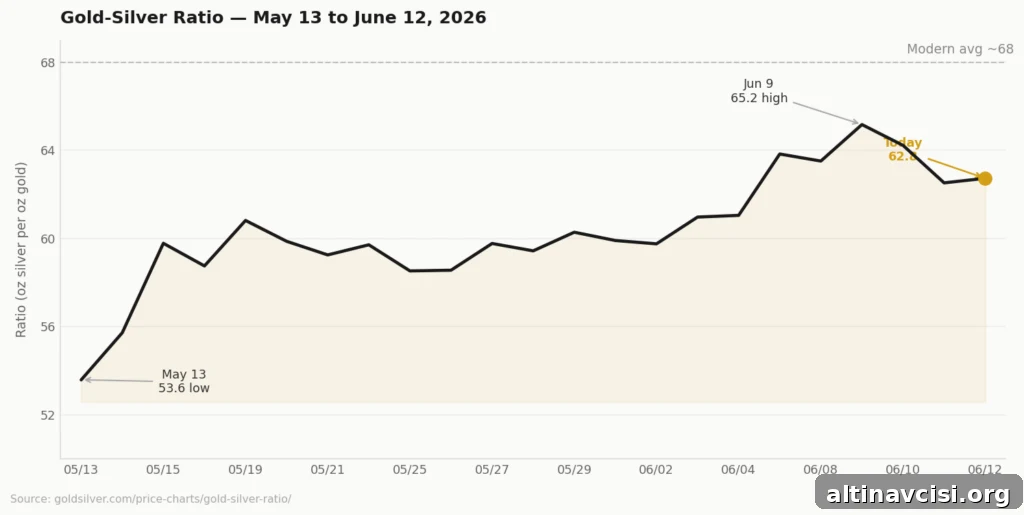
As of Friday morning the gold‑silver ratio sits near 63 — meaning it now takes more than 63 ounces of silver to buy one ounce of gold. A month ago that figure was about 55. An eight‑point move in thirty days is not mere noise: it reflects a clear mechanism and a consistent historical pattern for how markets tend to resolve such divergences.
Why does silver move differently than gold?
Gold functions primarily as a monetary metal: its price is driven by real yields, the US dollar, and broader confidence in fiat currencies. Silver shares those monetary sensitivities but also carries an industrial demand profile. Silver is used in solar panels, electric vehicles, electronics and data centers. That industrial demand consumes roughly 660 million ounces of silver per year (World Silver Survey 2026).
When monetary fear dominates — for example, rising rate‑hike expectations or inflation shocks — investors often rotate into gold first. Gold is the classic flight‑to‑safety asset. Silver can be pulled up alongside gold by that same monetary flow, but its industrial component leaves it more exposed to growth slowdowns and cost pressures.
At present both of silver’s engines are encountering resistance. The monetary driver has cooled: the Iran war, which began on February 28, pushed energy prices higher and fed into inflation measures. May’s producer price index printed at 6.5% year‑over‑year — the highest since November 2022 — prompting markets to price tighter monetary policy. Higher expected rates weaken the monetary bid for both metals.
Gold has fallen but retained a relative floor because of its pure monetary role. Silver, exposed to both monetary and industrial headwinds, has declined more sharply. Higher input costs have also encouraged some solar manufacturers to reduce silver intensity in panels, further weighing on demand. The result: the gold‑silver ratio widened. That is the mechanism behind the recent move.
The Edge Every Investor Needs
Smarter precious metals investing starts here. The Nuggets Newsletter brings you essential market insights, Fed updates, global trends, educational videos, and more.
What does a gold‑silver ratio above 60 historically signal?
The ratio should be interpreted in context. The 60–75 range is near the modern historical average and is not an extreme by itself. By contrast, the ratio spiked to 125 during the March 2020 COVID panic when silver crashed and gold held. It also reached 88 in early 2024 — just before silver rallied roughly 144% through 2025.
Both the level and the direction of the move matter. A more than eight‑point spike in thirty days signals that the monetary engine is suppressed, not broken. The physical supply picture underneath remains tight: the World Silver Survey 2026 (Silver Institute with Metals Focus) projects a 46.3‑million‑ounce supply deficit this year — the sixth consecutive annual shortfall since 2021.
For holders of physical silver, these signals are meaningful: the ratio implies relative cheapness while supply data points to scarcity. Those two indicators rarely line up by accident. When the monetary suppressor eases, the monetary demand for silver tends to return quickly, and that re‑engagement occurs against a market that has been physically tight for years.
What could push the gold‑silver ratio lower from here?
Two near‑term events could influence the ratio.
First, reports indicate an Iran peace agreement may be finalized around the G7 summit. If a memorandum of understanding leads to reopening the Strait of Hormuz and oil prices fall, energy‑driven inflation pressures would ease. Lower inflation expectations would reduce the probability of further rate hikes and relieve the monetary suppressor on both metals, allowing silver’s monetary component to re‑engage.
Second, the Federal Reserve meets on June 16–17. Markets currently expect the Fed to hold the federal funds rate in the 3.50–3.75% range, but the Summary of Economic Projections and the dot plot are not yet known. This will be the first projection under Chair Kevin Warsh. If the median outlook signals fewer future hikes than markets fear, the monetary pressure on gold and silver would ease.
Neither outcome is guaranteed: the Iran memorandum still needs final approval, and the Fed’s projections could lean hawkish. Still, the setup is straightforward: the ratio widened on monetary fear. If that fear recedes, the ratio is likely to compress, typically with silver narrowing the gap faster than gold moves higher.
Why does the structural silver supply deficit matter for price?
The gold‑silver ratio does not reflect structural supply dynamics. Since 2021 silver demand has exceeded mine supply each year. The Silver Institute projects the deficit will reach 46.3 million ounces in 2026. Physical coins, bars and exchange‑traded products continue to draw from the available pool of metal, and those flows outweigh modest reductions in industrial silver intensity.
A high ratio can persist for an extended period — it spent more than a year above 80 between 2019 and 2020 — so mean reversion is a tendency rather than a guarantee. Still, a widening structural deficit combined with a monetary drive that is paused rather than permanently disabled creates a favourable backdrop for long‑term physical silver holders.
At a ratio near 63, after a thirty‑day correction driven by identifiable monetary factors, silver is cheaper relative to gold than it was a month ago. The physical market has not loosened and the structural supply case remains intact. That is arithmetic, not alarm.
Stay On Top of Gold & Silver Prices
Get important market alerts sent straight to your inbox.
SOURCES
1. LBMA — Precious Metal Prices & Historical Data
2. Silver Institute / Metals Focus — World Silver Survey 2026
3. Bureau of Labor Statistics — Producer Price Index, May 2026
4. Bloomberg reporting on US‑Iran developments around the G7 meeting
5. CME Group — FedWatch Tool, June 2026
6–12. Additional industry and market reporting cited for context
Disclaimer: This article is for informational purposes only and does not constitute financial or investment advice. Consult a qualified financial adviser before making investment decisions.
You May Also Like:
- Every Bearish Catalyst Landed at Once. Gold and Silver Went Up Anyway.
- Gold at Seven‑Month Lows: Why Geopolitical Fear Is Not Enough
- Gold Slides to $4,130 as Iran War Turns Inflation Against It
- May CPI Printed 4.2%. Core Inflation Beat. So Why Did the Gold Price Drop?
- Gold Is Down 9%. The CPI Print That Could Either Extend the Drop — or End It.
- Gold Price News: Goldman, China, CPI, and the Fed Explained
- Gold Near $4,330 as Rate‑Hike Bets Hit 70% and China Acts
- Gold Is Down 22% — The Same Drop as 2022. The Floor Is Not the Same.
- Silver Falls 6% on Jobs Beat. The Six‑Year Deficit Didn’t.