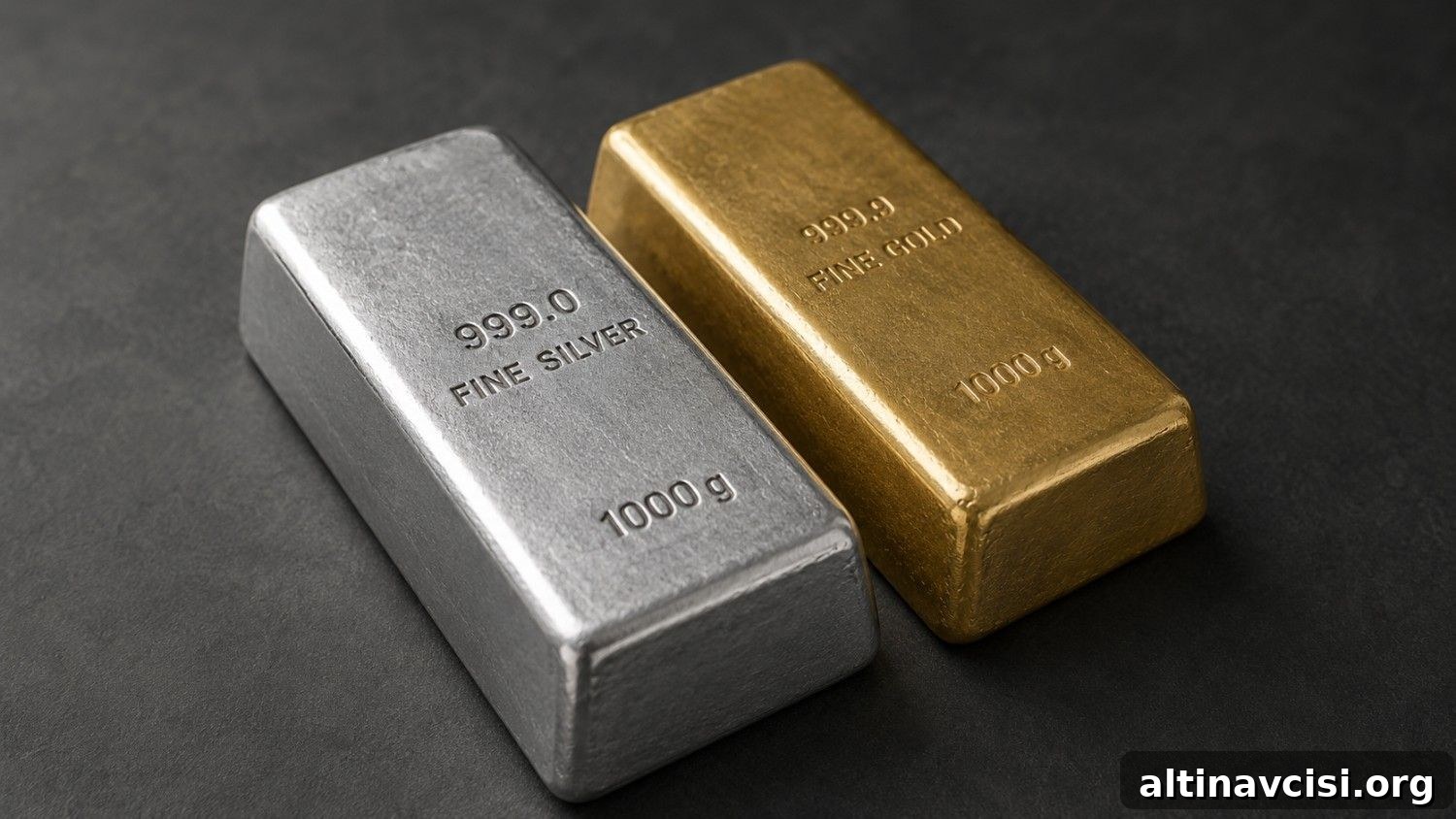
Key Takeaways:
- Silver rose 2.99% on May 25, 2026—about 2.3 times gold’s 1.31% gain—after optimism over an Iran agreement reduced energy risk and lifted expectations for industrial demand.
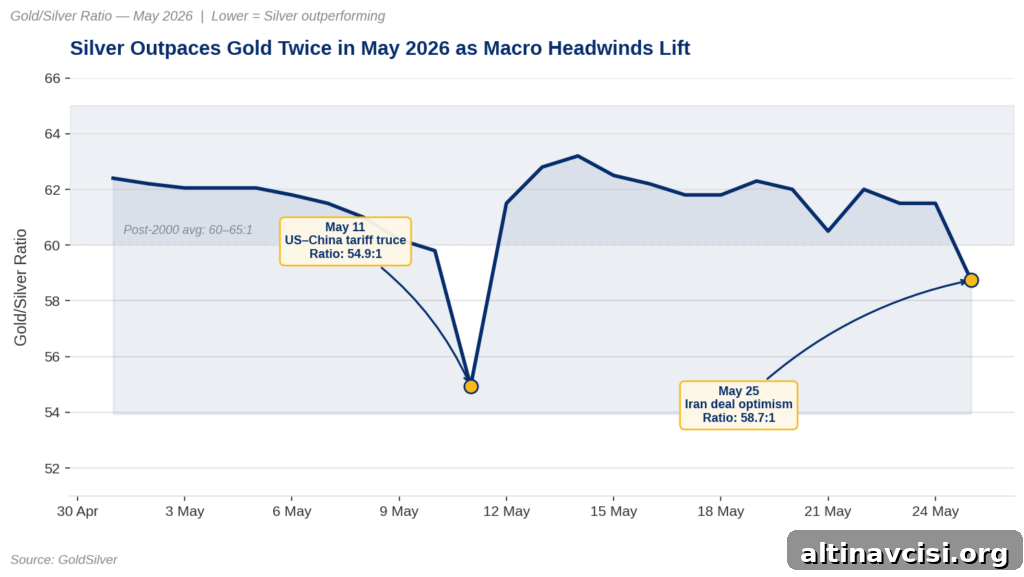
- The gold/silver ratio compressed to 58.7:1, under the post-2000 average of roughly 60–65:1. Similar behavior occurred on May 11 with the US-China tariff truce: when macro headwinds ease, silver often outpaces gold.
- Watch May 28: the Bureau of Economic Analysis releases the Q1 2026 GDP second estimate. A downward revision and a drop toward the 55:1 ratio level are key signals to monitor ahead of the June 16–17 FOMC meeting.
On May 25, 2026 silver advanced nearly three times as much as gold, and the gold/silver ratio explained why before the trading day ended. The move reflected not a failure but a healing of macro risks.
Silver finished the day at $77.78 per ounce, up 2.99%. Gold rose 1.31% to $4,568.54. The gold/silver ratio tightened to 58.7:1—below the modern post-2000 range of 60–65:1—marking one of the fastest three-week swings since the 2020 recovery. With U.S. markets closed for Memorial Day, London led the session.
What drove the move?
The immediate catalyst was weekend reports that the U.S. and Iran had largely agreed on a memorandum of understanding to reopen the Strait of Hormuz. The White House indicated the blockade would remain until a formal agreement is signed, leaving some uncertainty, but the market priced in a lower risk of supply disruptions.
Both metals rose—gold added about $59 and silver gained roughly $2.26. In percentage terms silver outpaced gold by more than twofold. On peace-related news that eases energy risk, silver’s larger move is meaningful, not random.
The transmission is straightforward: a deal reduces the threat to shipping, which eases oil price pressure. Lower energy costs temper inflation expectations, weakening the dollar—on May 25 the DXY fell about 0.28% to 98.96. A softer dollar supports precious metals broadly.
That explains gold’s increase. Silver’s larger advance reflects an extra factor: its industrial demand exposure.
The Edge Every Investor Needs
Smarter precious metals investing starts here. The Nuggets Newsletter delivers clear market insights, Fed updates, global trends, educational videos, and more.
Why does silver outperform gold on peace catalysts?
Silver carries a meaningful industrial component. Industry accounts for roughly 60% of annual silver demand—solar panels, EVs, electronics, and data-center equipment are major users. When energy costs fall, manufacturing margins improve and industrial activity tends to pick up, creating additional demand for silver. Gold, by contrast, trades largely as a monetary and safe-haven asset. Silver therefore receives both the monetary bid and an industrial bid.
That dual-demand profile explains why the gold/silver ratio tends to compress during de-escalation events and widen when inflation surprises to the upside.
What is the gold/silver ratio saying right now?
The ratio has swung rapidly in May 2026. It began the month near 62:1, fell to about 54.9:1 after the May 11 US-China tariff truce, then bounced into the low 60s when hotter inflation data arrived. By May 25 it stood at 58.7:1. Major banks offer varied silver targets—J.P. Morgan’s full-year average is near $81 per ounce, while Citigroup projects higher levels into the second half of 2026.
The market’s behavior shows it isn’t favoring one metal over the other; it’s bidding both, with silver gaining extra credit when the global outlook improves. When the ratio falls while prices are rising, it signals that both purchasing-power protection and industrial demand strength are present—an uncommon but powerful combination.
What most coverage is missing
The current compression began earlier, with the May 11 tariff truce that repriced industrial demand. The ratio then widened on hot inflation prints and compressed again with renewed Iran optimism. Each time a macro headwind eased, silver caught up faster than gold. This pattern reflects market structure: persistent silver supply deficits—documented by industry reports—mean physical markets tighten when demand rerates upward.
Since 2021, several years of supply shortfalls have drawn down global inventories, and most silver is produced as a byproduct of other mining operations, limiting rapid supply responses. That makes silver particularly sensitive to shifts in industrial demand and macro sentiment.
What to watch next
Key near-term data arrives May 28 when the Bureau of Economic Analysis releases the Q1 2026 GDP second estimate. The advance estimate was 2.0%, below the 2.3% consensus. A downward revision combined with persistent inflation would point toward stagflation—an environment where both metals historically perform as rates and the dollar come under pressure.
Monitor the gold/silver ratio level of 55:1. That level briefly acted as a floor on May 11; a sustained break below 55:1 would be a strong signal that silver’s next leg of outperformance could be underway.
Stay On Top of Gold & Silver Prices
Get important market alerts sent straight to your inbox.
SOURCES
1. Silver Institute — World Silver Survey: Silver Supply & Demand
2. Silver Institute — Silver Industrial Demand Reached a Record 680.5 Moz in 2024
3. GoldSilver — Silver Price Outlook May 2026: Stop Chasing the Number
4. GoldSilver — Silver Breaks $92, Citi Eyes $100 by March
5. Bureau of Economic Analysis — GDP Advance Estimate, 1st Quarter 2026
6. Federal Reserve — FOMC Meeting Calendars and Information
Disclaimer: This article is for informational purposes only and does not constitute financial or investment advice. Consult a qualified financial adviser before making investment decisions.
You May Also Like:
- Iran News Sent Gold Price Both Ways. The Driver Was Never Iran.
- Gold Falls 0.5% on Iran Deal: The Floor Holds
- Is Gold Being Repriced? 5 Major Institutions Say Yes.
- Silver Dropped 12%. Gold Dropped 3%. That Gap Is the Story.
- Gold Price Holds Firm After Hawkish Fed Minutes — Here’s Why
- Why London Still Sets the Gold Price — and Asia Doesn’t
- Gold Price at ~$4,502: Is the Dip a Buy? BofA Says $6,000
- Gold Didn’t Fall on Iran Peace News. That’s the Point.