
Key Takeaways
- Silver dropped about 7.7% to roughly $77.11 on May 15, 2026, wiping out a four-day summit-driven rally that had pushed prices from $77 to $86.10.
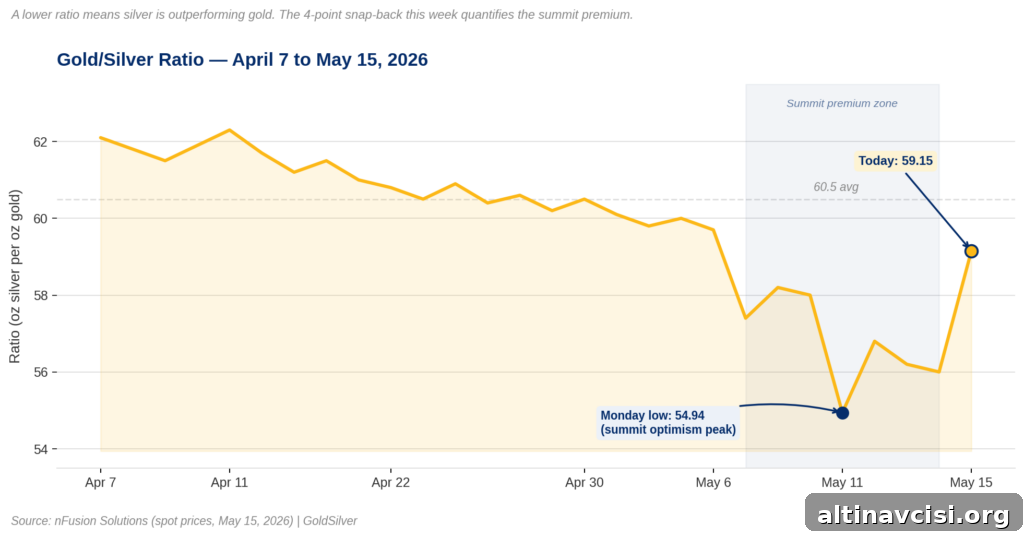
- The gold/silver ratio reversed from about 54.94 back to roughly 59, indicating approximately $8/oz of silver’s recent gain was driven by short-term trade optimism that has now been priced out.
- Fundamentals remain intact: six consecutive years of supply deficits, a projected 46.3 million ounce shortfall for 2026, and a monetary backdrop that, if anything, looks more challenging after recent data.
Why did silver fall so sharply today? In short: a summit premium that accumulated over four days evaporated in a single session.
On May 15, 2026, silver slid roughly 7.7% to $77.11 as traders unwound the price premium that had been built into the metal ahead of the Trump–Xi Beijing summit. Markets had anticipated concrete trade breakthroughs and bid silver up accordingly. The metal opened at $83.47 that day and declined steadily, ending the session near its pre-rally level from the start of the week.
This pullback represents the removal of short-term optimism rather than a shift in the structural case for silver. Supply deficits, real yield compression and broader monetary stress remain the driving forces behind silver’s long-term support.
The Edge Every Investor Needs
Smarter precious metals investing starts here. The Nuggets Newsletter brings you essential market insights, Fed updates, global trends, educational videos, and much more.
Why Does Silver React So Sharply to Trade News?
Silver’s demand is driven by two main forces: monetary and industrial. On the monetary side, silver is held as a store of value and a hedge against currency debasement, often outside traditional banking channels. On the industrial side, about 60% of annual silver demand comes from manufacturing—solar panels, electric vehicles, semiconductors—according to the Silver Institute’s World Silver Survey 2026. Many of those supply chains are linked to U.S.–China trade flows.
Because of that dual role, trade developments influence silver more than gold. Ahead of the Trump–Xi summit, markets priced in a likely trade breakthrough and that expectation pushed silver from $77 to $86.10 over four days. When the summit produced broad statements without concrete commitments—the announced deals lacked specificity, large expected orders did not fully materialize, and geopolitical remarks added new inflation risk—the anticipated demand boost never arrived. With no clear agreement, the summit premium was removed and silver retraced those gains.
What Is the Gold/Silver Ratio Saying Right Now?
The gold/silver ratio shows how many ounces of silver are required to buy one ounce of gold. The ratio fell to about 54.94 on Monday amid summit optimism, then climbed back to around 59.15 by May 15, 2026. That roughly four-point swing over four trading days is the sharpest round-trip since early 2025 and highlights how much of silver’s recent advance was driven by a short-term trade bet. With those hopes dashed, that money exited the market.
At about $77.11, silver is trading on a monetary support level that helped lift it from $60 in late 2025 to an all-time high of $121 in January 2026. The factors that created that floor—persistent supply deficits and stresses in the monetary system—remain in place.
So What Hasn’t Changed?
The supply deficit remains intact. The Silver Institute’s World Silver Survey 2026 reports six consecutive years of supply shortfalls, with a projected 2026 deficit of 46.3 million ounces. A summit outcome, successful or not, does not alter primary market production and overall demand trends.
The monetary picture has not improved; some indicators are heading in the opposite direction. The 10-year Treasury yield reached 4.544%, the highest level since May 2025. Recent U.S. inflation data—CPI at 3.8% year-over-year in April and PPI at 6% annually—adds to upward pressure on yields. CME FedWatch priced about a 51% chance of a Fed rate hike by December, reflecting market uncertainty.
The summit’s limited trade outcomes and heightened geopolitical remarks also raised inflation risk. That combination weakens silver’s industrial demand outlook in the near term while reinforcing elements of its monetary case.
SOURCES
1. nFusion Solutions — Silver & Gold Spot Prices — May 15, 2026
2. Silver Institute — World Silver Survey 2026 — Metals Focus, April 15, 2026
3. Fortune / UBS — Wall Street reaction to Trump–Xi summit — May 15, 2026
4. Fortune / Deutsche Bank — Summit analysis — May 15, 2026
5. US Bureau of Labor Statistics — Consumer Price Index — April 2026
6. US Bureau of Labor Statistics — Producer Price Indexes — April 2026
7. FRED, St. Louis Fed — 10-Year Treasury Constant Maturity Rate (DGS10)
8. CME Group — CME FedWatch Tool — Fed Rate Probabilities, May 15, 2026
9. CNBC — Trump–Xi Summit takeaways — May 15, 2026
Disclaimer: This article is for informational purposes only and does not constitute financial or investment advice. Consult a qualified financial adviser before making investment decisions.
You May Also Like:
- Gold Fell. China Bought Its Most in 17 Months. Here’s Why.
- Why Silver Falls Harder Than Gold — And What It Means
- Gold Near $4,700: The Chaos Isn’t a Ceiling. It’s a Floor
- 5 Forces Shaping Gold and Silver at the Beijing Summit
- The Real Reason Gold Falls When Inflation Surges
- CPI Hits 3.8%. Gold Falls. The Mechanism Nobody Explains
- Why the Gold Silver Ratio Is Falling — and What It Means
- What’s Moving Gold Prices This Week: CPI, Seoul & Beijing