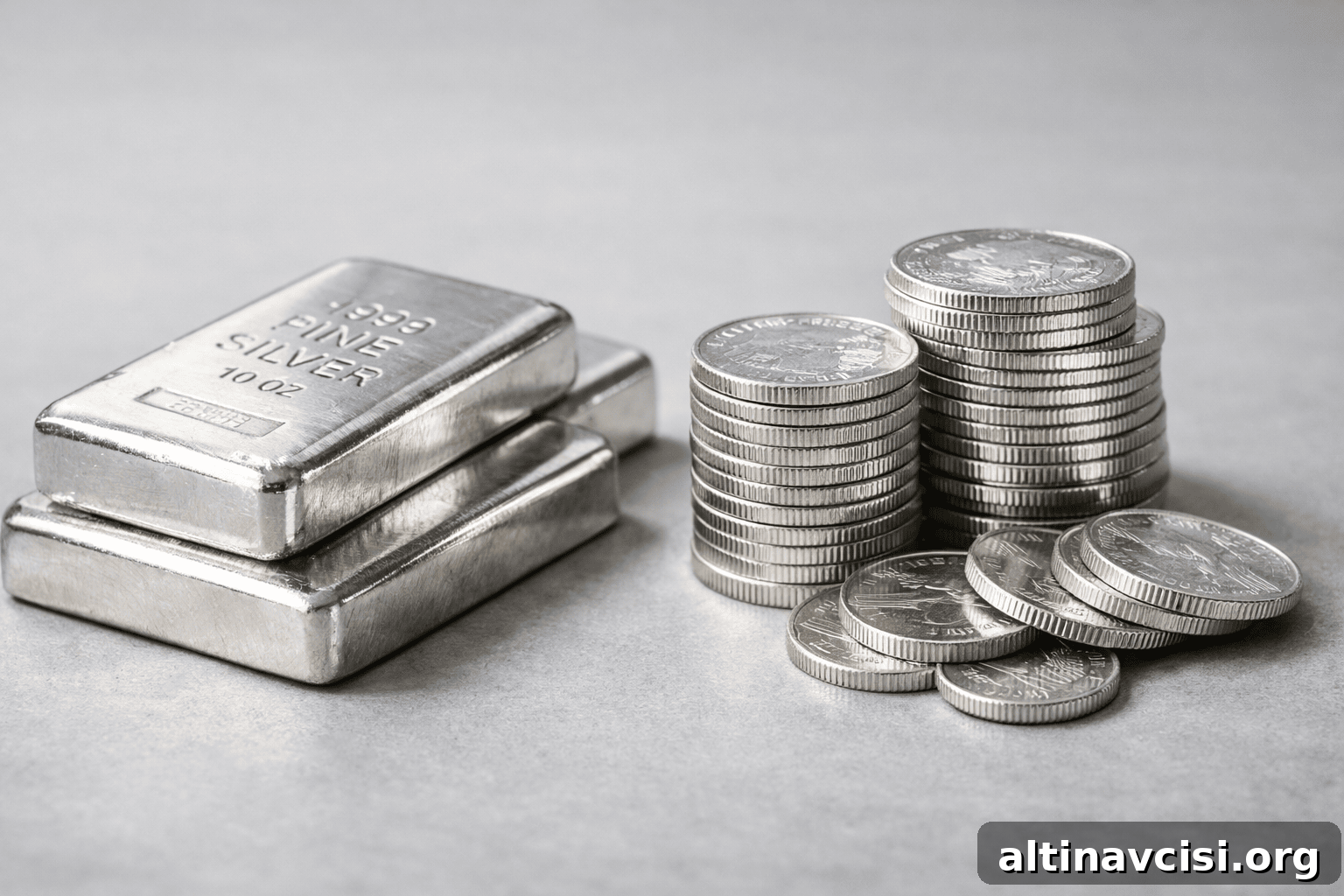
If you’re considering adding silver to your portfolio, one of the first choices you’ll face is whether to buy silver bars or silver coins. It seems simple, but each option has distinct advantages and trade-offs that can shape your investment approach. Knowing the differences helps you make an informed decision rather than simply picking the most attractive piece.
This guide summarizes the key points to consider before you buy.
Why Silver Deserves a Spot in Your Portfolio
Before debating bars versus coins, it helps to understand why silver can be a valuable holding.
Silver is both a monetary metal and an industrial commodity. It plays a vital role in technologies such as solar panels, electric vehicles, semiconductors, and medical devices. Industrial demand is a major driver of silver’s consumption, which gives it different fundamentals from gold. That industrial demand can push prices higher when technology and clean-energy investment expand, but it also makes silver more sensitive to economic cycles.
This dual role—store of value and industrial input—means silver reacts to a mix of investment sentiment and real-world demand, creating unique opportunities and risks compared with other precious metals.
Silver’s Volatility: What You Should Expect
Expect larger swings from silver than from gold. Silver’s market is smaller, with less institutional liquidity, and its strong tie to industrial activity can cause rapid price moves both up and down. That volatility can produce big gains in bullish phases and steep declines in downturns.
For many investors, volatility is an acceptable feature: silver offers the potential for higher returns if you can tolerate price fluctuations. A practical allocation approach is to treat gold as a stability anchor and silver as a growth-oriented complement, recognizing that silver often requires a longer time horizon and greater patience.
Silver Bars: Lower Premiums, More Metal for Your Money
Silver bars are the simplest way to own physical silver. They typically contain .999 fine silver and offer the lowest premium over spot price, especially in larger sizes. Bars are efficient, easy to value, and practical for investors focused on accumulating ounces.
Why investors choose silver bars:
- Lower premiums over spot. Bars are inexpensive to produce and usually carry the smallest markup. Larger bars lower the per-ounce cost further.
- Efficient stacking. Flat, uniform bars stack compactly, making them simple to store for sizable holdings.
- Straightforward valuation. A bar’s value is its silver weight—there’s no numismatic premium to consider.
Common sizes: 1 oz, 5 oz, 10 oz, and 100 oz bars are the most popular. The 100 oz bar appeals to investors who want the lowest cost per ounce.

The trade-off: Larger bars reduce flexibility. Selling a portion of a single large bar isn’t practical—you typically must sell the entire piece—so bars can be less adaptable if you need to liquidate smaller amounts.
Silver Coins: Liquidity, Legal Tender, and Recognizability
Government-minted coins, such as the American Silver Eagle or Canadian Maple Leaf, are widely recognized, carry legal tender status, and trade at higher premiums than bars. That recognition makes coins very liquid and simple to sell in small units.
Why investors choose silver coins:
- Global recognizability. Widely known coins are easier to sell or trade almost anywhere.
- Legal tender status. Coins issued by sovereign mints carry a face value and broad recognition that can simplify transactions.
- Divisibility. 1 oz coins let you buy, hold, or sell smaller amounts, which suits dollar-cost averaging and flexible liquidity needs.
- Collector crossover. Some coins have numismatic appeal that can add value beyond metal content—though investors should avoid overpaying for collectibility if their goal is pure silver exposure.

The trade-off: Coins cost more per ounce than bars, and premiums can add up if you buy a large quantity. They are less cost-efficient for maximizing ounces at a set budget.
Silver Bars vs Silver Coins: Which Is Right for You?
Consider your goals, budget, and how you plan to use silver:
Choose bars if:
- You want to accumulate as many ounces as possible at the lowest cost.
- You can store larger denominations securely.
- You prioritize cost efficiency and are comfortable with lower divisibility.
Choose coins if:
- You’re a newer investor who prefers recognizable, liquid assets.
- You want to build your position gradually through dollar-cost averaging.
- You need the flexibility to sell in smaller increments.
Many investors hold both: coins for liquidity and smaller sales, and bars for the bulk of their holding where cost per ounce matters most.
Entry Point: Why Silver Is the Accessible Precious Metals Investment
Silver is a popular starting point for precious metals investors because of its lower price relative to gold. A single 1 oz silver coin is affordable for many first-time buyers, making it practical to begin building exposure without a large upfront commitment. Regular purchases—dollar-cost averaging—can smooth volatility and build position over time.
Small bars and 1 oz coins are well suited to this approach, letting you learn about physical ownership while gradually scaling into larger purchases if desired.
Storage: Don’t Overlook This Part
Storage is an important and sometimes overlooked cost. Silver is bulky: a 100 oz bar weighs a little over six pounds, and meaningful holdings require space and proper protection.
Home storage: Possible, but requires a quality safe, appropriate insurance, and airtight containers to prevent tarnish. Discretion and secure placement are essential.
Professional vault storage: For larger positions, allocated, insured storage at a professional vault reduces risk and often provides greater peace of mind despite storage fees.
Key considerations:
- Silver tarnishes if exposed to air and contaminants; use airtight capsules or tubes.
- Insurance is essential for home storage.
- Vault storage fees protect against theft and loss but add ongoing costs.
Bars are generally more storage-efficient than coins because they stack neatly, which can matter when space is limited and you’re building a substantial position.
Final Thoughts
There is no single correct answer between bars and coins. The right choice depends on your objectives: bars for cost-effective accumulation, coins for liquidity and smaller, recognizable units. Many investors combine both to balance value and flexibility.
The most important step is to start thoughtfully. Silver’s mix of monetary history, industrial demand, and accessible price point makes it a useful diversification tool outside stocks and bonds.
People Also Ask
Are silver bars or silver coins better for investing?
Both can be good investments. Bars are more cost-efficient for large purchases, while coins offer easier resale in smaller quantities and broader recognizability.
Why do investors buy silver coins instead of silver bars?
Investors often choose coins for their global recognition, ease of sale in small amounts, and the simplicity of trading government-minted pieces.
Is silver a good investment for beginners?
Silver is an accessible entry point because of its lower price relative to gold. Buying small, regular amounts lets beginners build a position while learning about physical ownership.
Why is silver more volatile than gold?
Silver’s smaller market size and substantial industrial demand make it more sensitive to changes in economic activity, which contributes to larger price swings compared with gold.
How should I store silver bars and coins at home?
Use a quality safe, airtight containers to prevent tarnish, and ensure proper insurance. For larger holdings, consider professional allocated vault storage to reduce theft and loss risk.
Disclaimer: This article is for informational purposes only and does not constitute investment advice. Past performance is not indicative of future results. Consult a qualified financial advisor before making investment decisions.
You May Also Like:
Gold vs. Silver: Roles, Risks, and Portfolio Strategy
Gold Silver Prices: Short-Term Noise, Long-Term Signal
Silver Canadian Maple Leaf: Why It’s One of the World’s Top Bullion Coins
Gold Portfolio Allocation 2026: What Forecasts Mean for Investors
How Government Debt Affects Gold and Silver
Gold vs Silver: The Liquidity Difference That Matters