

Silver has climbed to $46.71 an ounce, rising roughly 61% year-to-date. This dramatic surge is the steepest in decades and brings silver close to its all-time high of $49.45 set in January 1980.
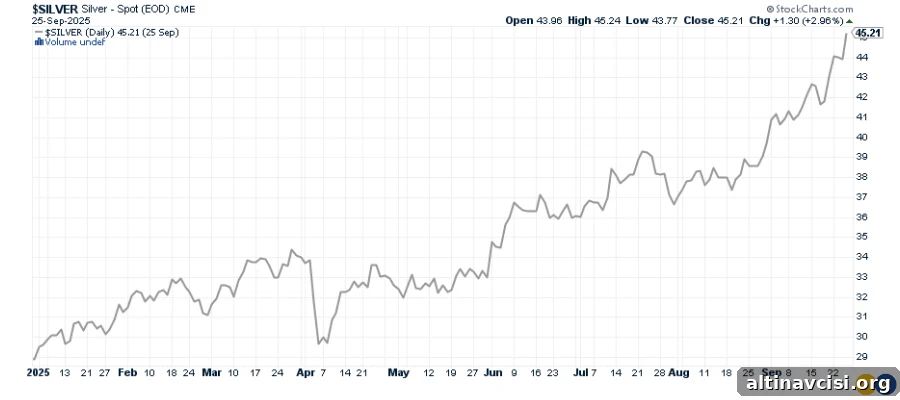
Price spikes in silver often accompany periods of economic stress, rising inflation, and financial uncertainty. To gauge what might happen next, it helps to revisit the last time silver approached $50 and compare the drivers then with those at work today.
Silver’s Last Peak: Lessons from 1980
In January 1980 silver briefly neared $50 amid a perfect storm of factors:
- Very high U.S. inflation, above 13%.
- Oil shocks following geopolitical upheaval in the Middle East.
- A weakening U.S. dollar that encouraged flows into hard assets.
- Heavy speculative buying, most famously by the Hunt brothers.
That episode ended abruptly, but several themes echo today: persistent inflation, geopolitical tensions, and skepticism toward fiat currencies. These conditions make precious metals attractive as stores of value.
Today’s Macro Backdrop: Why Silver Is Surging
1. Inflation hedge: Despite central bank rate moves, inflation pressures remain a concern. Silver, like gold, is sought as protection against eroding purchasing power.
2. Industrial demand: Silver plays a crucial role in solar panels, electric vehicles, and electronics. Strong industrial consumption supports silver’s price beyond its monetary role.
3. Currency and geopolitical risks: Trade tensions, sanctions, and geopolitical uncertainty have reduced confidence in fiat currencies, benefiting physical assets.
4. Gold’s lead: A robust rally in gold often precedes strength in silver. Silver typically follows gold’s direction but with greater volatility, offering larger percentage moves in both directions.
Will Silver Break $50?
Surpassing the all-time high would be more than symbolic: it would indicate a broad investor rotation toward tangible assets as hedges against inflation, debt, and financial instability. Historical episodes show silver can move rapidly once momentum builds.
During the 1979–1980 surge silver didn’t climb gradually; it went parabolic. In late 1979 it rose from about $30 to $40 in a few weeks, then accelerated from $40 to $49.45 in a matter of days. Similar rapid gains occurred in 2011 when silver moved from roughly $30 to $48 in three months. If history repeats, a break above $50 could be swift and extend considerably before a pause or retracement.
The Next Move in Silver
The current rally to the mid-$40s reflects a mix of industrial demand, inflation concerns, and geopolitical uncertainty rather than pure speculation. Whether silver reaches a new record imminently or consolidates near current levels first, the metal offers a unique risk-reward profile: it benefits from both monetary demand and growing industrial use.
For investors, silver’s proximity to its historic peak highlights potential upside alongside marked volatility. Those considering exposure should weigh silver’s dual role—as a hedge and an industrial commodity—against their time horizon and risk tolerance.
People Also Ask
What is the current silver price and how close is it to the all-time high?
As of late September the silver price is around $46.71 per ounce, a few dollars below the 1980 high of $49.45. With a year-to-date gain of roughly 60%, many market participants are watching for a potential breakout above $50.
When did silver approach $50 before?
Silver neared $50 in January 1980 and again ran into the high-$40s in 2011. Both episodes were driven by inflation fears, monetary concerns, and speculative demand.
How fast did silver rise during the 1980 spike?
In late 1979 silver jumped from about $30 to $40 in three weeks, then surged from $40 to nearly $49.50 within a few days in January 1980. That episode shows how quickly momentum can accelerate prices.
What is the gold-to-silver ratio and why does it matter?
The gold-to-silver ratio expresses how many ounces of silver equal one ounce of gold. A high ratio suggests silver may be undervalued relative to gold and can signal potential upside for silver when sentiment shifts.
How can I invest in silver safely?
Common options include buying physical silver bars and coins, or using secure storage and custody services that provide insured vaulting. Each approach has trade-offs related to liquidity, storage cost, and ease of sale; investors should consider their objectives and risk tolerance.
Investing in Physical Metals Made Easy
Get Gold & Silver Insights Direct to Your Inbox
Join thousands of investors who receive expert analysis, market updates, and exclusive offers every week.