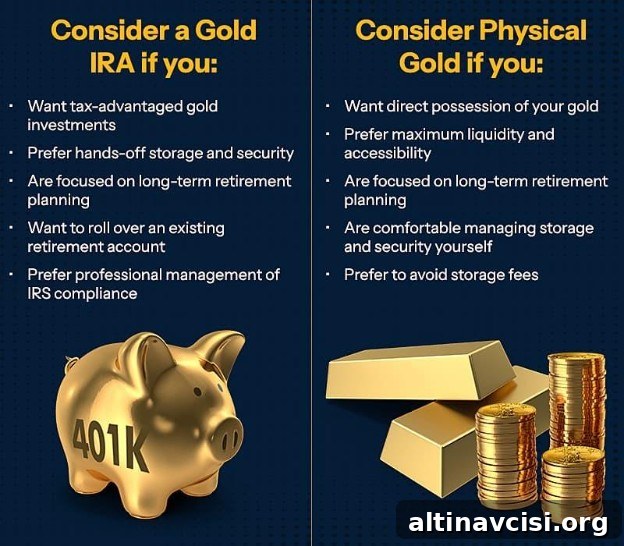
Deciding how to include gold in your retirement strategy often comes down to two primary choices: a Gold IRA that holds physical bullion in an approved depository, or owning and storing gold yourself at home or in a private vault. Each option has distinct advantages and trade-offs. Below is a concise comparison to help you choose the approach that best fits your goals.
What is a Physical Gold IRA?
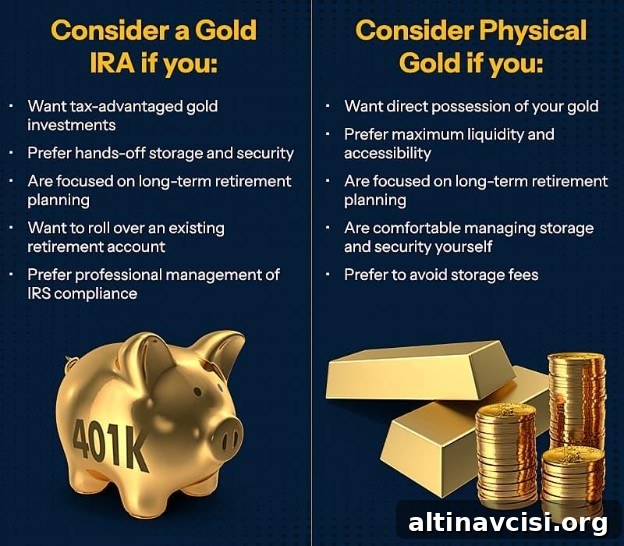
A physical Gold IRA is a self-directed Individual Retirement Account that stores IRS-approved gold coins or bars in secure, IRS-compliant depositories. It combines the tax-deferred growth features of an IRA with the portfolio diversification and long-term stability that precious metals can provide.
Home Gold Storage
Home gold storage refers to buying physical gold—coins or bars—and keeping it in your possession or in a private vault. This route gives you direct control over your holdings and immediate access, but it also places responsibility for security, storage, and insurance on you.
Which Option Matches Your Goals?
To determine the right choice, consider tax treatment, storage and security, access and control, and how each option aligns with your investment timeline and risk tolerance.
Tax Benefits & Implications
Tax treatment is one of the clearest distinctions between a Gold IRA and home ownership.
Physical Gold IRA:
- Investments grow tax-deferred until withdrawals are made
- Contributions may be tax-deductible depending on account type and eligibility
- Required minimum distributions (RMDs) generally begin at age 73
- Withdrawals are taxed at ordinary income rates
Home Gold Storage:
- No tax deferral or IRA-specific deductions
- Sales generally subject to capital gains tax; collectible rates can apply
- No RMDs or mandatory age-based withdrawals
Storage & Security
Storage and security responsibilities differ markedly between the two approaches.
Physical Gold IRA:
- Assets must be stored in IRS-approved depositories
- Storage typically includes insurance and regular audits
- Custodians and depositories manage security and recordkeeping
- Direct personal possession of IRA metals is not permitted
Home Gold Storage:
- You control the storage location—home safe, private vault, or third-party storage
- Security and insurance are your responsibility
- Easier access but greater personal risk if not properly secured
- Flexibility to choose non-IRS-approved items if desired
Access & Control
Consider how much control and immediate access you need versus the benefits of custodial management and regulatory structure.
Physical Gold IRA:
- Withdrawals before age 59½ may incur a 10% early withdrawal penalty in addition to taxes
- Transactions must be processed through the account custodian
- Only IRS-approved coins and bullion are eligible
- Annual IRA contribution limits apply (for example, the 2024 limit was $7,000 for many account holders)
Home Gold Storage:
- Buy and sell on your schedule without IRA penalties
- Direct control over transactions and choice of dealers
- No restrictions on the types or quantities of gold you may own
- No limits on purchase amounts
Finding the Right Balance
These options are not mutually exclusive. Many investors split their allocation between a Gold IRA for tax-advantaged, long-term holdings and privately held gold for liquidity and immediate access. This blended approach can offer tax benefits, institutional security, and the flexibility that direct ownership provides.
Ready to Protect Your Retirement?
If you want personalized guidance, consult a qualified precious metals specialist or financial advisor who can review your retirement goals and tax situation. A professional can help you weigh the pros and cons and design a gold strategy that fits your needs.
Contacting a trusted representative can clarify details like eligible metals for IRAs, storage options, and how gold might complement your broader retirement plan.
Schedule a Free Consultation Today
Note: This article is for informational purposes only and does not constitute tax advice. Consult a tax professional for guidance tailored to your situation.
Past performance is not indicative of future results. All investments, including precious metals, carry risk and may result in partial or complete loss of principal. Information presented here reflects sources available at the time of writing and may change. Investors should perform their own due diligence and consult appropriate professionals before making investment decisions.