Daily News Nuggets | Today’s top stories for gold and silver investors
February 27th, 2026 | Brandon Sauerwein, Editor
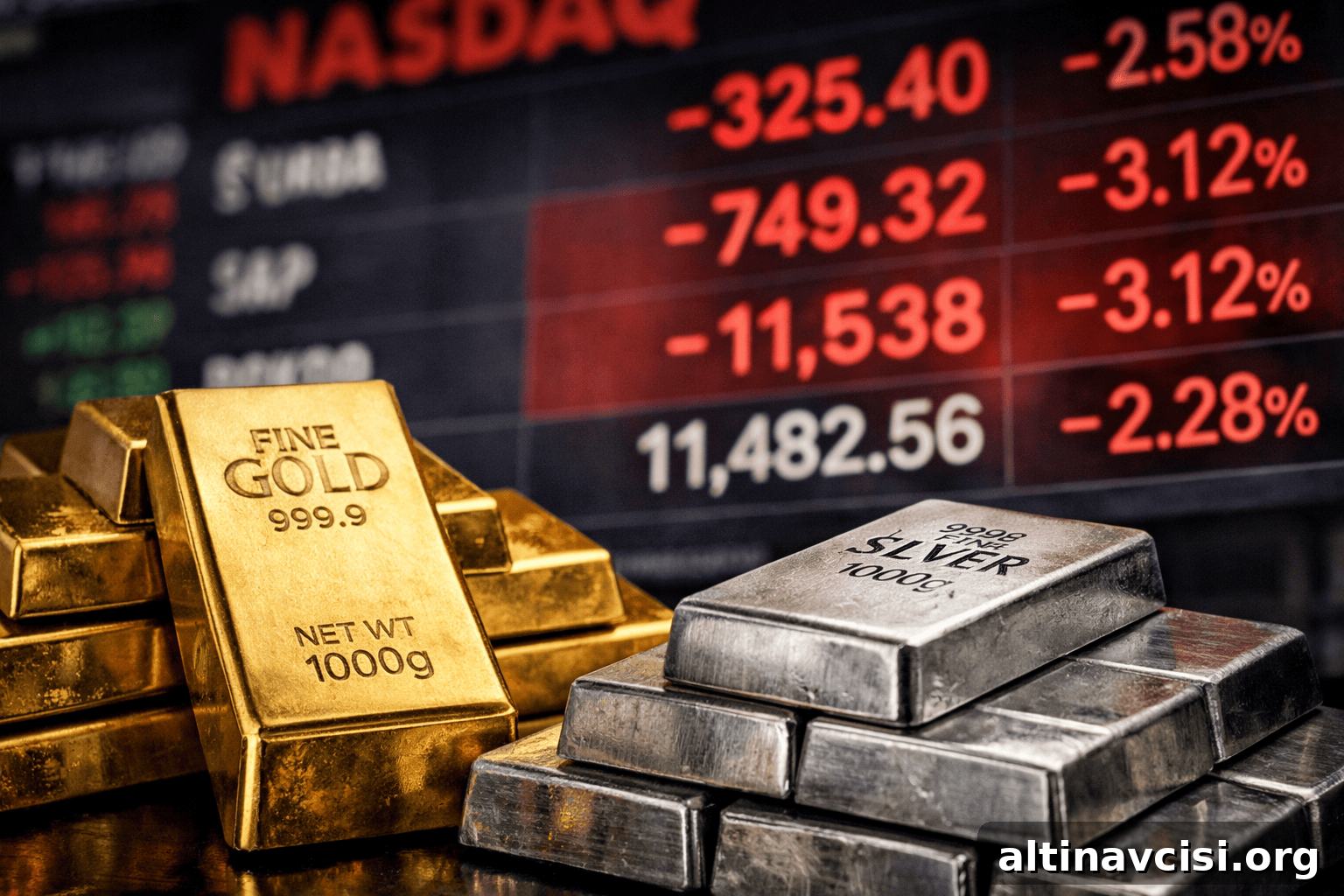
Gold and Silver Prices Rise as Inflation Data Rattles Wall Street
Wholesale prices came in hotter than expected in January. The Producer Price Index rose 0.5% for the month, well above the 0.3% economists had forecast. Core PPI, which excludes food and energy, surged 0.8% — nearly three times the anticipated increase.
Markets reacted immediately: Dow futures slid more than 580 points in early trading and S&P 500 futures fell close to 1%. The PPI matters because higher input costs for producers typically filter through to consumers and feed into the PCE index, the Federal Reserve’s preferred inflation gauge.
Persistent inflation is increasingly the main force driving gold and silver. Wall Street had been pricing in two rate cuts this year; today’s report makes that outlook harder to sustain. The longer inflation remains above target, the more the Fed is likely to hold rates steady — and the stronger the case becomes for gold as an inflation hedge.
Tech’s Worst Month in Nearly a Year
February has been a rough month for technology stocks. The Nasdaq Composite is on track for its worst monthly performance since March 2025, down roughly 2.5% with the final trading day offering the last chance for a rebound.
Nvidia provides a clear example of the mood. The chipmaker reported exceptional results — $68.1 billion in Q4 revenue and $78 billion guided for Q1 — yet shares fell about 5.5% after the release. When a company posts such strong numbers and still trades lower, it often reflects broader market sentiment rather than company fundamentals.
The weakness extends beyond a single name. AI-related valuation fatigue is setting in, and concerns are rising that automation could disrupt jobs faster than the economy can adapt. Companies including Block have recently announced significant layoffs and explicitly cited AI as a factor. In this environment, financials and industrials have begun to outperform tech.
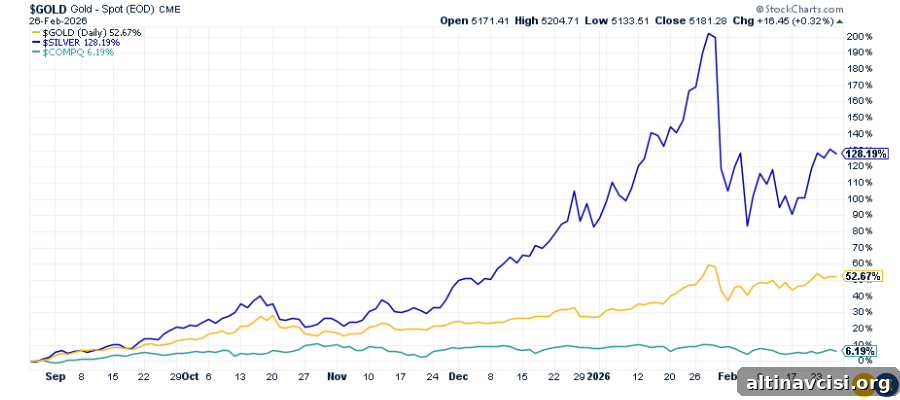
Over the past six months the rotation is clear: while the Nasdaq has been relatively flat, gold is up more than 50% and silver has more than doubled. Capital hasn’t evaporated — it has shifted into hard assets.
Gold and Silver vs. the Nasdaq (Sep 2025 – Feb 2026)
Silver Breaks Out — and It’s Sending a Signal
Silver surged more than 4% on Friday, outpacing gold’s smaller gain. Such strong relative performance usually reflects multiple forces at once and draws market attention.
Several factors are at work: rising inflation expectations, growing industrial demand from solar and electronics, and technical dynamics after weeks of consolidation below $90 that likely triggered short-covering. When silver outperforms gold this sharply, it often signals broader interest in hard assets.
The gold-silver ratio tightened significantly, a pattern historically associated with expanding appetite for tangible stores of value. Because silver is both a monetary and industrial metal, its price action provides useful insight into investor sentiment across different economic themes.
Gold Holds Steady as US-Iran Talks Enter Round Three
Gold climbed above $5,200 per ounce on Friday as US and Iranian diplomats met for a third round of nuclear talks in Geneva. The metal is up about 20% year-to-date, though many investors are observing developments rather than adding aggressively.
The market response is straightforward: if talks fail, gold typically rises; if a deal emerges, prices often retreat. Geopolitical uncertainty surrounding US-Iran relations and renewed concerns about tariffs have become bullish catalysts. The US trade representative also warned this week that tariffs for some trading partners could exceed 15%, adding another layer of uncertainty.
Gold cleared the $5,200 resistance level that had capped it earlier in the week. Analysts cite $5,340 and $5,400 as the next targets, but the most immediate driver for prices is likely to be the outcome in Geneva rather than developments on Wall Street.
Gold Is Turkey’s Unauthorized Stimulus Program
Turkish households hold roughly $600 billion worth of gold outside the banking system, stored at home or passed down through families. That level of household ownership is among the highest globally, and rising gold prices are complicating Turkey’s battle with inflation in unexpected ways.
Over the past year, higher gold prices added about $300 billion to the value of those holdings, with January alone contributing roughly $80 billion. That increase creates a measurable wealth effect: Turks are spending more and buying homes, even as annual inflation remains above 30%. Authorities have noted sharp rises in housing prices in regions with higher concentrations of gold holdings.
The mechanism is simple. As perceived household wealth grows, consumption increases, which boosts demand and, in turn, inflation. In effect, rising gold prices are acting like an informal stimulus program the government didn’t authorize and cannot directly control.
This situation underscores a broader point: at scale, gold is not just a financial asset — it can reshape local economies and influence macroeconomic dynamics.
The Edge Every Investor Needs
Smarter precious metals investing starts here. The Nuggets Newsletter delivers market insights, Fed updates, global trends, educational content, and timely analysis to help investors make informed decisions.
You May Also Like
- Gold Price Rally Nears Record Streak as Tariffs Return
- Metals Rise, Confidence Cracks, and the Affordability Gap Widens
- Gold Up 21%, Silver 25% YTD as AI and Inflation Risks Build
- Gold Hits $5,000. Is This the Next Leg Higher?
- Gold Support Levels Firm as Washington Backs Minerals