Gold and silver market update — April 28, 2026
Key Takeaways
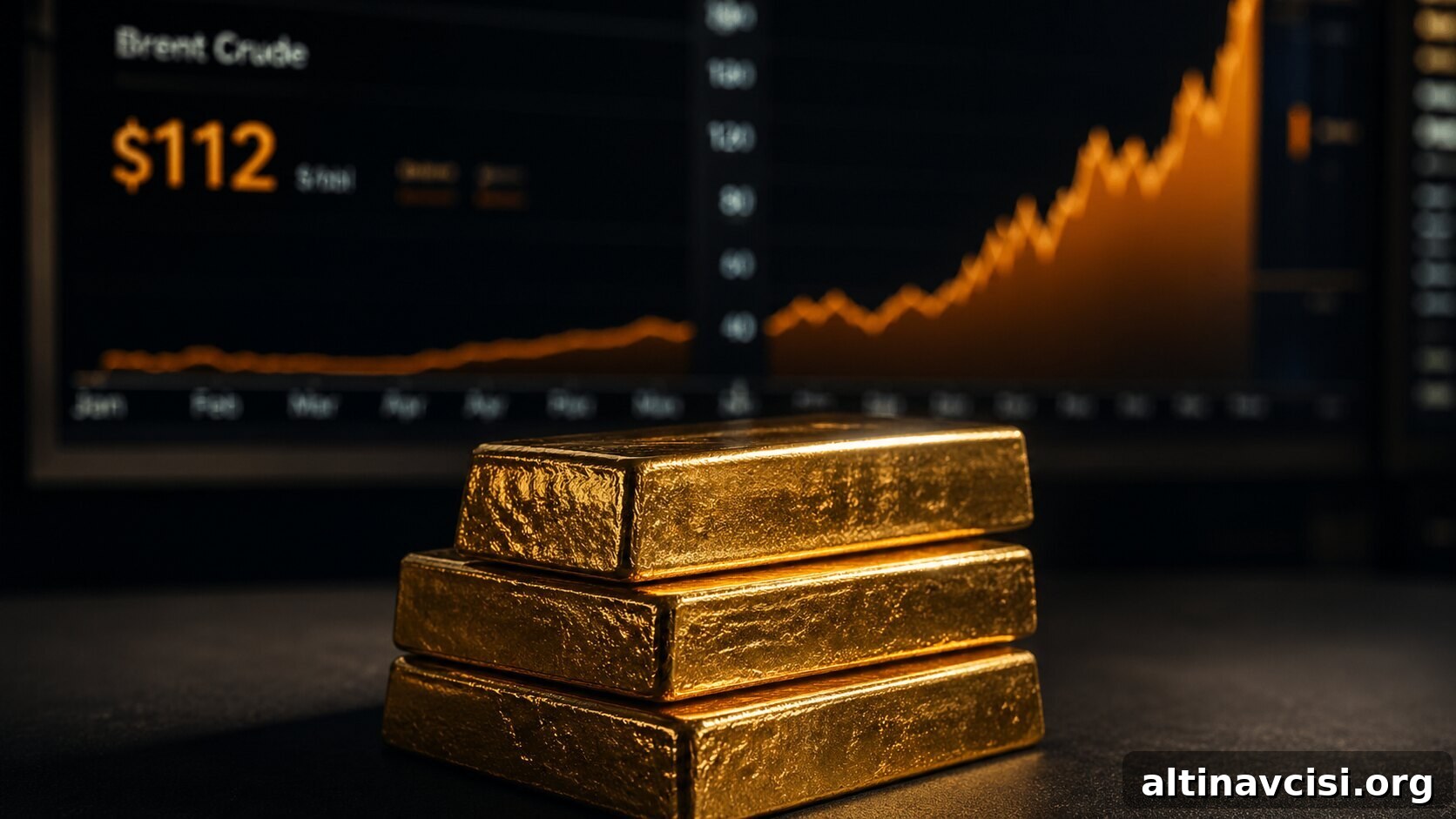
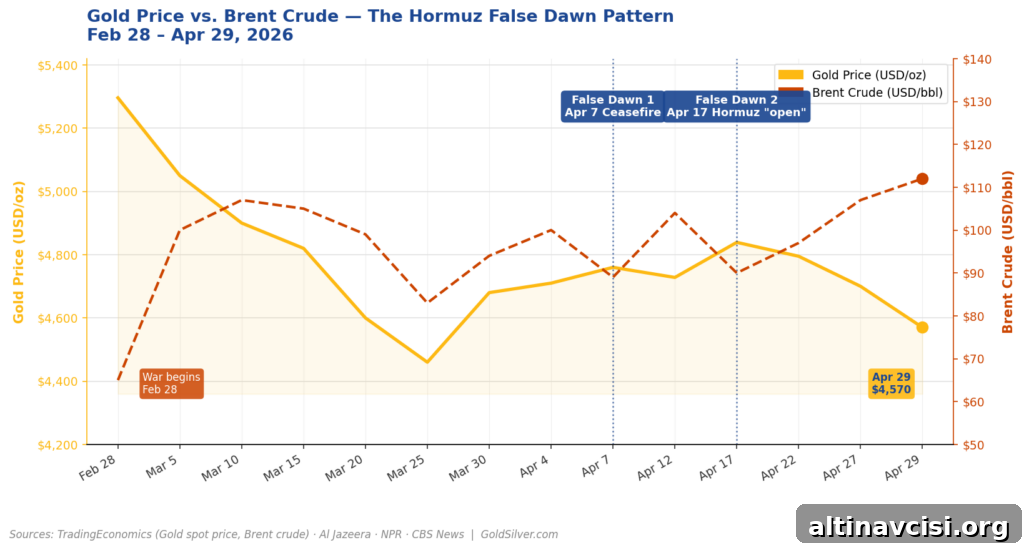
- Iran’s army confirmed it is “still in a war situation.” The latest Hormuz proposal collapsed. Brent topped $112. Gold fell about 2% to $4,570 — its lowest level since late March.
- Gold is sliding not because investors have lost faith in the metal but because oil-driven inflation is keeping the Fed on hold, which keeps real yields elevated and lowers gold demand.
- The Strait of Hormuz has reopened briefly twice since February 28 and closed again both times. These are false dawns, not a single resolution. Gold’s structural supports — heavy central bank buying and a large US fiscal deficit — remain intact.
Sixty days into the Iran war, gold is doing something many investors find surprising: it is falling even as oil and geopolitical tensions remain high. Conventional logic suggests gold should rally when a war is active and oil spikes. The current move shows a specific mechanism at work, and understanding it is more important than fixating on the price action.
As of April 29, 2026, gold trades near $4,570 per ounce, down roughly 2% from the prior session and nearly 19% below its all-time high of $5,589 set on January 28, 2026. Brent crude topped $112 on April 28, up about 10% on the week after Iran’s Hormuz proposal failed to produce a deal. An Iranian army spokesperson said the country remains “still in a war situation.”
Price down, oil up, war ongoing — these facts are consistent once you follow the chain that links oil, inflation, the Fed, real yields and institutional flows.
What Happened This Week With Hormuz Negotiations
On April 27 Iran proposed reopening the Strait of Hormuz in exchange for the US lifting its naval blockade while deferring nuclear talks. The White House confirmed the plan was reviewed by the national security team. Secretary of State Marco Rubio described the submission as “better than what we thought they were going to submit,” but he emphasized the core issue remained unresolved.
President Trump posted on social media declaring Iran “in a State of Collapse” and urging Hormuz to reopen quickly. No agreement followed and no second round of talks has been scheduled.
This pattern has repeated. On April 17 Iran said the Strait was “completely open” during a ceasefire and oil fell sharply while gold rose. Days later the blockade remained in place, Iran reimposed restrictions and the Strait closed again, reversing the moves. The same sequence occurred after the April 7 ceasefire: temporary openings, brief market relief and then a return to disruption.
The Edge Every Investor Needs
Smarter precious metals investing starts here. The Nuggets Newsletter brings essential market insights, Fed updates, global trends, educational videos, and much more.
Why Does High Oil Push the Gold Price Down, Not Up?
The mechanism works in four linked steps. Recognizing this chain explains why gold can fall even while geopolitical risk and oil remain elevated.
Step 1: Oil keeps CPI elevated. March 2026 CPI was 3.3% year-over-year, the highest since May 2024, with gasoline surging sharply.
Step 2: High CPI keeps the Fed on hold. The FOMC was expected to hold rates at 3.50–3.75% for the third consecutive meeting. With oil near $112 and CPI above 3%, prospects for multiple cuts are limited.
Step 3: Rates on hold keep real yields elevated. Real yields — inflation-adjusted returns on government bonds — are among the most direct short-term drivers of gold prices. Higher real yields make cash and bonds more attractive relative to non-yielding gold.
Step 4: Institutional money stays in bonds. With attractive real returns available in Treasuries, institutional demand for gold weakens, establishing a ceiling on the metal’s price until the rate outlook changes.
Investment banks have modeled this link. For example, Goldman Sachs estimates each 25 basis point Fed cut adds roughly 60 tonnes of gold ETF demand over six months. Multiple cuts would materially lift gold, but cuts require lower oil and cooler inflation — conditions that have not yet emerged.
Goldman’s base case forecasts Brent around $90 by Q4 2026, still well above pre-war levels; a sustained Brent near $120 would reverse the real-yield headwind and push gold’s ceiling into a solid floor. Until that scenario happens, the ceiling remains the dominant force.
Is the Strait of Hormuz Reopening a Single Event or a Long Process?
Recent evidence points to a process with repeated false dawns rather than a one-time reopening. Since February 28 the Strait has been effectively disrupted. Brief openings on April 7 and April 17 were followed by renewed closures within days. Large-scale supply disruptions typically take time to resolve, and markets will likely see more episodic openings and setbacks before a durable solution.
Each false dawn follows the same pattern: oil falls, inflation expectations ease, rate-cut odds improve, real yields compress and gold spikes — only for oil to recover and gold to surrender gains. Tracking that rhythm is more useful than reacting to every diplomatic headline.
What remains unchanged is the structural case for gold. Central banks bought large quantities of gold in 2025, well above pre-2022 averages, and the US fiscal deficit and long-term debt dynamics continue to support demand for a non-sovereign store of value. Those fundamentals form a durable floor beneath the market.
When the Hormuz disruption resolves — meaning lower oil, cooling CPI and a Fed that can cut — the current ceiling will fade and the path back toward the January high becomes clearer. That sequence simply has not started yet.
What Should Gold Investors Watch This Week?
Thursday, April 30 — Q1 GDP, Core PCE, Employment Cost Index.
If Q1 data confirm stagflation — weak growth with inflation above 3% — the Fed’s pause becomes entrenched, reinforcing the current ceiling and strengthening the floor. That outcome would keep gold range-bound until inflation cools.
Brent above or below $110.
$110 is a practical threshold where the inflation-ceiling mechanism for gold remains fully engaged. A sustained fall below that level would change the rate-cut calculus and could open the door to renewed gold strength.
Iran’s language, not individual proposals.
Phrases like “still in a war situation” signal ongoing conflict; a durable market signal would be language committing to a permanent reopening framework rather than temporary proposals that collapse within days.
The drivers behind gold’s nearly 40% year-over-year gain remain present: a strong structural floor from central bank demand and fiscal dynamics, and a ceiling driven by the Fed’s limited ability to cut while oil and inflation remain elevated. This week’s data will show which force is dominant.
Stay On Top of Gold & Silver Prices
Get important market alerts sent straight to your inbox.
SOURCES
1. Al Jazeera — Iran War Live: Iranian Army ‘Still in War Situation’; Gulf Leaders Meet
2. NPR — Deadlock Over Iran’s Nuclear Program and the Strait of Hormuz Cripples Peace Efforts
3. NBC News — U.S. Appears Cool on Iran Proposal to End War and Reopen Hormuz Without a Nuclear Deal
4. Bureau of Labor Statistics — Consumer Price Index, March 2026
5. TradingEconomics — Brent Crude Oil Price, April 28, 2026
6. TradingEconomics — Gold Spot Price, April 28–29, 2026
7. CBS News — What Is the Highest Gold Price in History?
8. Benzinga — Goldman Lifts Oil Forecast Again: Q4 Brent $90, Upside Scenario $120
9. Goldman Sachs Insights — Gold Is Forecast to Rise: ETF Demand and Rate Cut Framework
10. World Gold Council — Gold Demand Trends: Full Year 2025
11. Congressional Budget Office — The Budget and Economic Outlook: 2026 to 2036
12. International Energy Agency — Global Oil Supply Disruption Assessment, 2026
13. Federal Reserve Bank of Atlanta — GDPNow Q1 2026 Estimate, April 21, 2026
By the GoldSilver Editorial Team — helping investors understand sound money since 2005. This article is for informational purposes only and does not constitute financial, investment, or tax advice. Always consult a qualified financial advisor before making investment decisions.
You May Also Like:
- Oil Hits $100 and OPEC Is Fracturing. Gold Knows Why
- How China Restricts Silver Supply Without Touching Silver
- Powell Press Conference: What It Means for Gold
- Iran Blinked — And One Word From Powell Decides What Happens Next
- COMEX Silver First Notice Day April 30: What to Watch
- What Warsh as Fed Chair Means for the Gold Price
- 5 Signals the Mainstream Gold & Silver Narrative Missed
- Before the Fed Speaks, Watch This Number for Gold