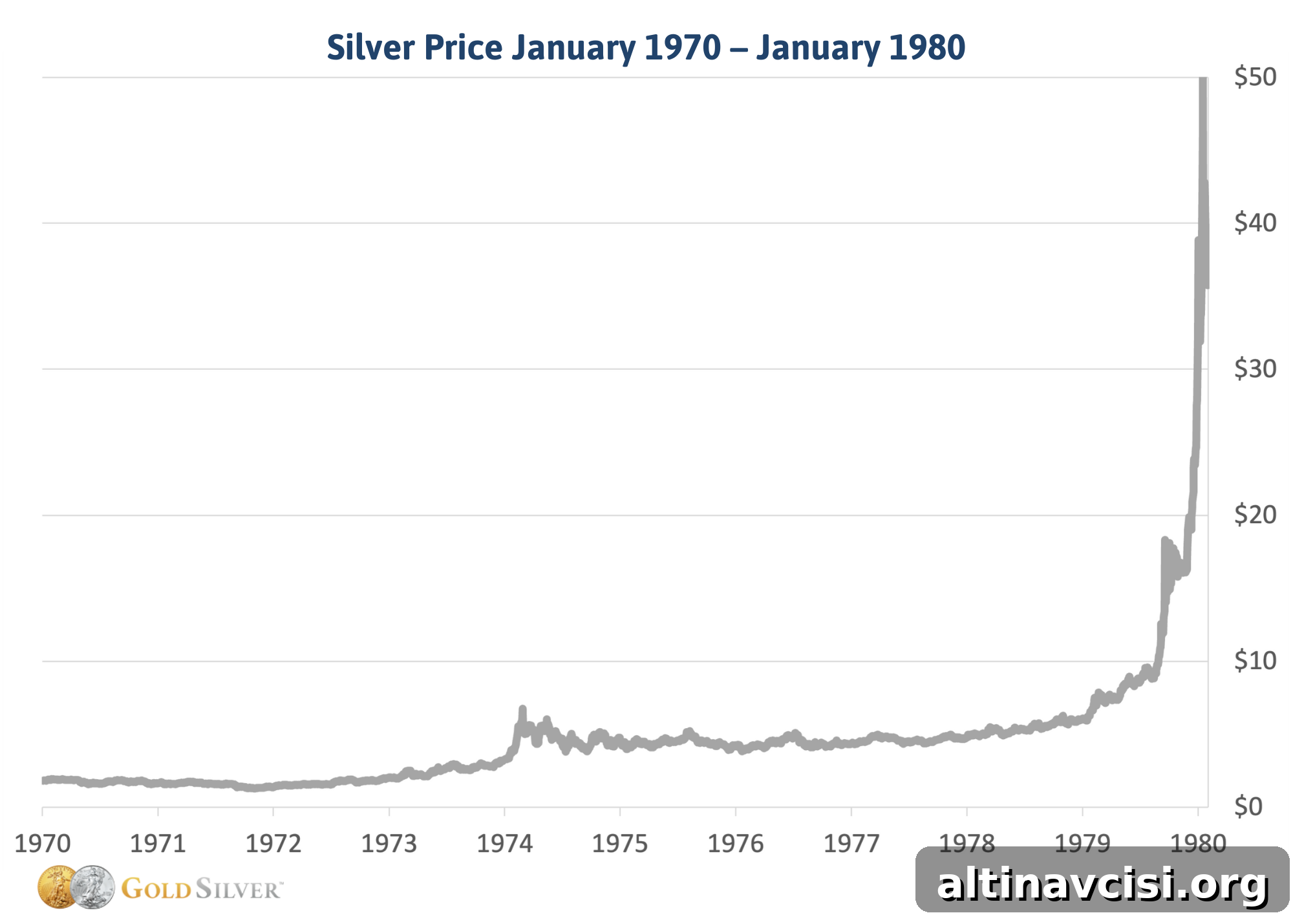
Forty-four years ago a pivotal change occurred in the metals markets: for the first time in American history, gold and silver were decoupled from the U.S. dollar. That shift helped set the stage for one of the most significant precious metals bull markets in modern times.
Below, we summarize recent developments influencing gold and silver, then present Mike Maloney’s researched account of two men whose actions left a profound mark on the precious metals market.
J.P. Morgan Sees Gold Peaking at $2,300/oz in 2025
In a new research note, J.P. Morgan highlights that expected Federal Reserve rate cuts and lower U.S. real yields are likely to be the primary drivers for gold in the coming year. The bank anticipates a short-term softening of prices before a renewed climb later in 2024, projecting a potential peak near $2,300 per ounce in 2025.
Corporate Debt Defaults Jump 80% in 2023
S&P Global Ratings reports a sharp rise in corporate defaults last year. The number of companies failing to meet debt obligations climbed to 153 in 2023, up from 85 the prior year—an 80% increase and the highest level since the COVID-19 shock of 2020.
Fed Official Signals Rate Cuts May Be Near
Federal Reserve governor Christopher Waller expressed growing confidence that inflation will return to the Fed’s 2% target this year. His remarks, consistent with other senior Fed officials’ comments, strengthen expectations for policy easing—potentially starting by mid-year.
Which ancient kingdom is credited with minting the first gold coins for general circulation, known as the Croeseid, around 550 BC?
A. The Roman Empire
B. The Kingdom of Lydia
C. The Persian Empire
D. Ancient Egypt
Scroll to the bottom for the answer…
The 1970s produced a remarkable run in precious metals, driven by major policy and economic shifts: President Nixon’s removal of the gold standard, the Coinage Act of 1965, and prolonged high inflation throughout the decade.
But no episode in that era had more dramatic, direct consequences for silver—and far-reaching market implications—than the Hunt brothers’ campaign to control the silver market. The following is Mike Maloney’s researched narrative of Bunker and Herbert Hunt, two Texas brothers whose actions shook commodities markets and drew intense regulatory attention.
The Day the Hunt Brothers Capped the Price of Gold (Part I)
Written by: Mike Maloney
Many silver investors recall the all-time high silver price of about $50 an ounce and attribute it to two Texas billionaires, Bunker and Herbert Hunt, who amassed enormous positions and are widely said to have “cornered” the market. At one point the Hunts controlled the rights to more than half of the world’s available silver supply.
Some accounts argue the Hunts were, in effect, sacrificed by the Federal Reserve in coordination with major commodities exchanges—COMEX and the Chicago Board of Trade—to tamp down prices. Regardless of the motivations, the Hunts’ actions had massive consequences for prices and market structure.
The Hunt Family Fortune
Bunker and Herbert were sons of H.L. Hunt, a self-made billionaire who built his wealth in real estate and oil. H.L. fathered 15 children across three marriages, and several heirs became wealthy in their own right. Bunker’s early oil ventures suffered setbacks, including failed drilling in Pakistan, but a major Libyan oil field and diverse investments eventually made him extremely wealthy—by the early 1960s he had eclipsed his father’s fortune.
The Rise of Silver
The environment leading to silver’s price surge included persistent inflation, sluggish growth, and political unrest. In the mid-1960s, President Lyndon Johnson’s increased deficit spending for social programs, tax cuts, and the Vietnam War helped push inflation higher. By 1971 the U.S. Treasury could not support full convertibility to gold, and President Nixon ended the Bretton Woods gold-dollar linkage, creating the modern fiat currency system.
Oil embargoes and supply disruptions compounded public anxiety, and by the late 1970s consumer prices were rising rapidly. Facing erosion of their wealth from inflation, the Hunt brothers sought to protect their fortune with real assets. Bunker, suspicious of government policy and wary of gold markets—especially since private U.S. ownership of gold was restricted—focused on silver as a durable store of value.
Silver traded near $2 per ounce in the early 1970s. With global silver production slowing and industrial demand rising, government and private stockpiles were the primary buffers. The Hunts concluded that once those hoards depleted, silver scarcity would push prices sharply higher.
They pursued silver primarily through futures contracts—an efficient, leveraged way to amass exposure. Futures let investors control large positions by posting margin, magnifying gains and losses. Although most futures settle in cash, the Hunts insisted on physical delivery to hedge against monetary depreciation and political risk.
When Bunker began buying, silver traded around $1.50 an ounce. By early 1974, the Hunts had amassed futures positions representing roughly fifty-five million ounces of silver.
Shipping and Storing the Hoard
Owning such a volume presented storage and security challenges. The Hunts sought the perceived safety of Swiss vaults and chartered three Boeing 707s to move much of their silver to Europe. The operation involved armed guards from the Hunts’ Circle K ranch, armored trucks, and covert loading at U.S. airports.
In Zurich, the silver was distributed across several banks and vaults, including Credit Suisse, UBS, and other facilities. The logistics were expensive: plane charters, armed transport, and anonymous Swiss storage fees which, at scale, amounted to substantial ongoing costs. The brothers preferred those expenses to holding assets vulnerable to U.S. taxation or perceived political interference.
As news spread that a sizable, secretive buyer was taking delivery of massive silver shipments, traders grew nervous. Because industrial demand was rising while available supply remained thin, few large players could significantly influence prices. Rumors that the Hunts were attempting to corner the market began to circulate, and regulatory scrutiny followed.
The Hunts’ campaign was far from over. Their appetite for physical silver would eventually provoke intense market reactions and government attention, with ramifications for the U.S. financial system.
We will continue this narrative in Part II of “The Day the Hunt Brothers Capped the Price of Gold” in next week’s issue of GoldSilver Nuggets.
Buy Gold or Silver Today
That’s it for this week’s GoldSilver Nuggets. We’ll be back next week with further news, analysis, and updates.
Best,
Brandon S.
GoldSilver
Which ancient kingdom is credited with minting the first gold coins for general circulation, known as the Croeseid, around 550 BC?
A. The Roman Empire
B. The Kingdom of Lydia
C. The Persian Empire
D. Ancient Egypt
Answer – B. The Kingdom of Lydia
The Croeseid, minted around 550 BC in Sardis under King Croesus of Lydia, represents one of the earliest standardized gold and silver coins and helped establish a bimetallic monetary system using both metals.