
Key Takeaways
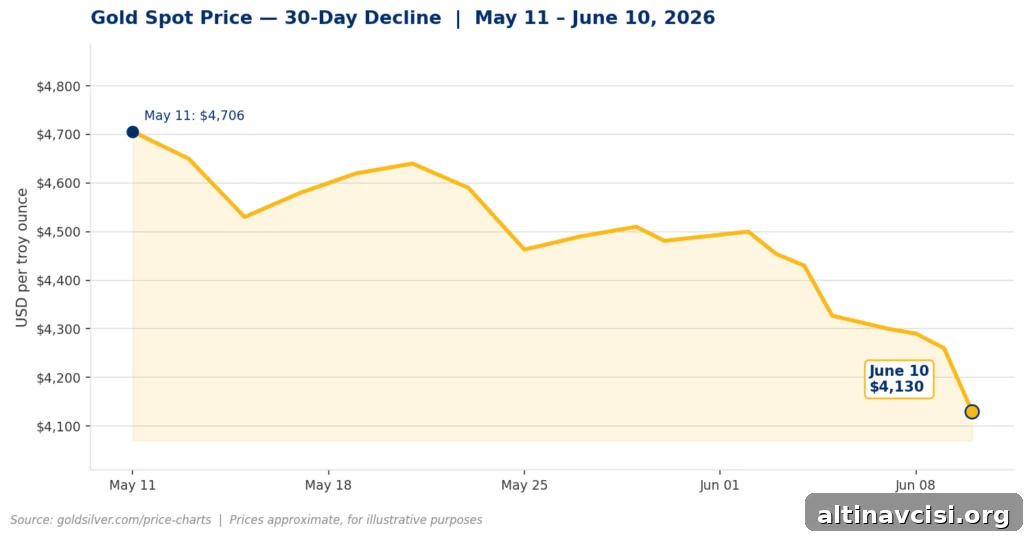
- Gold dropped to $4,130 today — its lowest level since late November 2025 — after hotter-than-expected CPI data and renewed US‑Iran strikes.
- May Consumer Price Index rose 4.2% year‑over‑year, the strongest reading since April 2023, with energy accounting for over 60% of the monthly increase.
- The Iran conflict is, counterintuitively, bearish for gold: the oil shock fuels inflation, which increases Fed rate‑hike expectations and raises the opportunity cost of holding gold.
- Core CPI, which excludes food and energy, is 2.9% annually. Underlying inflation has not yet become broad‑based.
- When the Strait of Hormuz reopens, the process reverses: oil falls, CPI cools, rate‑hike pressure eases, and gold should recover.
This morning, a post on Truth Social from former President Trump grabbed attention, but the market reaction to gold is driven by economics more than social media noise. His comment read: “Iran’s Military is a complete and total mess. Much of it, like their Navy and Air Force, doesn’t even exist anymore — They have been completely defeated.”
Gold sits at $4,130 per ounce, down about $130 or 3% — the lowest since late November 2025.
May inflation printed 4.2% year‑over‑year, the hottest pace since April 2023. The war is escalating. Yet gold fell. The explanation is straightforward.
The Edge Every Investor Needs
Smarter precious metals investing starts here. The Nuggets Newsletter brings you essential market insights, Fed updates, global trends, educational videos, and more.
Why Is Gold Falling During a War?
Most investors assume war lifts gold, and that intuition is generally true. But this conflict adds a strong countervailing force: a large disruption to global oil flows that feeds inflation and, in turn, higher interest‑rate expectations — the enemy of non‑yielding assets like gold.
This war matters not only for geopolitical risk but because the Strait of Hormuz, a critical passage for about 20% of seaborne oil trade, is effectively closed. Closing Hormuz raises energy prices, which show up quickly in headline CPI and prompt markets to reprieve expectations for higher interest rates.
The mechanism behind today’s move follows a simple four‑step chain:
1. Strait of Hormuz disruption. Since the US‑Iran conflict intensified on February 28, 2026, shipments through Hormuz have been constrained, pushing up oil and fuel costs.
2. Energy lifts headline inflation. The May CPI report showed a 4.2% year‑over‑year gain, with energy responsible for more than 60% of the monthly rise and gasoline jumping sharply.
3. Hot inflation raises Fed tightening odds. Market tools now price a material chance of further tightening, and some banks have pushed back expected timing for rate cuts, keeping yields elevated.
4. Higher rates increase gold’s carrying cost. Gold yields nothing; higher Treasury yields make interest‑bearing assets relatively more attractive, prompting some investors to reduce gold exposure.
Recent strikes on Iranian air‑defense sites and subsequent retaliatory actions have left the diplomatic path strained, keeping the Strait effectively closed and sustaining pressure on energy prices and, therefore, gold.
Does Core CPI Tell a Different Story?
Headline CPI grabbed headlines, but the more informative metric for long‑term inflation trends is core CPI, which excludes food and energy. Core CPI rose 0.2% month‑over‑month and 2.9% year‑over‑year. That suggests the current pressure is concentrated in energy rather than broad‑based price increases across rents, wages, and services.
That distinction matters: energy shocks are event‑driven and can reverse once supply routes reopen. Structural inflation requires a sustained rise in underlying costs; at present, core readings do not indicate a self‑perpetuating inflation cycle.
If Hormuz reopens and oil prices fall, energy’s contribution to CPI will shrink, easing the Fed’s case for near‑term hikes and removing a key constraint on gold.
What Happens to Gold When Hormuz Reopens?
Gold is roughly 26% below its record high of $5,589.38 from January 28, 2026. That decline mirrors the magnitude seen during the 2022 Fed hiking cycle, but the context differs. In 2022 the Fed delivered large, realized increases in policy rates; today markets are pricing heightened odds of future tightening driven primarily by an exogenous oil shock.
When the Strait reopens, the chain should reverse: oil falls, headline CPI eases, rate‑hike expectations retreat, real yields compress, and gold should reprice higher. Structural drivers for gold — sustained central bank purchases, high U.S. debt and large fiscal deficits — remain intact and support a longer‑term bullish case independent of short‑term headline noise.
The Federal Open Market Committee meeting on June 16–17, chaired by Kevin Warsh, and the updated dot plot will offer clues on how long rate‑path uncertainty might last.
In sum, today’s selloff doesn’t negate gold’s investment thesis; it reflects an energy‑driven, transitory shock that has temporarily elevated rates expectations and the cost of holding non‑yielding assets.
Stay On Top of Gold & Silver Prices
Get important market alerts sent straight to your inbox.
SOURCES
Selected public sources and market data for reference.
Disclaimer: This article is for informational purposes only and does not constitute financial or investment advice. Always consult a qualified financial adviser before making investment decisions.
You May Also Like:
- May CPI Printed 4.2%. Core Inflation Beat. So Why Did the Gold Price Drop?
- Gold Is Down 9%. The CPI Print That Could Either Extend the Drop — or End It.
- Gold Price News: Goldman, China, CPI, and the Fed Explained
- Gold Near $4,330 as Rate‑Hike Bets Hit 70% and China Acts
- Gold Is Down 22% — The Same Drop as 2022. The Floor Is Not the Same.
- Silver Falls 6% on Jobs Beat. The Six‑Year Deficit Didn’t.
- Gold Rate Hike Fears Are Weighing on Prices. Here’s the Full Picture.
- Gold at $4,480: Physical Demand Hits a 50‑Year Milestone