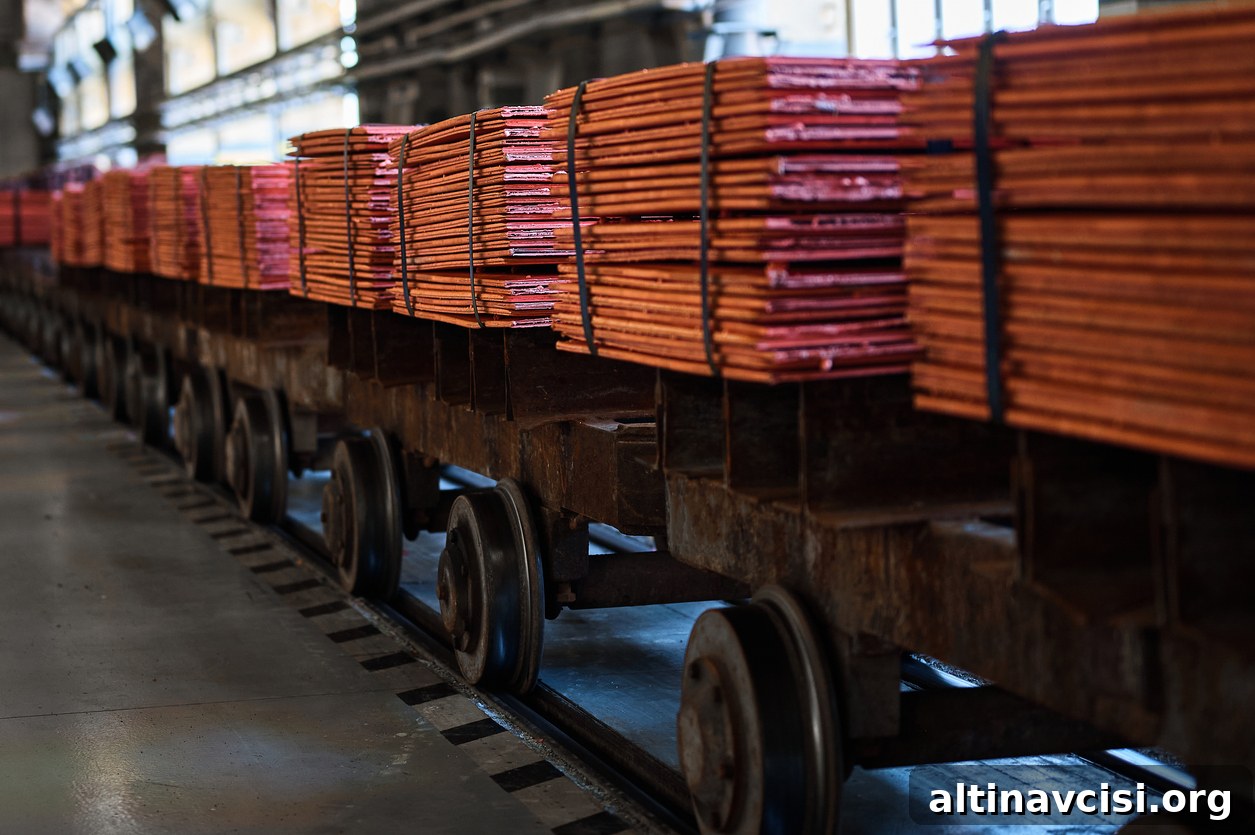
The Trump administration announced a 50% tariff on all imported copper, triggering a sharp market reaction: copper futures plunged as much as 18% in after-hours trading.
Shares of copper mining companies tumbled alongside the metal’s price drop, reflecting investor concerns about demand and profit margins. The tariffs are being presented as a measure to protect U.S. manufacturers and reduce the trade deficit, but analysts warn the policy could raise costs for a wide range of consumer and industrial products that rely on copper, from electrical wiring and plumbing to electronics and renewable-energy equipment.
Officials said the tariffs take effect this Friday and will apply to a metal that the United States imports nearly half of its supply of, with a large portion coming from Chile. Market observers note that higher import costs may encourage increased domestic production over time, but they also caution that an abrupt tariff of this magnitude can disrupt supply chains, create short-term volatility, and potentially slow manufacturing sectors that depend on competitively priced copper.
Industry groups and some economists have criticized the move, arguing it could generate inflationary pressure on construction, automotive, and electronics industries while providing limited immediate benefit to U.S. mining output. Others contend the tariffs could incentivize investment in domestic mining and recycling infrastructure, improving long-term supply resilience.
For consumers and businesses, the most direct near-term consequence is likely to be higher prices for goods that contain significant amounts of copper. Contractors could see increased material costs, manufacturers might face narrower margins or pass costs to buyers, and projects in utilities and renewable energy that require large copper inputs could experience budgetary strain.
Markets will be watching for further guidance from the administration on exemptions, phased implementations, or support measures for affected industries. Investors will also monitor production responses from both U.S. and foreign producers, shifts in trade flows, and any currency movements that could offset or amplify the tariff’s effects on global copper prices.