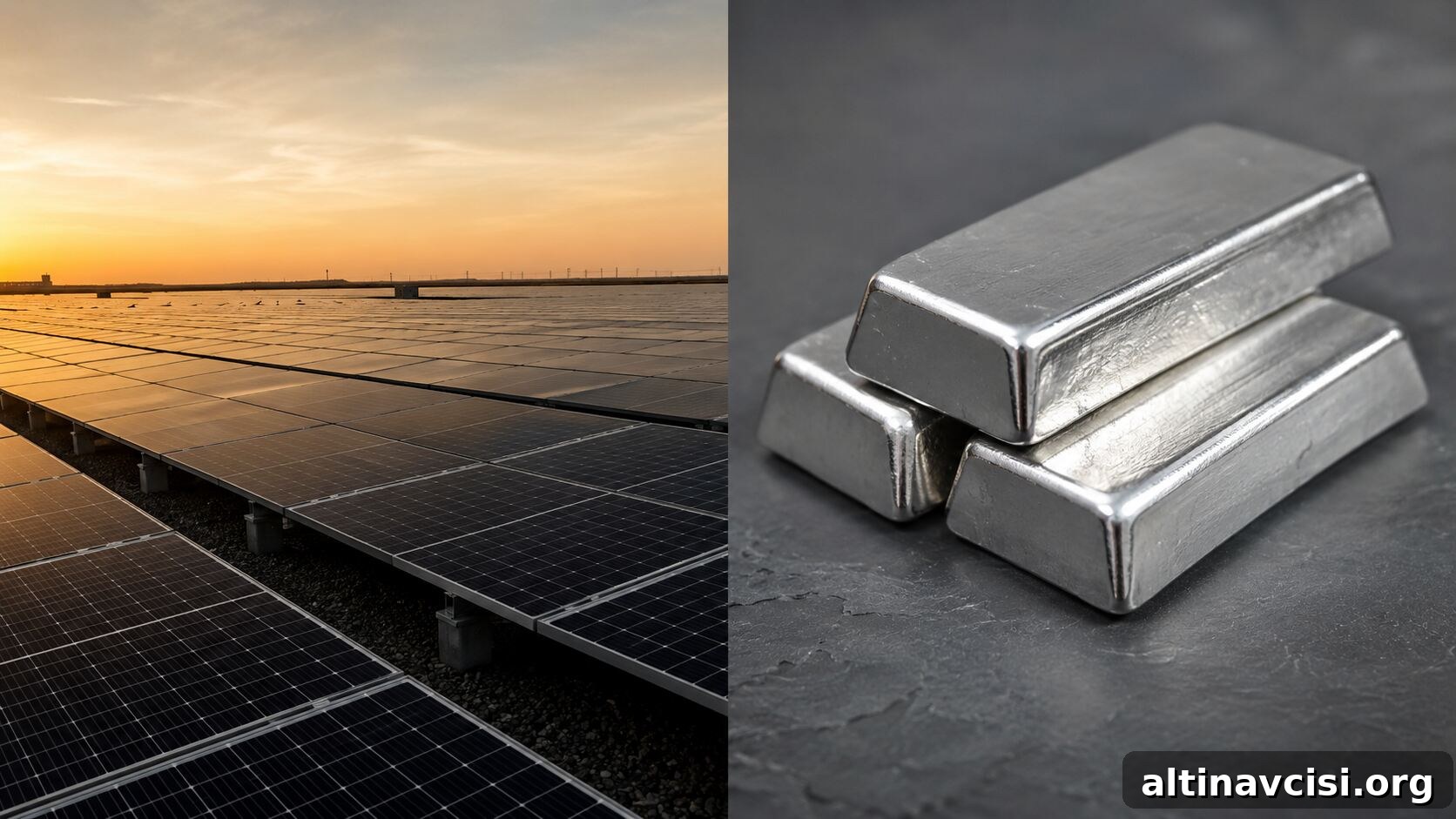
What to Know
- Silver has two distinct demand pools — industrial and monetary — that often offset one another. Stagflation is the unusual environment where both strengthen at once.
- Industrial demand is not expected to collapse with the economy. Growth in solar, electric vehicles (EVs), and AI data center infrastructure is driven by long-term mandates and technology cycles rather than short-term GDP swings. Battery EVs use substantially more silver than combustion vehicles (Silver Institute / Oxford Economics).
- The market has been in deficit for consecutive years. The World Silver Survey 2026 projects a 46.3 million ounce shortfall in 2026, up from 40.3 million ounces in 2025. Since 2021, approximately 762 million ounces have been drawn from above-ground stocks.
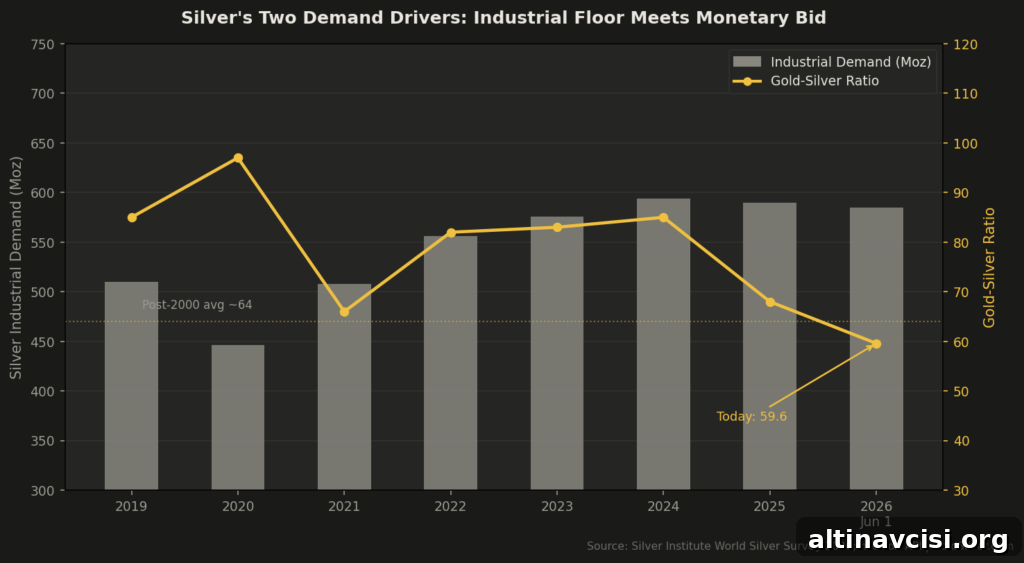
- The gold-silver ratio sits near 60.0 today — close to its post-2000 average and well above the January 2026 low near 46:1. The Fed’s rate-hold is both a reason for silver’s recent underperformance and the structural backdrop supporting its case.
Most assets respond predictably to stagflation: bonds lose purchasing power, equities struggle with weak growth, and cash erodes. Gold typically benefits because inflation remains elevated and real yields are suppressed. Silver is more complex because it serves two separate roles — a monetary asset and an industrial commodity — which usually counteract one another. Stagflation is the rare scenario where both roles point in the same direction, creating a unique opportunity for silver.
Understanding how these dual drivers interact helps explain why silver’s current market position is not fully reflected by short-term price moves. The structural forces supporting silver extend beyond daily volatility.
What Are Silver’s Two Demand Drivers?
Silver draws demand from two largely independent sources. The monetary side treats silver as a store of value and a hedge against inflation, often tracked alongside gold. The industrial side consumes silver in solar panels, electric vehicles, semiconductors, medical devices, and AI data centers. The Silver Institute estimates around 58% of global silver demand is industrial.
In normal economic conditions these pools act in opposition. Strong growth with low inflation boosts industrial consumption while weakening the safe-haven demand. Conversely, recessions tend to increase monetary demand as industrial activity slows. That tug-of-war contributes to silver’s higher historical volatility compared with gold, which functions almost exclusively as a monetary metal.
Stagflation — persistent inflation with below-trend growth — is the scenario where both demand engines can operate simultaneously, which is unusual and significant for silver.
The Edge Every Investor Needs
Smarter precious metals investing starts here. The Nuggets Newsletter brings essential market insights, Fed updates, global trends, educational videos, and more.
Why Is Stagflation Uniquely Bullish for Silver?
Stagflation combines elevated inflation with below-trend growth. In the current U.S. backdrop, core indicators show inflation that remains above target and GDP growth below trend. The Federal Reserve faces a difficult trade-off: cutting rates risks tolerating persistent inflation, while hiking rates risks deepening an already weak growth environment. That impasse suppresses real yields and creates a form of financial repression that strengthens demand for sound money.
When real yields are low and inflation persists, the monetary case for precious metals strengthens. Gold is the primary beneficiary, and silver typically follows. But silver benefits from an added layer: a resilient industrial demand floor that gold does not have. That combination — monetary interest plus durable industrial consumption — is what makes stagflation particularly supportive for silver.
Why Doesn’t Silver’s Industrial Demand Fall With the Economy?
Unlike metals such as copper, whose demand closely follows construction and manufacturing cycles, a large share of silver demand comes from technologies driven by structural mandates and long-term investments. Renewable energy targets, fleet electrification rules, and the rapid expansion of AI infrastructure are multi-year trends that continue regardless of short-term GDP fluctuations.
For example, battery-electric vehicles require substantially more silver per vehicle than combustion engine models, and solar installations use silver in photovoltaic cells. These are strategic investments and regulatory-driven rollouts, not discretionary purchases that pause during temporary economic slowdowns. As a result, industrial demand for silver offers a more durable floor than many other industrial metals.
Why Can’t Silver Supply Catch Up With Demand?
The market deficit is structural. A large share of silver supply — nearly 70% — comes as a byproduct of mining for other metals such as copper, lead, zinc, and gold. That means silver’s own price signal has limited influence on the pace of new mine development. Primary silver mines respond slowly, and most additional supply requires time and capital tied to other metals’ economics.
As a result, recent years of demand outpacing supply have been met by drawing down above-ground stocks rather than by rapid production growth. With cumulative draws totaling hundreds of millions of ounces since 2021, the physical market is tighter today, so any increase in demand confronts a more constrained supply environment than in previous cycles.
What Does the Gold-Silver Ratio Tell Us Today?
The gold-silver ratio measures how many ounces of silver are needed to buy one ounce of gold and is a simple gauge of relative value between the two metals. As of early June 2026 it sits around 60.0, which is within the post-2000 historical range of roughly 60–68:1. The ratio tightened to near 46:1 in January 2026 when silver peaked, but has since widened as silver lagged gold during the Fed’s rate-hold period.
That divergence reflects the short-term sensitivity of silver to interest-rate expectations due to concerns about industrial demand. Yet the same rate environment — a prolonged hold with inflation above target — reinforces the monetary case for both metals. When policy eventually pivots, either through cuts or a forced adjustment, both industrial and monetary demand for silver can strengthen together, compressing the ratio further.
What Does This Mean for Your Silver Allocation?
For investors already holding physical silver, the structural picture suggests patience: the supporting forces are multi-year and not a near-term trading catalyst. For those considering a position now, silver trading near a 60:1 ratio to gold sits against a backdrop of multiple consecutive deficit years and substantial draws on above-ground stocks. That setup differs materially from buying near the January lows when the ratio compressed to 46:1.
The policy dilemma facing central banks means achieving a return to 2% inflation without a growth hit is unlikely in the short term. Either path that resolves the dilemma (a recession or policy tightening followed by a pivot) tends to favor both monetary and industrial demand for silver. Understanding this mechanism clarifies what investors are actually holding: a metal supported by both store-of-value demand and durable technological adoption.
Stay On Top of Gold & Silver Prices
Get important market alerts sent straight to your inbox.
People Also Ask
What is stagflation and why does it matter for silver?
Stagflation is when inflation remains elevated while economic growth is below trend. It matters for silver because it can activate both monetary demand (as investors seek stores of value) and industrial demand (from ongoing technology and infrastructure buildouts) at the same time — a rare alignment that supports silver’s dual role.
Why does silver have two separate demand drivers when gold only has one?
Gold operates primarily as a monetary asset with minimal industrial use. Silver has significant industrial applications — solar, EVs, semiconductors, AI data centers, and medical devices — which represent a meaningful portion of total demand. That industrial component creates a structural demand floor that differs from gold’s purely monetary role.
What is the gold-silver ratio today, and what does it signal?
The gold-silver ratio is around 60.0 as of early June 2026. That sits within its post-2000 historical range and indicates silver is near its long-term relative average against gold. Recent widening from January’s tighter ratio reflects silver’s short-term sensitivity to rate expectations rather than a breakdown in its long-term structural case.
Is silver a good investment during stagflation?
The structural argument for silver during stagflation rests on subdued real yields favoring monetary metals plus resilient industrial demand from long-term technology and infrastructure trends. Combined with a multi-year supply deficit and large draws on above-ground stocks, the case is best viewed over a multi-year horizon rather than as a short-term trade.
Why can’t silver miners increase supply to meet demand?
Because most silver is produced as a byproduct of mining other metals, higher silver prices alone do not quickly spur new primary silver mine development. Supply is structurally inelastic to silver price signals, so deficits have been covered by drawing down above-ground inventories rather than rapid production growth.
SOURCES
1. Silver Institute / Metals Focus — World Silver Survey 2026
2. Metals Focus / Silver Institute — Global Silver Investment to Remain Strong in 2026
3. Oxford Economics / Silver Institute — Silver, The Next Generation Metal (December 2025)
4. Silver Institute — Silver Supply & Demand
5. U.S. Bureau of Economic Analysis — Personal Income and Outlays, April 2026
6. U.S. Bureau of Economic Analysis — GDP Second Estimate and Corporate Profits, 1st Quarter 2026
7. U.S. Department of the Treasury / Federal Reserve — 10-Year Treasury Yield (FRED)
8. nFusion Solutions — Spot metals price feed, gold and silver (June 1, 2026)
Disclaimer: This article is for informational purposes only and does not constitute financial or investment advice. Always consult a qualified financial adviser before making investment decisions.
You May Also Like:
- The Buyer List for Gold Just Got Longer. These Countries Have Never Bought Before.
- PCE Hit 3.8%. GDP: 1.6%. Gold Went Up. Here’s the Mechanism.
- Gold Targets Are Falling. The $8,000 Forecast Isn’t.
- Gold Radar: 5 Stories the Price Chart Isn’t Telling You
- Silver Lost 3.3% While Gold Lost 1.6%. That Gap Is Not Random.
- Gold Down 1.2%, Silver Down 2.8% — The Floor Holds
- UBS Just Cut Its Gold Target by $400. The Part They Kept Is the Real Story.
- Why Gold Is Falling Today — And Why $4,500 Is Holding.
- Gold Is Down Today. Here’s Why Smart Money Is Still Buying.