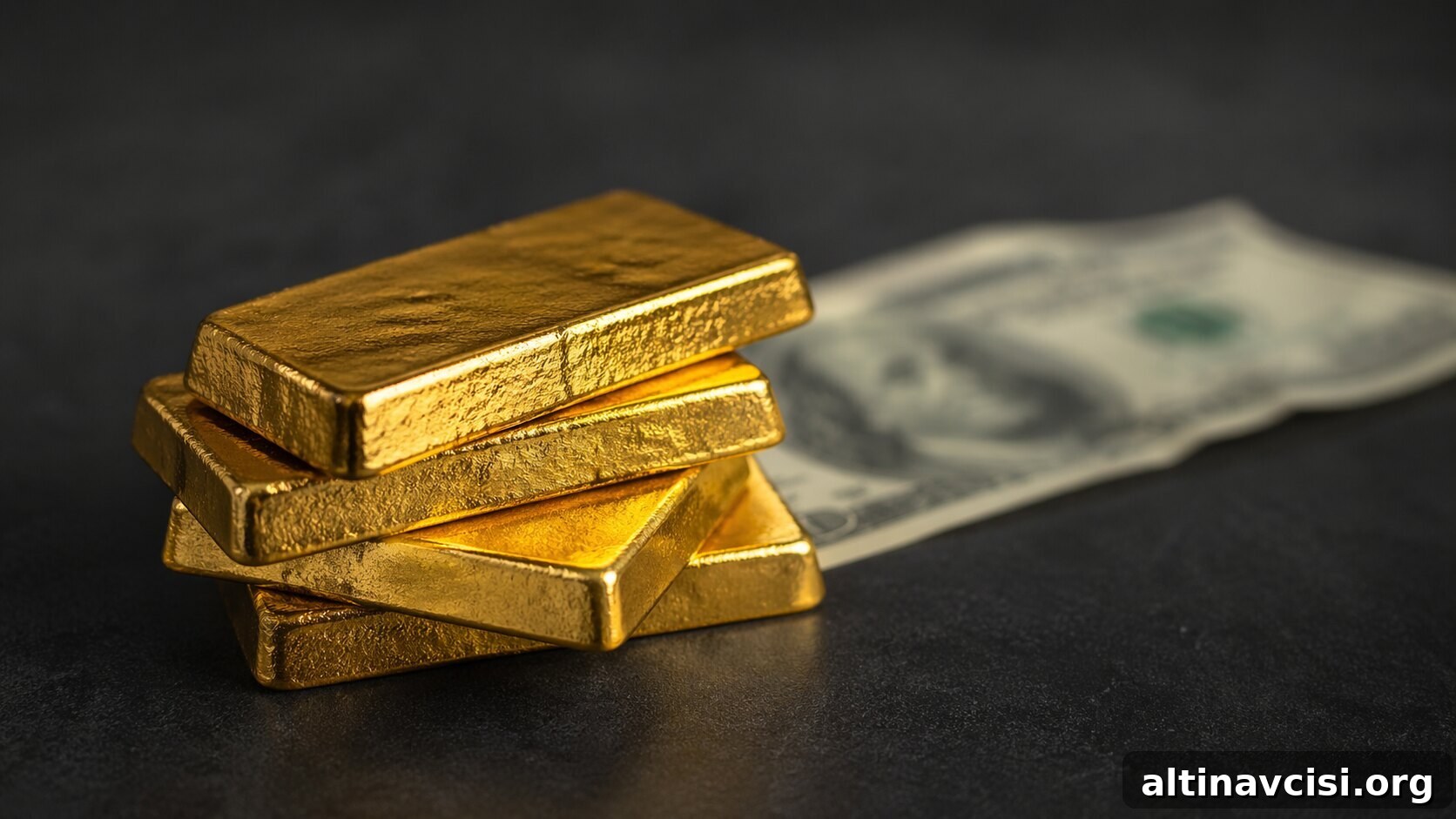
When the dollar weakens, gold typically rises. Every major episode of dollar devaluation since 1971 has coincided with a substantial gold rally — and the present cycle follows that pattern. With the U.S. Dollar Index down roughly 14% from its 2022 peak, gold has climbed more than 43% year-over-year. A falling dollar erodes the purchasing power of paper currency, while gold — a finite asset that cannot be printed — becomes a preferred store of value for capital seeking protection.
For over five decades, since the U.S. ended dollar convertibility to gold in 1971, gold and the dollar have most often moved in opposite directions. Today, that inverse relationship is again evident: the U.S. Dollar Index is trading near multi-year lows while gold is up strongly. Fiscal deficits, monetary easing, and a gradual reduction in global confidence in the dollar are the structural forces behind the currency’s weakness — and those same forces have historically driven gold to new highs.
As of April 23, 2026, gold was trading around $4,746 per ounce, a gain of more than 43% year-over-year even after a recent pullback. Meanwhile, the U.S. Dollar Index (DXY) sits near 98.3, pressured by persistent inflation, rising federal debt, and a steady shift away from dollar-denominated reserves.
This pattern is not coincidence but cause and effect. Understanding why gold tends to respond to dollar weakness — rather than merely observing that it does — helps investors act with conviction instead of reacting after the fact.
What Does a Dollar “Crash” Actually Mean?
A dollar crash does not have to be a single sudden event. Often purchasing power erodes gradually over years, so the important factor is direction and persistence rather than a single headline shock.
The DXY measures the dollar against a basket of major currencies. The dollar fell about 9.4% in 2025 — its weakest annual showing since 2017 — and several major banks forecast further declines through 2026. Three broad structural forces are pushing that trend:
- Monetary policy easing. Rate cuts in 2025 narrowed the yield advantage of dollar assets, reducing foreign investor demand for dollar-denominated securities.
- Policy preference for a weaker dollar. Current administration policy has not prioritized a strong dollar, and some analysts see deliberate tolerance for dollar weakness to support exports and reduce the trade deficit.
- Improving global growth. Strengthening growth abroad attracts capital away from traditional safe-haven dollar assets.
When the dollar faces sustained structural pressure, it becomes more than a forex story — it becomes a major driver for gold.
Your Gold Buying Guide Most investors overpay when buying gold and again when they sell. This guide explains what to own and why.
Why Does Gold Rise When the Dollar Falls?
Gold is priced globally in U.S. dollars. When the dollar weakens, the dollar price per ounce typically increases even if physical demand is unchanged. When lower currency value coincides with rising demand, prices can accelerate quickly.
Since the Bretton Woods peg of $35 per ounce, gold’s nominal price has risen many times over, reflecting a dramatic long-term decline in the dollar’s purchasing power. Beyond the price mechanics, a weakening dollar signals stress in the monetary system, and investors often turn to gold as a tangible asset that cannot be created by central banks.
Gold’s strong performance in recent years — including a notable rally in 2025 — echoes past episodes where geopolitical tension and currency weakness combined to push the metal sharply higher.
What Does History Say? The Record from 1971 to Now
When the U.S. ended gold convertibility in August 1971, the international monetary system shifted to fiat currencies and gold was free to find its market price. In the two years following the change, gold surged dramatically as inflation eroded dollar values.
The pattern repeated in later decades. In the 2000s, a declining dollar driven by low interest rates and large fiscal deficits helped gold climb from the low hundreds to over $1,000 per ounce. After the 2008 crisis and additional monetary expansion, gold rose again into the early 2010s. Each cycle where the dollar faced systemic pressure produced meaningful gains for gold.
Why Is Gold Pulling Back Even as the Dollar Stays Weak?
Gold has eased about 15% from its peak in January 2026, despite the dollar remaining weak. Short-term corrections are normal after large rallies and can be driven by profit-taking, temporary demand for other safe havens, or brief improvements in risk sentiment.
Crucially, if gold holds at historically high levels while the dollar is weak, that suggests the metal’s base has risen. Support may now come from structural demand — central bank purchases, ETFs, and global retail buying — rather than being driven solely by dollar depreciation. That kind of consolidation often precedes further advances.
What Are Central Banks Telling Us?
Central bank behavior reveals more about conviction than short-term price charts do. Total central bank gold purchases reached high levels in recent years, well above prior averages, even as prices climbed.
These institutions are building reserves and diversifying away from fiat currency exposure. Increased buying from emerging-market central banks and other official institutions creates a substantial support level for prices and reduces the likelihood that gold’s gains are purely speculative.
Is Now a Good Time to Buy Gold?
Gold trading below its January 2026 high still sits within a broader uptrend supported by persistent structural drivers: dollar weakness, rising federal debt, sustained central bank demand, and ongoing monetary uncertainty. Many analysts expect further upside over the coming year, and institutional demand forecasts point to continued buy-side interest.
Investors considering gold should weigh their objectives and time horizon. For those seeking to protect purchasing power over time, physical gold and allocated bullion products remain the most direct options. As always, consult a qualified financial adviser before making investment decisions.
Stay On Top of Gold & Silver Prices
Get important market alerts sent to your inbox.
People Also Ask
Does gold go up when the dollar crashes?
Historically, yes. The dollar and gold have often shown an inverse relationship. When the dollar loses purchasing power because of inflation, fiscal expansion, or reduced reserve-currency confidence, gold has tended to rise in dollar terms.
Why does gold rise when the dollar weakens?
Because gold is priced in dollars, a weaker dollar raises the nominal dollar price per ounce. More broadly, a weak dollar signals monetary risk, driving investors toward a tangible store of value that central banks cannot create at will.
Will gold protect me if the dollar collapses?
Gold has historically preserved purchasing power during currency crises. Physical gold is not a liability and cannot be printed or defaulted on, making it a reliable hedge against severe currency devaluation.
What happened to gold after Nixon ended the gold standard?
After the U.S. ended convertibility to gold in 1971, gold’s market price rose sharply as inflation and confidence issues eroded the dollar. Over the next decade gold climbed manyfold, reflecting the loss of fixed convertibility and the transition to fiat money.
Can gold fall even when the dollar is weak?
Yes. Short-term declines occur for various reasons, such as profit-taking, alternative safe-haven flows, or brief improvements in risk appetite. But if gold holds high levels while the dollar is weak, that often indicates underlying structural support rather than weakness.
The Dollar Is the Risk. Gold Is the Response.
Major dollar devaluation cycles since 1971 have consistently produced strong, sustained rallies in gold. The current mix of a softer dollar, large federal debt, and elevated central bank buying is a continuation of those historical dynamics rather than a one-off event.
Gold’s recent pullback should be viewed in the context of a broader bull market driven by long-term structural factors: fiscal deficits, monetary expansion, and gradual de-dollarization. For investors focused on preserving purchasing power, physical gold and silver remain direct and time-tested options.
SOURCES
1. Trading Economics — Gold price and historical data
2. Trading Economics — U.S. Dollar Index data
3. U.S. Bank analysis on dollar value and investor implications
4. Analysis and forecasts on the U.S. Dollar Index
5. Federal Reserve History — end of gold convertibility
6. World Gold Council — gold demand trends and central bank activity
7. Investing News Network and other market reports
8. Major bank research and market commentary
Disclaimer: This article is for informational and educational purposes only and does not constitute investment advice. Consult a qualified financial adviser before making investment decisions.
You may also like:
- Gold Fell During a War. So Is It Really a Safe Haven?
- Is Gold at Fair Value? What Three Models Say — and Where They Disagree
- Silver Price Predictions for the Next 5 Years: Data-Backed Scenarios
- Tariff Refunds, Dollar Weakness, the AI Bust: Gold’s Case
- How to Buy Gold for Beginners: Step-by-Step Guide (2026)
- Silver Price Forecast 2026-2027: The bull case and bear case laid out
- How to Buy Silver Bars: The Investor’s Guide
- Why Silver Falls While Gold Rises: What It Means for You
- Why Are BRICS Countries Buying So Much Gold?