🌆 Evening News Nuggets | Today’s top stories for gold and silver investors
April 2nd, 2026 | Brandon Sauerwein, Editor
Signs of stagflation in 2026 are becoming hard to ignore. In the same 24-hour span, President Trump’s Iran address pushed oil above $111, manufacturing prices hit a four-year high, and U.S. hiring dropped to its weakest level since the COVID shutdowns.
Trump’s Iran Speech Crushes Ceasefire Hopes — Markets Sell Off
Markets had been pricing in a de-escalation; instead they got escalation. In a primetime address Wednesday night, President Trump said the U.S. is “getting very close” to finishing military objectives in Iran and pledged to strike Iranian targets “extremely hard” over the next two to three weeks. A ceasefire announcement never materialized.
Markets reacted quickly. Precious metals and equities moved sharply: gold reversed earlier gains and lost ground, while silver fell more steeply. U.S. futures slid, with major indices opening lower. The dollar strengthened and defense shares rallied as investors repositioned for higher geopolitical risk.
Competing claims about ceasefire requests and whether talks are underway have continued between the two sides. For gold, the current dynamic is familiar: headlines suggesting peace spark a rally, but prices retreat when follow-up details disappoint. Without a clear path to de‑escalation or a decisive shift from the Federal Reserve, that cycle is likely to persist.
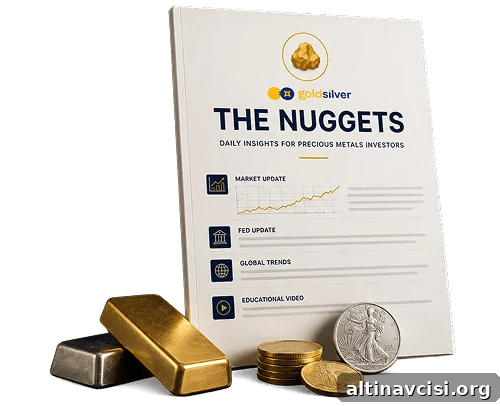
The Edge Every Investor Needs
Smarter precious metals investing starts here. The Nuggets Newsletter delivers market insights, Fed updates, global trends, and educational content to help you make better decisions.
Why Are Oil Prices Surging? The Strait of Hormuz Is Nearly Shut Down
Oil markets reacted to heightened geopolitical risk. U.S. WTI crude jumped more than 11%, closing above $110 per barrel, while Brent also rose sharply. The immediate driver was reduced expectation that the Strait of Hormuz would reopen soon: tanker traffic through the narrow chokepoint has effectively halted, cutting a significant portion of daily seaborne supply.
This disruption has moved through to fuel prices: gasoline costs have risen significantly, and national averages climbed above $4 per gallon in many parts of the United States. Higher oil prices feed into headline inflation, complicating the Federal Reserve’s policy choices. A Fed that feels compelled to stand pat because of sticky inflation keeps pressure on rate-sensitive assets — a chain reaction that is influencing markets today.
ISM Prices Hit a Four-Year High — Is the U.S. Heading Toward Stagflation?
March’s manufacturing report presented a difficult trade-off for policymakers. The ISM Manufacturing PMI showed continued expansion in factory activity, but the Prices Paid subindex surged to its highest level in years. That sharp uptick in input prices points to accelerating cost pressure even as growth remains modest.
The ISM chair warned that rising costs and weaker demand indicators could reverse the production expansion if the trend continues. External factors — including the Iran conflict and tariff uncertainty — are adding to firms’ hesitation to hire and invest.
ADP’s report also signaled cooling momentum: private-sector job gains slowed in March, with notable losses in trade, transportation, utilities, and manufacturing. The combination of slowing hiring and rising prices is the classic recipe for stagflation: weak employment and growth alongside persistent inflation. Historically, gold tends to perform well in such environments, but typically more so once central banks shift policy in response.
JOLTS Report: U.S. Hiring Hits Its Lowest Level Since the COVID Shutdowns
The latest JOLTS release showed job openings and hiring trends continuing to cool. February job openings fell notably and hiring declined to levels not seen since the spring of 2020. The hiring rate eased, and voluntary quits — an indicator of worker confidence — also dropped to pandemic-era lows.
When quits fall, it often signals that workers perceive fewer attractive opportunities in the market. Friday’s nonfarm payrolls will be closely watched: a weak print would accelerate recession concerns and increase pressure on the Fed to consider rate cuts even while inflation remains elevated. A slowing labor market could be the catalyst that shifts central bank guidance and, in turn, lift gold prices if policy turns more accommodative.
Stay On Top of Gold & Silver Prices
Get important market alerts sent straight to your inbox.
1. Euronews — Oil jumps as markets disappointed by Trump’s Iran threat
2. FinancialContent — Trump Vows ‘Extremely Hard’ Strikes on Iran; Market Rout Erases Ceasefire Hopes
3. CNBC — U.S. Oil Prices Soar as Trump’s Iran War Speech Stokes Escalation Fears
4. CNBC — Trump Iran Speech Recap: President Vows ‘Extremely Hard’ Hits in Coming Weeks
5. TheStreet — Gold Price Drops After Trump Makes Stunning Claim About Iran
6. Institute for Supply Management — ISM Manufacturing PMI Reports Roundup: March 2026
7. Trading Economics — United States ADP Employment Change, March 2026
8. U.S. Bureau of Labor Statistics — Job Openings and Labor Turnover Survey (JOLTS), February 2026
9. Armstrong Economics — JOLTS February 2026 Analysis
This article is for informational purposes only and does not constitute financial or investment advice. Consult a qualified financial advisor before making investment decisions.
You May Also Like
- Gold Price Volatility Hits COVID Levels
- Gold Jumps 2% as Trump Plans Iran War Address Tonight
- Gold Is Rising Again. The Reason May Surprise You
- Gold +3%, Silver +7%: Metals Close Q1 With a Bang
- Gold and Silver Market Update: Rebound Faces Pressure
- Gold Bounces as Iran, the Fed, and the Dollar Collide
- Iran Rejects Talks as Gold and Silver Extend Slide
- Is Gold Still a Safe Haven During War?