
The debate between digital gold and physical gold is more relevant than ever. Investors today can choose to hold a tangible gold coin or to own exposure to gold through a smartphone app. Each approach ties to the same underlying metal, but ownership, rights, risks, and costs differ substantially. Below is a clear guide to help you decide which option suits your needs.
Both digital and physical forms track the price of gold, yet what you actually own—and the protections and obligations that come with it—vary. Read on to understand the key differences and the questions to ask before you invest.
What Is Digital Gold?
Digital gold is an umbrella term for several ways to gain exposure to gold without holding physical bullion. It includes gold ETFs, mutual funds, futures contracts, and online platforms that sell fractional ownership of vaulted metal. These technology-driven services typically offer mobile or web interfaces, and may include storage, insurance, and real-time value tracking.
Not all digital gold products are the same. Some, such as many ETFs, represent claims on a fund that may not hold fully allocated physical metal. Others, including certain digital bullion platforms, back customer positions with allocated, identifiable bars or coins stored in professional vaults. The first question to ask is which structure you are buying into.
What Is Physical Gold?
Physical gold means the tangible metal you can hold and transfer directly: coins, bars, and rounds. Bullion is valued for recognized purity and weight and for the simplicity of outright ownership. When you possess physical gold, there is no intermediary between you and the asset. No platform can freeze your account, no fund manager can make decisions for you, and no third party’s insolvency is needed for your gold to retain value. That direct ownership is the central appeal of physical bullion.
Is Digital Gold Backed by Physical Gold?
This is a critical question investors often overlook—and the answer varies. The important distinction is between allocated and unallocated holdings. Allocated gold means specific bars or coins are assigned to you and held in a vault in your name. Unallocated gold means you have a general claim against a pool of metal; the custodian may use that pooled metal for other purposes, and in insolvency you could be treated as an unsecured creditor rather than a direct owner of specific metal.
Some digital platforms back every customer position with fully allocated, audited, insured metal stored in secure vaults; in those cases your digital position corresponds to identifiable physical bullion. Many ETFs and paper-gold instruments, however, operate on an unallocated or partially allocated basis or use derivatives to replicate gold’s price. Always read a fund or platform prospectus and seek third-party audit documentation before assuming full physical backing.
Key Differences: Digital Gold vs Physical Gold
Ownership and Control
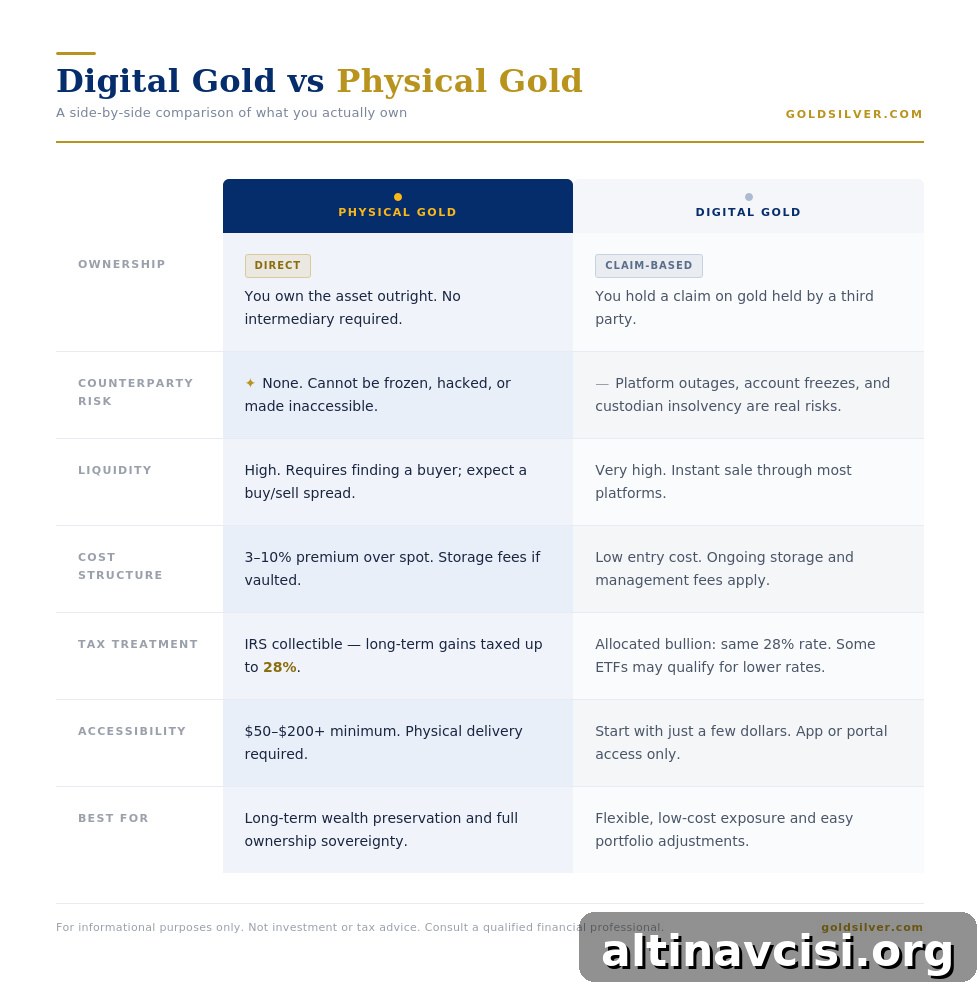
Physical gold delivers direct, unencumbered ownership. Digital gold provides a claim on a fund, platform, or vault that depends on that entity’s solvency and operational integrity. Whether that claim is allocated or unallocated determines how solid your ownership actually is.
Liquidity
Physical gold is less liquid than many digital alternatives. Selling physical bullion often requires a dealer, and you must contend with buy/sell spreads. Digital gold typically offers faster liquidity via online platforms, though platform spreads, fees, and withdrawal limits can apply.
Costs
Physical gold usually carries an upfront premium over spot—commonly 3% to 10%—plus storage and insurance if you use a vault. Digital gold often has lower entry costs and supports fractional purchases, but ongoing storage and management fees can erode returns over time. For long-term holders, those recurring fees matter.
Accessibility and Minimum Investment
Digital platforms frequently allow purchases starting at a few dollars, making gold accessible for small investors. Physical gold requires a larger initial outlay tied to the smallest available coin or bar—often $50 to several hundred dollars—and involves shipping or pickup logistics.
Is Your Gold Investment Taxed at the Right Rate?
Taxes are a major but often overlooked factor. In many jurisdictions, physical gold and digital positions backed by allocated bullion are classified as collectibles. In the U.S., long-term gains on collectibles can be taxed up to 28%, higher than typical long-term stock capital gains rates. Some digital gold products—such as certain commodity ETFs structured under partnership rules—may be taxed under different rules that can affect the effective rate. Tax treatment varies by product and jurisdiction, so review prospectuses and consult a tax professional before investing.
Do You Own Your Digital Gold, or Are You Just a Creditor?
Beyond headlines about hacks and outages, a quieter but greater danger is custodian insolvency. When a brokerage or custodian fails, client assets do not always return intact. Historical collapses have shown that client commodity holdings can be used to cover a firm’s losses, leaving customers as unsecured creditors. If your digital gold is unallocated, you face this counterparty risk. Physical gold held directly has none of these exposures: it cannot be frozen by a platform, hacked, or made inaccessible due to a custodian’s collapse.
Red Flags to Watch For
Not all digital gold providers are equal. Before committing funds, watch for these warning signs:
- No third-party audit certificates. Reputable platforms publish independent audits that verify vault holdings equal outstanding digital positions. Without audits, holdings are unverifiable.
- Offshore custodians with no regulatory oversight. Jurisdiction matters: limited regulatory oversight reduces recourse if problems arise.
- No physical delivery option. If a platform won’t permit redemption for physical bullion, question the strength of your ownership claim.
- Vague or unallocated storage disclosures. If terms don’t clearly state that holdings are allocated and segregated, assume they are not.
Which Is the Better Investment?
Physical gold should be viewed as the foundation; digital gold is a complement. Physical ownership removes counterparty risk, avoids recurring platform fees, and sits outside the financial system—traits important for long-term wealth preservation. Digital gold, when backed by fully allocated and audited metal, can provide convenient fractional exposure and easier liquidity, making it useful for flexibility and trading.
For many investors, the best approach is a mix: establish core holdings in physical bullion for security and preservation, and use carefully vetted digital products to add accessibility and liquidity. Treat digital exposure as a supplement rather than the primary store of long-term wealth.

The Financial System Isn’t Safer — And You Know It
As risks mount, see why gold and silver are projected to keep shining in 2026 and beyond.
People Also Ask
What is the key difference between digital gold and physical gold?
Physical gold is a tangible asset you own outright with no counterparty risk. Digital gold is a claim on metal held by a fund or platform, and the strength of that claim depends on the provider’s structure and solvency.
Is digital gold backed by actual physical gold?
Sometimes. Some platforms back digital holdings with fully allocated physical metal in secure vaults. Others use derivatives or hold only a fraction of the metal their shares represent. Always verify the product’s structure in its prospectus or terms.
Is digital gold safe compared to physical gold?
Digital gold offers convenience but introduces platform and counterparty risk: accounts can be frozen, platforms can be hacked, and access can be restricted. Physical gold you control avoids these risks and is generally safer in systemic disruptions.
What are the tax implications of digital gold vs physical gold?
Tax treatment depends on the product and jurisdiction. Physical gold and digital positions backed by allocated bullion are often treated as collectibles and may face higher capital gains rates. Some digital gold ETFs and commodity products follow different tax rules. Consult a tax professional for details.
Which is better for long-term investment: digital gold or physical gold?
Physical gold is generally the preferred choice for long-term preservation due to direct ownership and no counterparty risk. Digital gold is valuable for accessibility and flexibility. Many investors combine both.
This article is for informational purposes only and does not constitute investment or tax advice. Consult a qualified financial professional before making any investment decisions.
You May Also Like:
- Bank Safety Deposit Box vs. Gold Vault Storage: Where Is Your Gold Actually Safer?
- Is Gold in a Bubble? What Kiyosaki’s $35K Forecast Tells Us
- Gold vs Stocks & Bonds: What the Data Really Suggests
- Silver Price Crash History: What Happens After the Biggest Drops
- Gold IRA vs Physical Gold: Which is Best for Your Portfolio?
- When Should You Sell Gold and Silver? (And What to Buy Next)
- Could the US Revalue Its Gold Reserves to Pay Down Debt?