When margin requirements change suddenly, markets don’t slowly adapt — they react quickly.
That is exactly what happened after CME Group announced on February 6, 2026, that it was raising margin requirements on COMEX 5,000-ounce silver futures from 15% to 18%, along with adjustments to certain gold futures contracts. The decision followed an extraordinary silver rally that pushed prices above $120 per ounce before a rapid correction brought them back toward $70.
If you’ve ever wondered why precious metals can spike and then plunge in what feels like an instant, margin requirements are a major part of the explanation.
Here’s a clear breakdown.
What Are Margin Requirements?
In futures markets, traders do not pay the full value of a contract up front. Instead they post a percentage of the contract’s total value as collateral. That percentage is the margin requirement.
For example:
- If silver trades at $100 per ounce, a 5,000-ounce futures contract is worth $500,000.
- At a 15% margin requirement, a trader must post $75,000 to control that contract.
That is leverage — and leverage amplifies both gains and losses. When prices rise, returns are magnified. When prices fall, losses accelerate. When volatility increases, exchanges commonly raise margin requirements to limit systemic risk.

The Financial System Isn’t Safer — And You Know It
As risks mount, see why gold and silver are projected to keep shining in 2026 and beyond.
Why CME Raised Margin Requirements on Silver and Gold
The recent silver rally was historic. After starting 2025 near $30 per ounce, silver climbed relentlessly and peaked above $120 in late January 2026. As prices rose for weeks, speculative momentum intensified. Retail participation increased, geopolitical tensions and inflation fears added to the pressure, and leverage accumulated in the futures market.
Traders used borrowed capital to amplify exposure. That magnified both potential gains and the risk of rapid losses. To curb the systemic danger posed by extreme leverage, CME raised margin requirements from 15% to 18% — essentially telling traders they needed more capital to hold the same positions.
Exchanges raise margins when volatility spikes because highly leveraged markets can unwind quickly. If many traders cannot meet margin calls, forced liquidations can cascade and destabilize the price discovery mechanism.
Paradoxically, raising margins can precipitate the very sell-off it aims to prevent.
The February 6 adjustment was the third margin increase in under two weeks. CME raised COMEX 100 gold futures margins from 8% to 9% while increasing silver margins to 18%, effective after market close. A prior procedural change on January 13 — switching from fixed-dollar margins to percentage-based margins — magnified the effect: as prices rose, percentage-based margins automatically increased, forcing additional capital demands on leveraged traders.
That structural shift amplified the pressure from each subsequent hike.
How Margin Hikes Trigger Market Selloffs
The mechanism is straightforward:
- Silver surges.
- Traders add exposure using leverage.
- The exchange raises margin requirements.
- Traders must post additional capital immediately.
- Those who cannot meet calls sell positions.
- Selling begets more selling.
- Prices decline sharply.
That sequence played out on January 29, 2026. After silver topped $120, margin hikes forced weaker hands out of the market. Liquidations cascaded and silver plunged into the $70s within days.
Silver’s Run to $120 and the Margin-Induced Reset
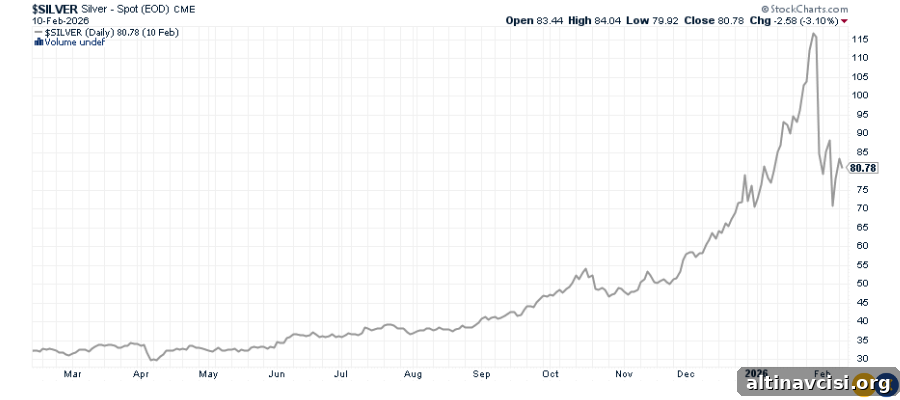
This episode was driven more by market structure and positioning than by an immediate change in fundamentals. Leverage and liquidity conditions tend to produce short-term extremes in price action. When leverage reaches extreme levels, margin changes act as a pressure release.
Why This Matters for Precious Metals Investors
If you own physical gold or silver for long-term wealth protection, margin requirements in futures markets do not directly affect your holdings. However, futures markets set global benchmark prices, so forced liquidations among leveraged traders can create significant short-term volatility that also affects spot pricing and dealer quotes.
Key points to remember:
- Futures markets set benchmark prices used worldwide.
- Leverage is a primary driver of short-term volatility.
- Margin hikes reduce leverage but can trigger rapid corrections.
- Physical ownership behaves differently from paper speculation.
Those dynamics explain why precious metals can swing dramatically even when long-term drivers like monetary policy, real interest rates, and confidence in fiat currencies remain unchanged.
The Real Lesson: Volatility Is a Feature, Not a Flaw
The rise to $120 and the rapid drop back to $70 offer a clear lesson in how leverage distorts markets. In uncertain times capital flows toward hard assets; speculators use borrowed money to amplify moves; leverage quietly builds; then margin requirements rise and the market resets when undercapitalized traders are forced to exit.
These episodes rarely occur independently. They often coincide with broader structural shifts — rising inflation expectations, geopolitical instability, monetary uncertainty, or weakening confidence in the financial system. Over decades, gold and silver have weathered cycles of leverage expansion and contraction. Short-term volatility mainly reflects positioning and leverage; long-term value depends on monetary trends, real rates, and global trust in fiat money.
Stay On Top of Gold & Silver Prices
Get important market alerts sent straight to your inbox.
People Also Ask
What are margin requirements in futures trading?
Margin requirements are the minimum collateral a trader must post to control a futures contract. Rather than paying the contract’s full value, traders post a percentage, which creates leverage and amplifies both gains and losses. Exchanges typically raise margins when volatility increases to limit systemic risk.
Why did CME raise margin requirements on silver in 2026?
CME raised margins after silver surged above $120 and volatility spiked. The increase from 15% to 18% required traders to post more capital to maintain leveraged positions, aiming to reduce risk in an overheated futures market.
How do margin requirements cause silver prices to fall?
When margins increase, traders must provide additional capital immediately. Those unable to meet calls sell positions, forcing liquidations that accelerate selling pressure and can push prices down sharply, even if long-term fundamentals remain intact.
Do margin requirements affect physical gold and silver investors?
Margin requirements affect futures traders directly, not holders of physical metal. Nonetheless, futures-driven forced selling can influence spot prices and create short-term volatility that affects physical investors’ buying and selling opportunities.
What happened to silver prices after the January 2026 margin hike?
After silver topped $120 in late January 2026, margin hikes triggered forced liquidations in the futures market. Selling cascaded and prices fell sharply into the $70s within days. The decline was driven primarily by leverage unwinding rather than an abrupt change in long-term fundamentals.
You May Also Like
- Gold vs Silver: The Liquidity Difference That Matters
- Silver Price Components: Premium, Spot, and Dealer Markup Explained
- Silver Price Forecasts Revisited: Why Wall Street Got It Wrong
- Gold’s Purchasing Power: What One Ounce Buys Over Time
- Why Metals Dominated Every Asset Class in 2025 [and What It Means for 2026]
- Best Investment Of 2026: Silver’s Setup Is Hard To Ignore