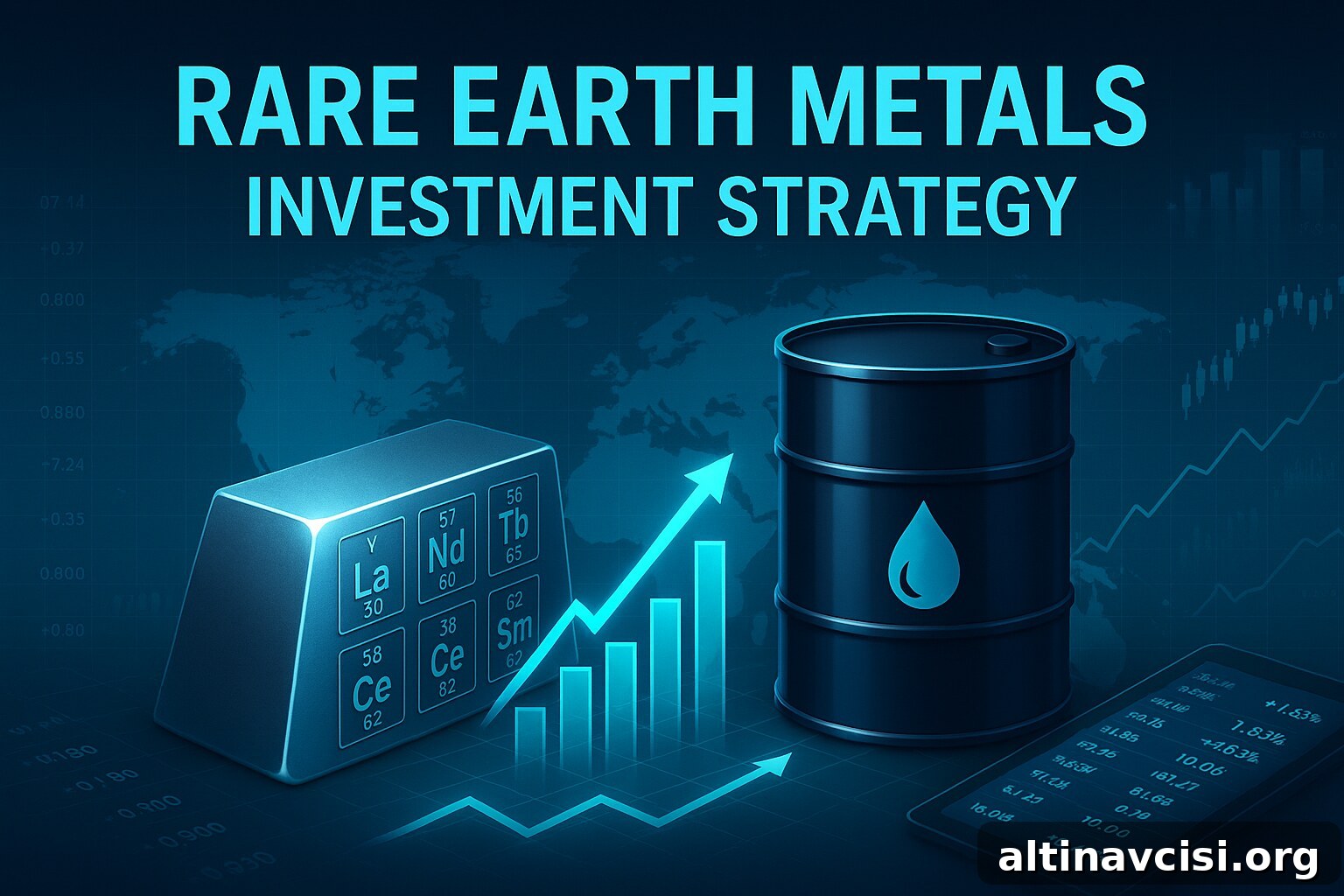
China has turned rare earth metals into a geopolitical lever, exposing how dependent the West remains on a small number of suppliers for the materials that power modern life.
In July 2025 Beijing tightened export controls on several key rare earth elements, limiting access to the materials used in electric vehicle motors, wind turbines, smartphones, and missile guidance systems. The move followed new tariff proposals from Washington and intensified an economic standoff that has prompted a global scramble to rebuild supply chains that were outsourced over decades.
The Hidden Backbone of Modern Industry
Rare earth metals may sound specialized, but they are foundational to today’s technology in much the same way oil was for the last century. Neodymium, dysprosium, and terbium are essential for everything from high-performance magnets and green energy systems to advanced electronics and defense technologies.
Other critical materials are also under strain. Silver is vital to the energy transition: it’s used in solar panels for conductivity and in many EV electronics. Industry reports show significant year-over-year increases in silver demand from the solar sector while mine supply struggles to keep up.
Nickel faces similar pressure. High-energy-density EV batteries require nickel-rich cathodes, and Indonesia supplies roughly half of global nickel production. Like China with rare earths, Indonesia has leveraged its market position by restricting raw ore exports to encourage domestic processing.
What ties these materials together is scarcity, strategic importance, and geographic concentration. A few countries control most of the production and processing capacity, creating leverage points in the emerging resource competition that is reshaping global trade.
Estimates indicate China accounts for around 70% of global rare earth production and close to 90% of refining capacity. That dominance gives Beijing not only economic influence but also strategic sway over technologies central to future growth.
Western nations are racing to catch up. The U.S. and Europe are accelerating projects to restart domestic mining and refining, but many analysts warn that new capacity will take years to come online—leaving a window of vulnerability during which critical industries remain dependent on a small pool of suppliers.
Economic Nationalism Is Back — and It’s Here to Stay
Resource nationalism, once thought to be largely a relic of past decades, has reemerged across commodities from oil to semiconductors. Rare earths, nickel, lithium, and cobalt are now central to national strategies for industrial and military strength.
Governments are investing heavily to reshore critical supply chains, but the deeper challenge is trust. In a world of shifting alliances and persistent inflation, physical commodities that cannot be digitally manipulated are regaining strategic value.
Investors are watching closely because supply shocks in these materials often ripple through broader commodity markets, raising production costs across technology, automotive, and energy sectors. Those cost increases can influence inflation and monetary policy, making the resource story relevant beyond industry insiders.
Gold and Silver: The Ultimate Hedge in the Resource Wars
This competition over critical minerals is also about sovereignty and the value of tangible assets. Precious metals play a complementary role: central banks have expanded gold reserves to maintain financial stability and reduce counterparty risk, and investors are rediscovering silver as both an industrial metal and a form of portfolio insurance.
Silver’s dual role—essential for solar, EVs, and electronics while also serving as a tangible store of value—means growing industrial demand coincides with renewed interest from investors seeking protection against supply-chain shocks and currency volatility.
The same forces driving the race for rare earths—deglobalization, inflationary pressures, and geopolitical fragmentation—are encouraging a return to physical stores of value. For many investors, owning tangible assets provides a degree of certainty when global supply chains are fragile.
The Takeaway
The rush for rare earth metals is more than an industrial issue: it signals a broader shift from abundance to strategic competition. Materials such as neodymium, nickel, silver, and gold are becoming geopolitical and economic focal points for the 21st century.
For investors and policymakers alike, the lesson is to think strategically: secure scarce, tangible resources and diversify supply chains. In an era of fragile logistics and changing geopolitical alignments, physical assets—from critical minerals to precious metals—offer resilience and a hedge against uncertainty.
Investing in Physical Metals Made Easy
People Also Ask
Why are rare earth metals so important in 2025?
Rare earth metals are critical to electric vehicles, renewable energy systems, electronics, and defense technology. In 2025, China’s market position has made these materials a geopolitical flashpoint and highlighted the strategic value of tangible assets such as gold and silver.
How much of the world’s rare earth supply does China control?
China is estimated to produce about 70% of rare earths and to hold close to 90% of global refining capacity. That concentration increases the urgency for supply diversification among Western manufacturers and governments.
What does the rare earth metals shortage mean for inflation?
Shortages and export restrictions can raise input costs across multiple industries, which may feed into higher consumer prices. Historically, periods of commodity scarcity have increased interest in inflation hedges like gold.
How do rare earth metals compare to gold and silver as investments?
Rare earths are industrial commodities with complex supply chains and are not easily accessible to retail investors. Gold and silver offer greater liquidity and established roles as stores of value and portfolio hedges.
Is silver also affected by the clean energy boom?
Yes. Demand for silver from solar, EV, and electronics sectors has grown significantly, while mine production has struggled to keep pace. This imbalance is contributing to renewed investor interest in silver as both an industrial and monetary asset.
Get Gold & Silver Insights Direct to Your Inbox
Join investors who receive market insights, expert analysis, and curated updates.