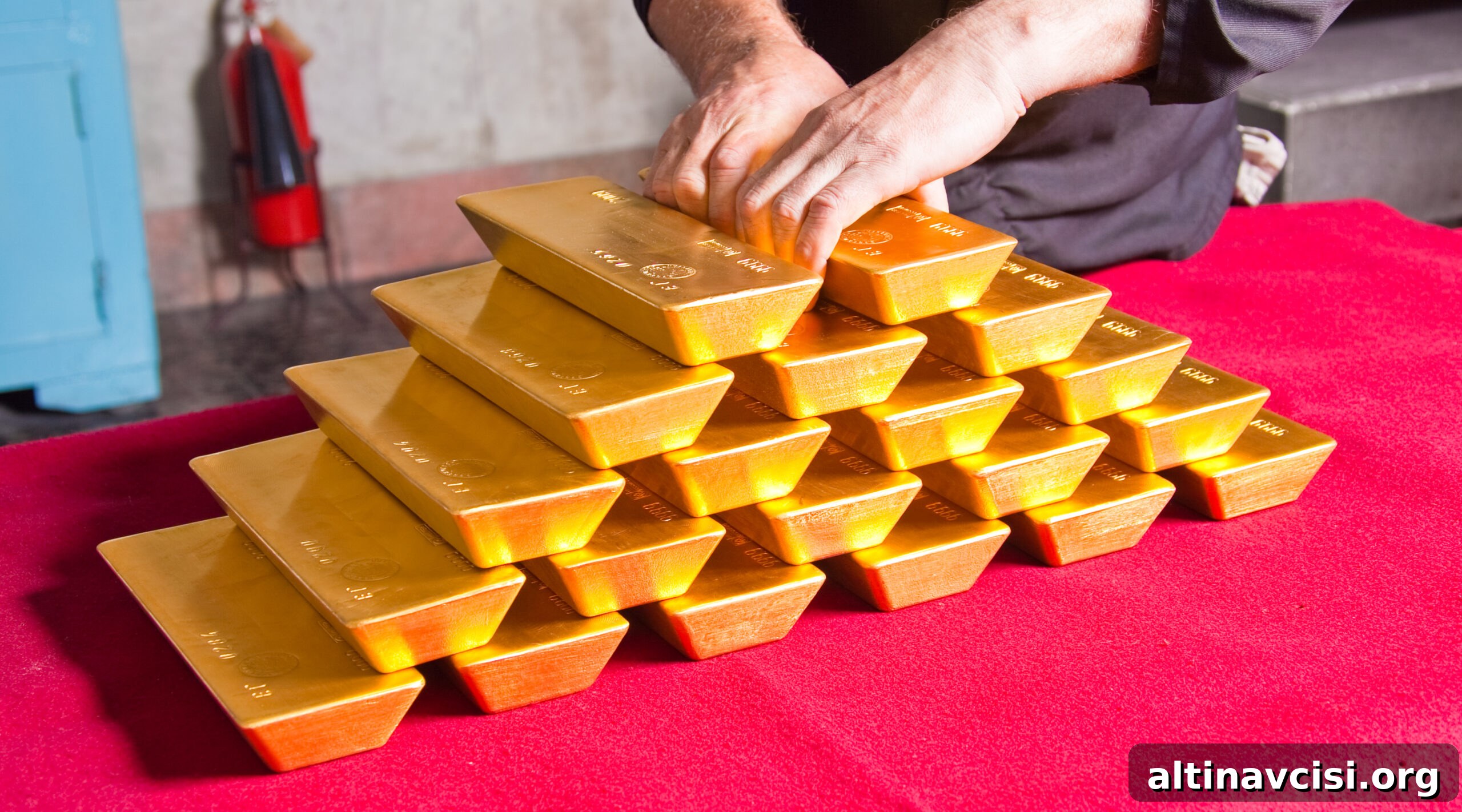
Deep beneath Zurich Airport lies a 350-square-meter high-security vault that illustrates gold’s lasting appeal: an ultra-secure storage site where wealthy clients keep their precious metals.
Operated by Egon von Greyerz, the vaults have substantial minimums: $400,000 for storage in Zurich or Singapore and $5 million for a site in the Swiss Alps. These requirements reflect the exclusive nature of the service, and they also mirror a broader rise in demand for physical bullion. The Royal Mint has reported a marked jump in sales, and dealers around the world point to growing uncertainty as a driver of renewed interest in tangible assets.
Von Greyerz, formerly a finance director at Dixons who later became a prominent advocate for gold, frames the metal as a principal tool for preserving wealth amid record global debt—estimated at more than $300 trillion—and heightened geopolitical risks. His clientele spans roughly 90 countries, and many of them allocate substantial portions of their assets to gold: typical allocations range from 20% to 50% of total wealth, well above the global average, which remains under 1% for most investors.
Long-term performance helps explain that confidence. Since 1970, the price of gold has appreciated dramatically, a trend that supporters argue underscores its role as a hedge against inflation and currency debasement. At the same time, concerns about finite mining reserves, with some projections suggesting supply pressures as mid-century approaches, and expanding industrial uses add further support to bullish views.
While the high-cost vaults cater to very wealthy individuals, von Greyerz also encourages smaller investors to consider owning physical gold at whatever level they can afford. He points out practical advantages, such as favorable tax treatment for certain British gold coins, and stresses diversification benefits: including some allocation to precious metals can reduce overall portfolio risk when compared with a portfolio composed solely of fiat-denominated assets.
The shift toward gold is not purely speculative; for many it is a strategic response to economic and political uncertainty. Physical storage, whether in major financial centers or in remote alpine facilities, offers tangible reassurance that digital records or financial instruments sometimes cannot. As more individuals and institutions reassess their exposure to traditional financial systems, demand for insured, audited vaulting and allocated holdings appears likely to remain elevated.
In short, the subterranean vaults under Zurich and similar high-security sites exemplify how gold continues to serve as both a symbol and a practical instrument of wealth protection. From affluent long-term holders with multimillion-dollar allocations to modest buyers seeking a store of value, the metal’s enduring role in financial portfolios remains evident amid evolving global risks.