Key takeaways:
- Industrial demand represents about 56% of annual silver consumption — solar PV is roughly 19% of total demand and about 34% of industrial use.
- Solar silver demand has increased roughly 12-fold over the past decade.
- Electric vehicles use about 25–50 g of silver each, roughly twice the amount found in a combustion vehicle.
- The Silver Institute reported a structural supply deficit for four consecutive years through 2024.
- About 70% of silver supply is produced as a byproduct of other metal mining and cannot easily expand to meet rising demand.
- When industrial and monetary demand run together, silver often outperforms gold.
Many people think of silver mainly as a monetary metal, similar to gold — an asset to hold when confidence in central banks falls. That viewpoint explains part of silver’s price drivers, but it misses the larger story: roughly 60% of silver’s demand comes from industrial uses, including factories, solar farms and the 17.6 million EVs delivered in 2024.
Silver is the most electrically conductive element. That fact is central to the rapid shift in demand the metal is experiencing: its conductivity makes it essential in electronics, renewable energy and modern transportation systems. This industrial side gives silver an investment narrative different from gold’s.
Industrial demand is a major, durable component of silver consumption. Below is an overview of how those two demand engines interact and why they matter for price and supply.

Your Gold Buying Guide Most investors overpay when they buy gold and often when they sell. This guide explains what to own and why.
The Two Engines Inside Every Ounce of Silver
Silver’s demand comes from two distinct but interacting forces. The monetary engine behaves like gold — driven by real interest rates, inflation expectations, currency moves and central bank policy. When monetary accommodation increases, precious metals become more attractive.
The industrial engine is different: it’s driven by manufacturing volumes, trade and industrial policy, semiconductor growth, and energy infrastructure investment. This industrial demand is expanding rapidly and permanently reshaping silver’s market.
In 2024 industrial uses consumed about 680 million troy ounces, roughly 56% of total global silver demand (about 1,219 million troy ounces). More than half of every ounce mined goes into products that are built, installed or incorporated into equipment — a foundational and lasting use.
Electrical & Electronics Leads — But Solar PV Is Closing Fast
Silver industrial demand by category, 2024 — million troy ounces (total: 680 Moz)
Source: Silver Institute, World Silver Survey 2025 | GoldSilver
How Much Silver Does a Solar Panel Actually Use?
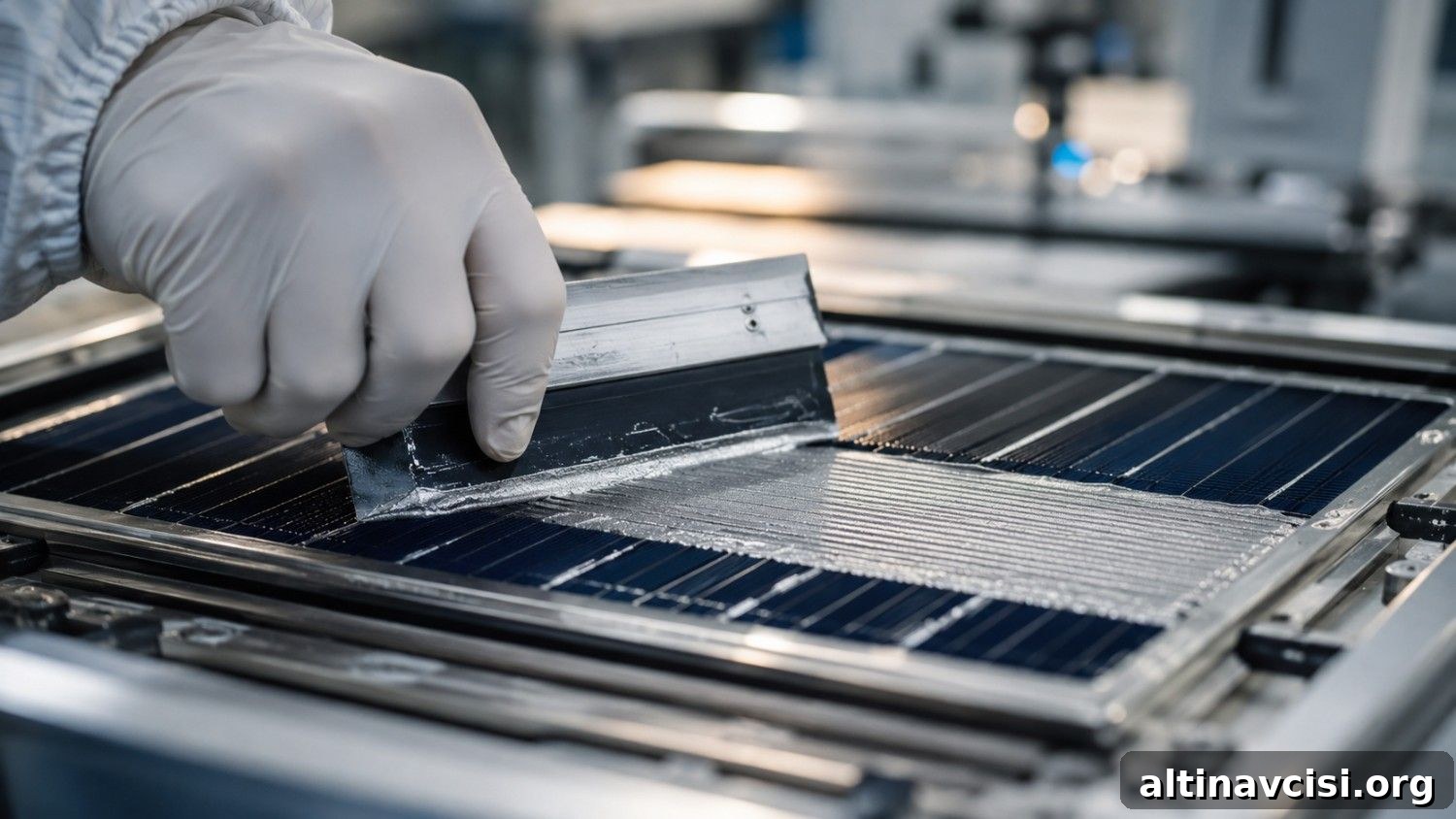
Solar photovoltaic manufacturing is the fastest-growing end market for silver. Each silicon solar cell includes silver paste to conduct electricity—those thin metallic gridlines you see on panels. Manufacturers have reduced silver per cell through “thrifting,” but deployment has grown faster than those savings.
In 2024 solar PV consumed about 232 million troy ounces, approximately 19% of total silver demand and about 34% of industrial consumption. A decade earlier, solar accounted for only a small share. Global additions reached a record 593 GW in 2024, up from roughly 75 GW in 2016, driving strong, sustained silver demand.
Solar silver demand rose roughly twelvefold over the past ten years. While thrifting continues, the absolute amount of silver used keeps rising because installations are scaling quickly. New cell technologies, like heterojunction (HJT), use two to three times more silver than older PERC cells, so per-gigawatt silver demand could increase as these technologies gain share.
How Much Silver Does an Electric Vehicle Actually Use?
EVs don’t use silver in their batteries, but silver is present across a vehicle’s electrical systems: relays, switches, fuses and control circuits. A conventional combustion vehicle typically contains about 15–28 grams of silver, while a battery electric vehicle uses roughly 25–50 grams — about double — due to higher voltage systems and more complex electronics.
Global EV deliveries reached 17.6 million units in 2024 and are projected to rise further. Automotive silver demand (combustion and electric combined) was approximately 72 million troy ounces in 2024, and that demand will grow as EV penetration increases. Energy and transportation electrification are linked: solar and grid upgrades support EV charging, and EV adoption drives further electricity infrastructure investment.
How Does Silver Industrial Demand Move Price?
Industrial silver is often permanently consumed: it becomes part of solar cells, electronics or automotive components and is rarely recoverable. That permanent removal creates a structural floor in available supply that differs from gold, which is mainly stored and re-traded.
In 2024 mine production was about 844 million ounces while total demand reached around 1,219 million ounces, leaving a shortfall of roughly 195 million troy ounces — the fourth consecutive annual deficit. That deficit has been met by drawing down above-ground inventories, which are finite. Persistent inventory drawdowns are a key, underappreciated dynamic in the market.
What Happens When Both Demand Engines Run at Once?
When industrial activity is strong and monetary conditions favor precious metals, silver commonly outperforms gold and the gold/silver ratio narrows. Conversely, if industrial demand weakens while monetary factors remain supportive, silver can lag gold. The two-engine nature of silver increases volatility but also multiplies upside when both engines accelerate together.
Stay On Top of Gold & Silver Prices
Get important market alerts sent straight to your inbox.
People Also Ask
Is silver a good investment because of industrial demand?
Industrial demand gives silver a structural base many other precious metals lack. With more than half of annual consumption tied to manufacturing and infrastructure, a substantial portion of silver demand is independent of investor sentiment. That doesn’t guarantee price gains, but it supports steady, long-term consumption.
What percentage of silver is used in solar panels?
About 19% of total silver demand — roughly 232 million troy ounces in 2024 — went into solar PV manufacturing. Solar is the fastest-growing industrial end-use and accounted for about 34% of industrial silver consumption in 2024.
Will silver run out due to industrial demand?
Silver is unlikely to “run out” in the near term, but the market is running a persistent deficit. In 2024 the shortfall was about 195 million troy ounces — the fourth consecutive year — and inventories have been used to fill that gap. The durability of those inventories will depend on future demand and mining supply.
How much silver is in an electric vehicle?
A battery electric vehicle typically contains about 25–50 grams of silver, used in electrical components and charging systems. That’s roughly twice the 15–28 grams found in a conventional combustion vehicle.
Why can’t silver miners just produce more to meet demand?
Roughly 70% of silver is produced as a byproduct of mining other metals like copper, zinc and lead. Production decisions are driven by the economics of those primary metals, not silver’s price alone, so silver output cannot quickly expand in response to rising silver demand.
What Does This Mean for Silver’s Long-Term Price?
Short-term price direction is uncertain, but the structure of silver demand is clear: industrial consumption is growing along technology adoption curves, while mining supply is limited by the economics of other metals. That structural mismatch has produced multi-year deficits and inventory drawdowns.
Silver’s monetary role sits on top of this industrial foundation. When both demand engines accelerate together, silver has historically outperformed gold. This is not a precise forecast, but a description of how the market has behaved under similar conditions.
For those who accept this structural view, holding physical silver rather than paper claims is a logical next step for direct exposure.
SOURCES
1. Silver Institute — World Silver Survey 2025
2. BloombergNEF — Electric Vehicle Outlook 2025
3. IEA — Renewables 2024
Disclaimer: This article is for informational and educational purposes only and does not constitute investment advice. Consult a qualified financial adviser before making investment decisions.
You may also like:
- Bank of America’s $6,000 Gold Forecast Isn’t a Price Call. It’s a System Call.
- Silver IRA Complete Guide: Rules, Limits, and Custodians Explained
- Silver’s Tesla Moment: The Solid-State Battery Thesis
- Physical Gold vs. Digital Gold: Which Is the Ultimate Safe Haven?
- BRICS Is Hoarding Gold. Here’s What It Means for Your Portfolio.
- Gold to Oil Ratio: The Ultimate Guide for Economic & Portfolio Analysis
- Dollar-Cost Averaging Into Gold and Silver: The Investor’s Practical Guide
- The Silver-to-Dow Ratio: How to Spot the Shift from Paper to Physical