
In today’s update: Central bank gold buying has been underreported — Goldman Sachs revised its estimates sharply higher. HSBC raised silver forecasts, U.S. Treasury yields hit a one-year high, and institutional demand for gold remains firm despite higher yields.
As of May 18, 2026, central bank gold purchases appear substantially larger than official tallies indicated after Goldman Sachs updated its model. Gold is trading around $4,544 per ounce while the 10-year Treasury yield reached 4.61%, a one-year high. Despite that yield pressure, major institutional buyers are increasing their allocations to gold.
HSBC raised its silver price outlook and major banks including J.P. Morgan and Wells Fargo continue to forecast much higher year-end gold prices. When institutions that manage sovereign reserves and understand debt risk keep buying through rising yields, that is a notable signal for the market.
Why Is Wall Street Still Bullish on Gold Despite Rising Yields?
Gold is trading near $4,544. The headlines matter, but the more important story is what major banks and institutional allocators are projecting and doing. J.P. Morgan’s Q4 2026 target sits at $6,300/oz, Wells Fargo Investment Institute projects $6,100–$6,300 by year-end, and Goldman Sachs has maintained a $5,400 target. A Reuters poll of analysts places the median 2026 forecast below those highs but still above current levels.
Rising yields raise the opportunity cost of holding non-yielding assets like gold, yet the underlying drivers for demand can strengthen when sovereign debt dynamics worsen. Higher borrowing costs and concerns about government balance sheets can reduce confidence in currency- and bond-based reserves, pushing some investors and central banks toward gold as a store of value. Institutional conviction that persists through a period of rising yields is often a stronger indicator than short-term price movements. Gold: $4,544, +0.09%.
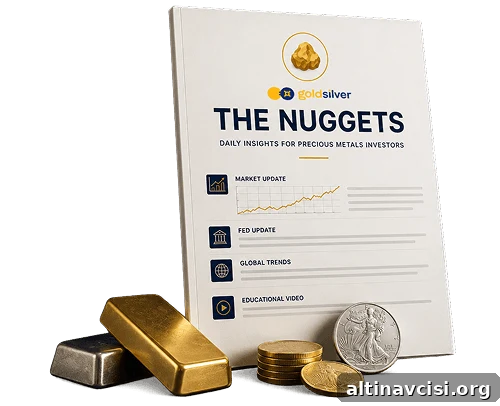
The Edge Every Investor Needs
Smarter precious metals investing starts here. The Nuggets Newsletter brings essential market insights, central bank updates, global trends, educational content, and timely price alerts.
Why Are Central Banks Buying More Gold Than Anyone Realized?
On May 15, 2026, Goldman Sachs published a revised nowcast indicating central bank gold purchases have been materially higher than previously reported. Its updated 12-month moving average estimate is about 50 tonnes per month, up from a prior estimate of roughly 29 tonnes. The revision stems largely from trade reporting issues that masked gold leaving London vaults starting in August 2025.
Goldman expects monthly purchases to be near 60 tonnes through 2026, and other industry surveys show many central banks plan to increase gold holdings. The World Gold Council’s Central Bank Gold Survey for 2025 reported that a significant share of central banks intend to boost reserves. Emerging market central banks, including the People’s Bank of China, have been notable buyers as they diversify away from dollar-denominated assets. These purchases are driven by reserve diversification strategies rather than attempts to profit from short-term price moves.
HSBC Raised Its Silver Forecasts — So Why the Caution?
HSBC updated its silver price forecasts on May 14, 2026, raising average projections for 2026 and 2027 to $75/oz and $68/oz, respectively, up from earlier estimates. At the same time the bank emphasized constraints on industrial demand. Silver’s industrial use accounts for a majority of consumption, and demand fell from a record in 2024 to lower volumes in 2025 as manufacturers reduced silver intensity in solar panels and electronics in response to higher prices.
HSBC expects industrial demand to decline further in 2026, trimming the supply deficit from 143 million ounces in 2025 to around 73 million ounces next year. The bank’s year-end 2026 price target sits near $70/oz, modestly below then-current spot levels, and it cautioned that the gold-to-silver ratio may widen as silver’s industrial sensitivity constrains upside.
Silver: $76.52, +0.76%.
Gold Is Holding Steady — Why Haven’t Yields Pushed It Lower?
Although U.S. Treasury yields have climbed — the 10-year reaching 4.61% on May 18, 2026 — gold has shown resilience. Rising yields typically increase the opportunity cost of holding non-yielding assets, encouraging flows into bonds and cash. In this episode, however, selling pressure has largely been absorbed by institutional buyers, including central banks and long-duration allocators, who view gold as a strategic reserve asset rather than a purely speculative holding.
A one-week move of roughly 14 basis points that fails to push gold decisively lower suggests underlying demand is durable. For holders of physical metal, steady accumulation by large, long-term buyers is more meaningful than short-term headline-driven price swings.
Treasury Yields Just Hit a One-Year High — What Does That Mean for Your Money?
The U.S. 10-year Treasury yield reached 4.61% on May 18, 2026, its highest level in a year. Inflation measures remain elevated — April CPI was 3.8% — and producer prices also surprised higher. Rising yields can benefit savers and fixed-income investors in the near term, but the context matters: investors are demanding more compensation to hold government debt, often reflecting concerns about fiscal sustainability rather than stronger fundamentals.
The Federal Reserve had last set policy rates in the 3.50–3.75% range, and market pricing for rate moves shifted toward a lower probability of cuts and a possibility of hikes later in 2026. Historically, a combination of above-target inflation and yields rising on fiscal concerns has been supportive for precious metals as investors hedge against weakening confidence in nominal government liabilities.
Three themes stood out today: Goldman Sachs revised higher its estimate of central bank gold demand; HSBC raised silver forecasts while underscoring industrial limitations; and Treasury yields hit a one-year high. Institutions managing reserves are buying gold not because yields are low but because they question the reliability of the assets those yields represent. That distinction underpins the current rationale for holding physical precious metals.
Prices as of 14:45 UTC, May 18, 2026. Gold: $4,544.10 (+0.09%). Silver: $76.52 (+0.76%).
SOURCES
Bloomberg; Reuters; World Gold Council; HSBC; Trading Economics; CNBC; CME Group; nFusion Solutions.
You May Also Like:
- Gold Up 40% in a Year. The Moody’s Downgrade Explains Why.
- No Deal, No Premium: Why Silver Fell 7% at the Trump‑Xi Summit
- Gold Fell. China Bought Its Most in 17 Months. Here’s Why.
- Why Silver Falls Harder Than Gold — And What It Means
- Gold Near $4,700: The Chaos Isn’t a Ceiling. It’s a Floor
- 5 Forces Shaping Gold and Silver at the Beijing Summit
- CPI Hits 3.8%. Gold Falls. The Mechanism Nobody Explains