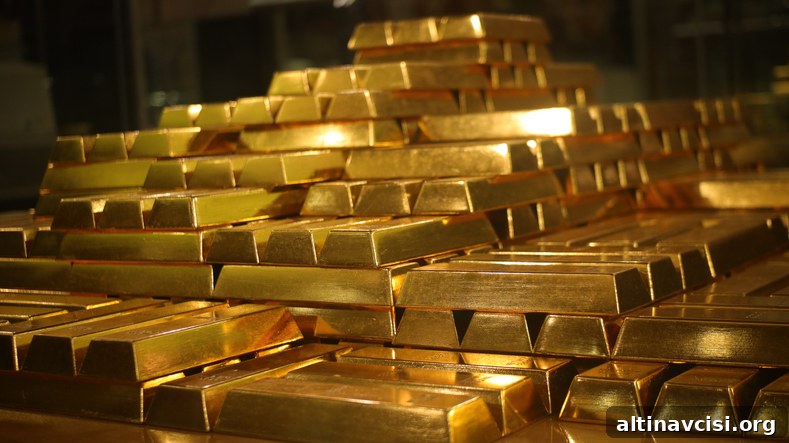
Russians are increasingly turning to gold as a financial safe haven amid mounting economic pressure. Consumer gold purchases reached 75.6 metric tons in 2024, a rise of 6% compared with 2023 and a substantial 62% increase over pre-war levels in 2021.
Several factors are driving this shift: persistent high inflation—recently around 9.5%—the ruble’s prolonged weakness and historic lows, and the impact of international sanctions that have constrained traditional investment avenues. Together these forces have pushed savers and investors toward tangible assets like gold.
The surge in consumer demand also helps the broader economy absorb Russia’s annual mining output, estimated at roughly 300 metric tons. That is particularly important because the central bank has scaled back its historically large official gold purchases, leaving more supply for private buyers and domestic markets.
For Russian buyers, the timing has generally proven advantageous. Global and domestic gold prices climbed sharply in 2024, rising about 28% over the year, and continued gains pushed prices another 10% into early 2025, with spot prices reaching record highs near $2,902 per ounce. Those price moves reinforced gold’s appeal as both a store of value and a hedge against currency volatility.
Retail demand has been concentrated in familiar forms—coins and small bars—that are easy to buy, hold and later liquidate. Jewelry purchases have also contributed but are often driven by a combination of investment and cultural preferences. Financial advisors and independent dealers report increased interest from households looking to diversify savings away from bank deposits and foreign-currency holdings, which have been less attractive due to exchange-rate risk and restricted access.
Beyond individual savers, the dynamics between supply and demand have been influenced by policy choices and market structure. With lower central-bank buying, more mined gold reaches private channels and domestic refineries, which in turn supports local retail sales and secondary markets. Meanwhile, sanctions and capital controls have limited cross-border flows, encouraging domestic retention of precious metals.
This pattern is not unique to Russia—investors worldwide often seek precious metals when inflation and currency weakness converge—but the specific combination of economic turmoil, policy responses and limited alternatives has intensified the trend domestically. As long as inflation remains elevated and the ruble volatile, gold is likely to stay a favored option for Russians seeking to protect wealth.
Looking ahead, future demand will depend on inflation trends, exchange-rate developments and government policy, including any changes to gold-import, sales or reporting rules. If central-bank purchases remain restrained and economic uncertainty persists, private demand could stay elevated, helping to absorb a significant portion of annual mining output and keeping gold prominent in Russian household portfolios.