
Daily News Nuggets | Today’s top stories for gold and silver investors
February 12th, 2026 | Brandon Sauerwein, Editor
Markets Brace for Friday’s U.S. Inflation Report
Friday’s CPI report could shift the U.S. inflation and gold outlook, as investors seek confirmation that price pressures are easing. Economists expect inflation to continue cooling in January.
Surveys from Dow Jones and The Wall Street Journal show headline inflation at about 2.5% year over year for January, down from 2.7% in December and the slowest pace in nearly five years. Core CPI, which excludes food and energy, is also forecast near 2.5%, a level not seen since 2021.
Recent data point to softer readings in components such as gasoline and rent, which have helped temper headline inflation. For the Federal Reserve, the CPI remains a key gauge. Markets currently price in limited near-term rate cuts, so a weaker print could reinforce a “wait-and-see” approach by policymakers.
That said, the outlook for U.S. inflation and gold depends on more than a single monthly report. Cooling inflation may reduce short-term upside for gold, but ongoing fiscal deficits, elevated borrowing, and geopolitical risks continue to support long-term demand for hard assets.
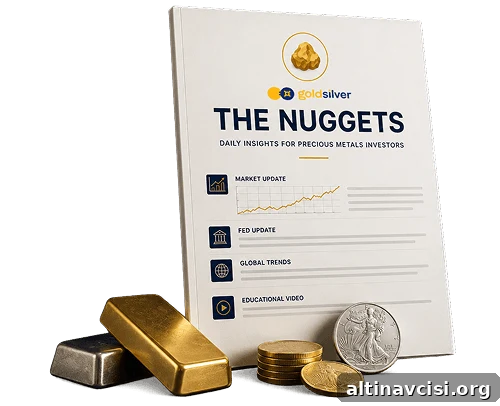
The Edge Every Investor Needs
Smarter precious metals investing starts here. The Nuggets Newsletter brings essential market insights, Fed updates, global trends, educational videos, and timely analysis.
Resilient Labor Market Lifts Dollar, Weighs on Metals
Gold retreated after a stronger-than-expected U.S. jobs report cooled expectations for near-term Federal Reserve rate cuts. The report reinforced the sense that the economy remains more resilient than many had expected.
Following the jobs data, Treasury yields rose and the dollar strengthened — both typical headwinds for precious metals. When real yields or short-term rates stay elevated, non-yielding assets such as gold often lose some near-term appeal.
However, underlying conditions have not changed dramatically. Inflation remains somewhat persistent, government borrowing continues to expand, and geopolitical uncertainty persists. Strong growth can delay rate cuts while also sustaining price pressures.
Markets have largely embraced a soft-landing narrative, which assumes inflation keeps trending lower without a renewed surge. While headline indicators tell one story, household balance sheets and consumer resilience are showing mixed signals beneath the surface.
U.S. Credit Card Debt Climbs to $1.28 Trillion Record
U.S. credit card debt rose to a record $1.28 trillion in the fourth quarter of 2025, according to the Federal Reserve Bank of New York. Revolving balances increased by roughly $44 billion over three months, reflecting a notable uptick in consumer borrowing.
Persistently high prices and elevated interest rates — in some cases above 20% — are pushing many households to rely on credit for essential spending. Delinquency rates have climbed, especially among younger borrowers and lower-income households, highlighting distributional stress in the recovery.
This pattern reinforces a “K-shaped” narrative in which some segments benefit while others face mounting financial strain. If borrowing costs remain high, rising debt service may crowd out discretionary spending and weigh on broader economic growth.
Stay On Top of Gold & Silver Prices
Get important market alerts sent straight to your inbox.
Copper Continues Rally as Metals Demand Outlook Brightens
Benchmark copper rose about 0.5% on the London Metal Exchange, extending a broader rally across base metals. The gain reflects tighter supply, a softer dollar at times, and renewed investor interest in industrial metals.
Traders are wagering that global manufacturing—particularly in Asia—will remain resilient. Demand tied to electrification, renewable energy, and AI infrastructure should support consumption going forward.
On the supply side, structural constraints such as declining ore grades and lean inventories have tightened markets. Chinese buying typically slows around the Lunar New Year, but longer-term demand expectations and risk appetite are keeping prices elevated.
Overall, markets are betting that industrial demand will hold up despite tighter financial conditions. That view depends on steady global growth and sustained investment in energy transition and technology.
Pentagon to Buy Coal: New Energy Directive
In a significant policy move, President Trump ordered the Department of Defense to prioritize electricity purchases from coal-fired power plants. The directive calls for long-term power purchase agreements and allocates roughly $175 million to upgrade six coal facilities across Kentucky, Ohio, Virginia, West Virginia, and North Carolina.
The White House frames the action as a national security measure aimed at preserving reliable baseload power for military installations during extreme weather events. The administration again promoted so-called “clean coal,” even though major scientific assessments continue to classify coal among the most carbon-intensive energy sources.
The order follows other efforts to delay coal retirements and roll back certain environmental regulations. Several states and utilities have already challenged related measures in court, arguing they could increase costs and exceed federal authority.
Energy-policy changes of this kind typically influence regional markets and investment decisions over the long term rather than producing immediate commodity market shocks. Still, multi-year contracts and regulatory shifts can alter incentives across the power sector.
You May Also Like
- Silver Volatile, Gold Resilient After January Jobs Surprise
- Silver’s 7% Bounce Sparks Bullish Calls
- Gold Holds Above $5,000 as Hedge Funds Brace for Turbulence
- Gold and Silver Rally Through Ongoing Market Volatility
- Gold Rebounds as Fed Risk, Weak Jobs, and Crypto Stress Collide