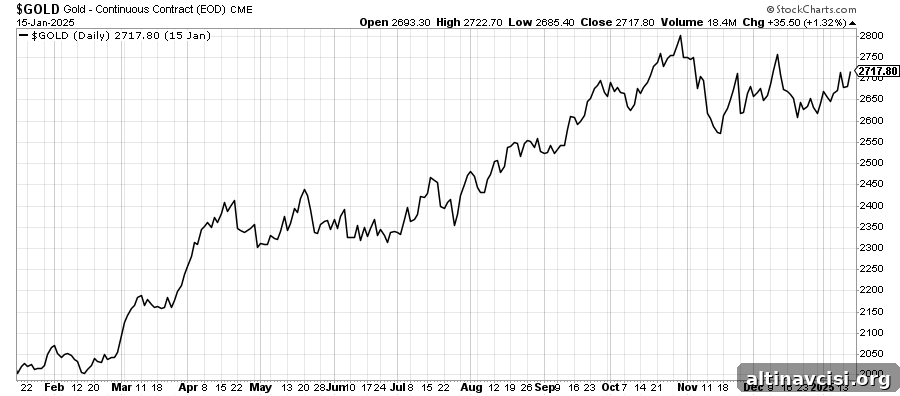
Gold has risen to its highest level in a month, trading above $2,700 an ounce after U.S. core inflation data came in softer than many investors expected.
The core consumer price index, which excludes volatile food and energy prices, increased by 0.2% in the latest report, down from four straight monthly gains of 0.3%. That moderation has shifted market expectations about the Federal Reserve’s policy path, suggesting the central bank could have more room to cut interest rates sooner than many previously anticipated.
Markets reacted quickly: U.S. Treasury yields and the dollar both slid, making gold more attractive for investors because it does not pay interest and typically benefits when real yields fall. The drop in yields reduces the opportunity cost of holding bullion, while a weaker dollar tends to support dollar-priced commodities like gold.
Derivatives markets have already reflected the change in expectations. Swap traders now see a rate cut as likely by July, a significant acceleration from forecasts that placed a first cut in September or October after stronger employment readings earlier in the year.
Federal Reserve officials, while noting easing inflation pressures, continue to stress caution and have not declared victory over price stability. Their careful tone echoes the uncertain backdrop that helped push gold to record highs last year: cooler inflation readings can increase the odds of easier policy, but persistent uncertainties mean central bankers remain vigilant.
For investors, the combination of softer core inflation, lower real yields and a weaker dollar has provided fresh momentum for gold. Analysts say the metal’s near-term performance will depend on subsequent inflation reports, incoming economic data and the Fed’s communications about the timing and size of any rate cuts.
In summary, more muted U.S. core inflation has prompted markets to bring forward expectations for policy easing, supporting gold’s rally above $2,700 an ounce as yields and the dollar moved lower and investors weighed the outlook for interest rates and inflation.