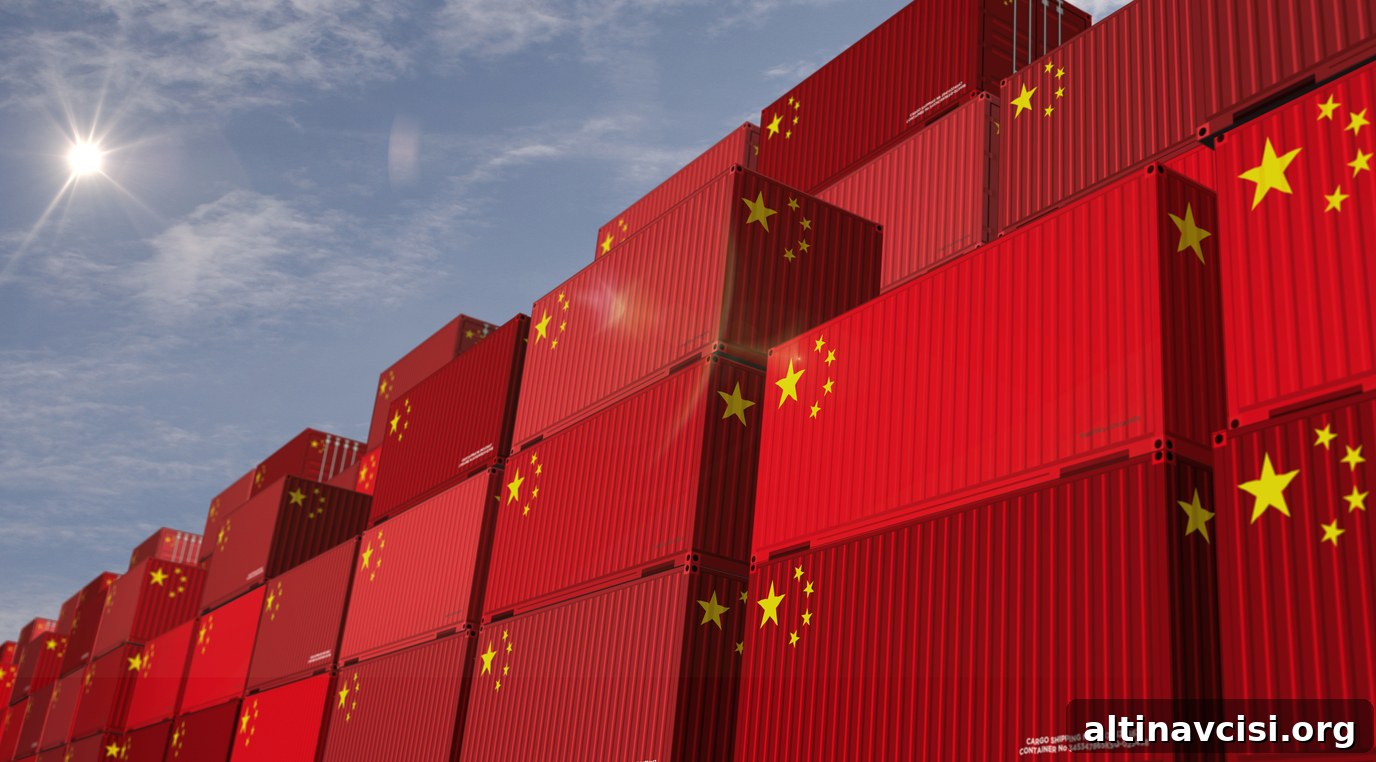
China has begun restricting its companies from making new investments in the United States, according to confidential sources familiar with the situation.
Several branches of the National Development and Reform Commission (NDRC), China’s top economic planning agency, have been instructed to suspend registration and approval procedures for firms intending to invest in the US. This pause targets new outbound investment applications rather than existing arrangements.
Although Beijing has long exercised controls on overseas investment for national security and capital-management reasons, these recent measures underscore growing tensions between the world’s two largest economies. The move appears to be a calibrated response designed to curb fresh capital flows while preserving current financial commitments.
The restrictions focus on new investments and do not appear to affect existing holdings, including China’s portfolio of US Treasury securities. The timing coincides with anticipated US trade policy shifts: President Trump was expected to announce reciprocal tariffs and has previously issued a memorandum in February directing limits on Chinese investments in strategic US sectors. In 2023, Chinese outbound investment to the United States amounted to about $6.9 billion.
Officials implementing the suspension reportedly aim to balance several priorities: protecting sensitive domestic industries, managing capital outflows, and maintaining leverage in an increasingly fraught bilateral relationship. By limiting approval and registration for new projects, Chinese authorities can scrutinize potential acquisitions and joint ventures that touch on technology, infrastructure, or other strategic assets.
For Chinese firms, the temporary halt introduces uncertainty for planned deals and may prompt a reassessment of cross-border strategies. Companies seeking to invest will likely face longer review times and heightened scrutiny of transaction details, ownership structures, and national-security implications.
Observers note that the change in policy is significant but targeted. It does not constitute a blanket ban on all outbound investment, nor does it signal an immediate sell-off of existing holdings in US markets. Rather, it functions as a policy tool to slow and vet new capital flows while China evaluates its economic and geopolitical options.
The broader context includes ongoing trade disputes, technology competition, and reciprocal measures by both governments. Restricting new approvals can be seen as part of a larger pattern in which economic policy is used to achieve strategic aims without resorting to overt market destabilization.
Market reactions could vary depending on how long the suspension remains in place and whether it is expanded or clarified. Investors will be watching official guidance from the NDRC and related regulators for details on scope, exceptions, and timelines. Meanwhile, businesses engaged in cross-border transactions will need to factor this development into due diligence and transaction planning.
In sum, the suspension of registration and approval for new China-to-US investments signals a cautious, targeted approach by Chinese authorities: pausing fresh outbound projects that may carry strategic implications while maintaining existing financial commitments and avoiding immediate disruption to broader capital markets.