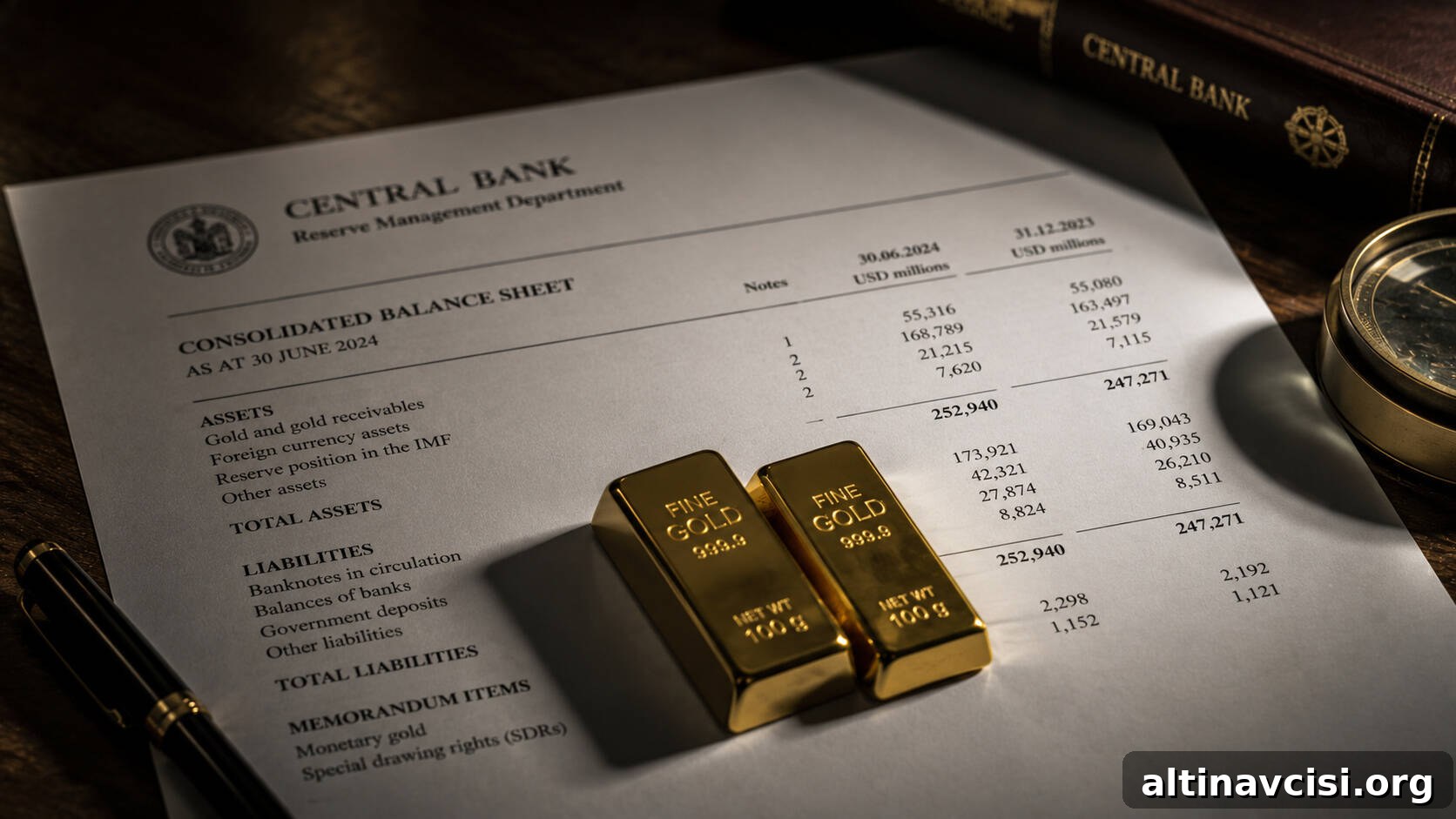
Central bank gold sales typically follow a few clear patterns: defending a currency, meeting an urgent fiscal need, rebalancing reserves, or following institutional mandates. Large or poorly communicated sales can push prices down—as the UK’s 1999 announcement showed, when news alone drove gold to a 20-year low. But today’s situation is more nuanced.
In 2025 central banks were net buyers of 863 tonnes, making them the strongest structural source of gold demand in decades. Sellers remain the exception rather than the rule.
Gold trades near $4,700 per ounce today—more than $1,200 higher than a year earlier—though still below the all-time high of $5,589.38 reached on January 28, 2026.
Central banks helped drive much of the recent rally, purchasing more than 1,000 tonnes annually from 2022 through 2024 [World Gold Council]. Even during that wave of buying, a small group of central banks sold. Why they sold matters for investors and for price dynamics.
What Are Central Bank Gold Sales?
Central bank gold sales are deliberate policy decisions by national monetary authorities to reduce gold reserves. They are not ordinary market trades: these moves are often planned over months and can directly affect global supply dynamics.
That matters because central banks collectively hold roughly one-fifth of all gold ever mined—around 37,000–38,000 tonnes [World Gold Council]. When institutions of that size sell, the market notices; when they hold or buy, that matters too.
Your Gold Buying Guide Most investors overpay when they buy gold, and again when they sell. This guide explains what to own and why.
Why Do Central Banks Sell Gold? The Four Main Drivers
Central bank gold sales usually reflect economic or political needs rather than ideology. The recurring motives fall into four categories.
1. Currency Defence
A central bank facing currency pressure may sell gold to raise hard currency and support its exchange rate. Gold is liquid, broadly accepted, and converts quickly to dollars. Turkey—one of the larger net sellers in 2026—has trimmed holdings partly to stabilise the lira.
2. Fiscal Emergency
Governments in severe fiscal distress sometimes ask central banks to monetise gold. Russia, a significant seller in 2026, faces high war-related expenses under heavy sanctions. Analysts noted that some central banks were selling “to defend their currency and/or to fund energy purchases” [CNBC].
3. Reserve Rebalancing
Not all sales signal crisis. Some are deliberate reallocations toward higher-yielding assets—government bonds or foreign deposits—or to meet target allocations. The Philippines, for example, reduced gold holdings through a planned rebalancing, not emergency measures.
4. Institutional Mandates
Multilateral institutions and national programmes sometimes require sales for operational reasons. The IMF’s 2009–2010 sales, which totalled 403.3 tonnes, were executed following an internal review and had limited market impact. Germany’s Bundesbank regularly sells modest amounts for minting and circulation needs; these transactions are scheduled and priced in.
What Does History Tell Us About Central Bank Gold Sales and Prices?
The decisive lessons come from communication and coordination. In 1999, the UK announced plans to sell 395 tonnes—about half of its reserves—when prices were near a two-decade low. Because the announcement was public, markets front-ran the move and gold fell sharply despite limited immediate physical sales.
The reaction prompted the 1999 Washington Agreement, in which fifteen European central banks capped collective sales to restore confidence. After the agreement, the price recovered quickly. By contrast, the IMF’s transparent, phased sales in 2009–2010 had little price effect because the transactions were managed and disclosed.
Who Is Selling Gold in 2026 — and Should You Be Worried?
Russia and Turkey were the primary sellers in 2026. Their sales reflect domestic pressures rather than a strategic retreat from gold.
Russia’s fiscal position has weakened under sanctions, and urgent liquidity needs have prompted sales. Turkey’s selling is driven by a prolonged currency crisis and active reserve management. Both are examples of distressed selling—signals about those economies, not about the metal itself.
By contrast, many other official institutions continued to buy. In 2025 the National Bank of Poland added 102 tonnes and set a public target of 700 tonnes on national security grounds. China, India, Uzbekistan, and Kazakhstan also added meaningful quantities. More than 20 central banks were net buyers that year [World Gold Council], making Russia and Turkey outliers rather than market leaders.
How Do Central Bank Gold Sales Actually Move the Price?
Two factors determine price impact: scale and transparency.
Large, unannounced, or poorly explained sales create uncertainty. Traders front-run anticipated supply, amplifying price moves—sometimes before physical tonnage changes hands, as in 1999. By contrast, coordinated, phased, and disclosed programs allow the market to absorb supply with minimal disruption.
In 2025, reported selling from all central banks was under 25 tonnes against 863 tonnes of net purchases [World Gold Council]. In that context, selling was effectively a rounding error.
What Do Central Bank Gold Sales Mean for Investors?
Interpret the seller rather than the sale. Distressed sales—by sanctioned states or countries in deep currency trouble—reflect national circumstances more than a view that gold is unattractive. Much of the metal sold in those cases is bought by other institutional or private buyers.
Surveys and forecasts underline the trend toward accumulation. A 2025 World Gold Council survey found 95% of central banks expected global gold holdings to rise over the next year; none expected a decline. J.P. Morgan raised its central bank purchase forecast for 2026 to roughly 800 tonnes, calling the demand “ongoing” [TheStreet].
Structural drivers remain in place: de-dollarisation, the insecurity revealed by frozen foreign reserves in 2022, persistent inflation, and long-term distrust of fiat currency. These forces shape how governments allocate reserves and explain why many continue to add gold.
The clear threat to gold’s price floor would be coordinated, large-scale selling by major reserve holders (G10 countries). That scenario is theoretically possible but, as of 2025, shows no evidence—none of those institutions has signalled anything resembling such a coordinated program [J.P. Morgan Private Bank].
Stay On Top of Gold & Silver Prices
Get important market alerts sent straight to your inbox.
People Also Ask
Why do central banks sell gold, and what are the main reasons behind these decisions?
Central banks sell gold to defend currencies, raise emergency liquidity, rebalance reserves, or meet institutional mandates. These are policy choices rooted in economic or political needs. In 2026, Russia and Turkey sold primarily because of acute domestic pressures, not because they have abandoned gold as a reserve asset.
How do central bank gold sales impact the price of gold?
Sales increase supply. Large, uncoordinated, or pre-announced sales can trigger sharp price declines as markets react. Conversely, phased and transparent programmes have much less impact. History shows that communication and coordination matter more than sheer tonnage.
What economic or geopolitical factors push central banks to sell gold?
Triggers include currency crises, war-driven fiscal strain, sanctions that limit access to other assets, and deliberate reserve diversification. Gold is often sold during geopolitical stress because it is liquid and accessible even when other assets are restricted.
What does central bank gold selling mean for individual investors?
It depends on who is selling. Distressed sellers indicate local economic problems rather than a market-wide rejection of gold. Watch instead for signs of coordinated selling by large, stable reserve holders; that has not occurred recently.
Could major central banks crash the gold price by selling?
The risk exists but is remote. In 2025, most central banks expected holdings to increase. A coordinated sell-off by G10 institutions would require major policy shifts and international alignment that currently do not exist.
What This Means If You Own Gold — or Are Thinking About It
Central bank gold sales follow predictable logic. Understanding the motivation behind a sale makes it easier to judge its significance. Large, uncoordinated sales by major holders can move markets quickly, but coordinated and transparent programmes usually have limited impact.
Currently, most official buyers are accumulating on policy grounds while a few pressured sellers reduce holdings out of necessity. Structural drivers—de-dollarisation, inflation concerns, and geopolitical fragmentation—remain intact and continue to influence reserve strategies worldwide.
SOURCES
1. World Gold Council — Gold Demand Trends Full Year 2025: Central Banks
2. CNBC — Central Banks Were Buying Gold at Record Levels. Here’s Why They’re Selling Now
3. IMF — Gold Sales Frequently Asked Questions
4. J.P. Morgan Private Bank — The Case Against Gold and Why It’s Wrong
5. World Gold Council — Central Bank Gold Agreements
6. TheStreet — J.P. Morgan Revises Gold Price Target for 2026
Disclaimer: This article is informational and educational only. It does not constitute investment advice. Consult a qualified financial adviser before making investment decisions.
You may also like:
- Why Gold Deserves a Permanent Spot in Your Portfolio
- Silver vs. Gold: A Clear 5-Year Investment Guide (2026–2031)
- $5,500 Gold by Q1 2027? The Central Bank Risk Driving It
- Why Gold Stabilizes — and Silver Amplifies
- COMEX Silver Coverage Ratio: Is Your Paper Silver Real?
- What the Gold Price Per Ounce Really Tells You
- The Gold Inflation Paradox Most Investors Miss
- Insurance vs. Upside: Balancing Your Portfolio with Gold and Silver