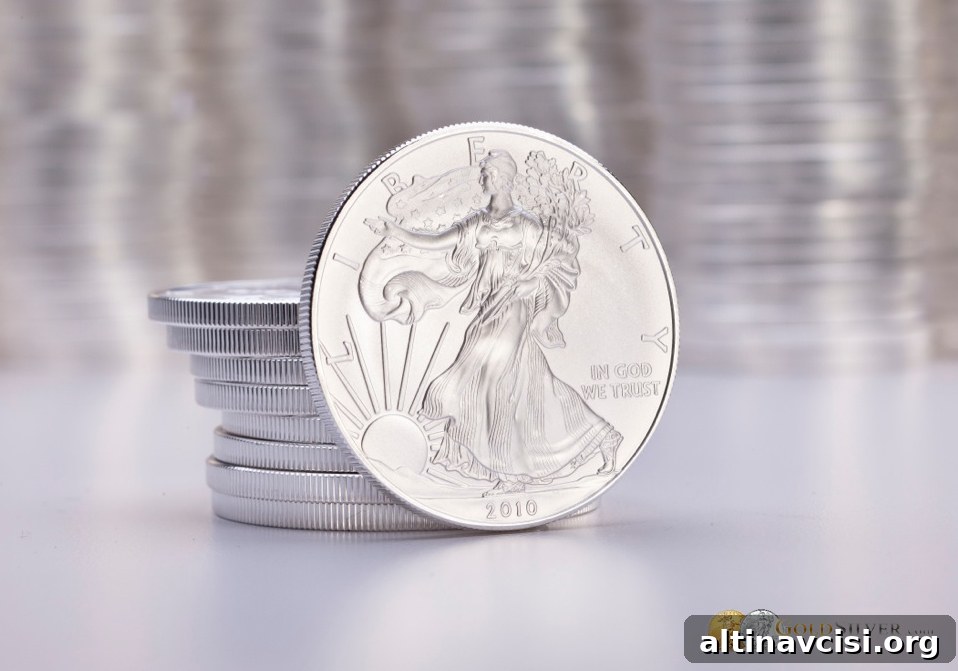
Looking to buy silver coins? You’ve come to the right place.
This guide explains what you need to know: the benefits of owning silver coins, the different types available, which coins are best for investment, and where to buy them. Each section includes an “Investor’s Edge” to highlight key takeaways.
If you have a specific question, use the quick links below to jump to a topic:
- Why Buy Silver Coins?
- Types of Silver Coins
- The Best Silver Coins to Buy
- The Most Popular Silver Coins
- The Best Places to Buy Silver Coins
Why Buy Silver Coins?
Silver coins offer more than potential price appreciation. They provide a range of unique advantages compared with many other investments.
- A tangible asset. Silver coins are physical and can be held. Unlike paper or digital assets that can be created or altered, physical silver represents real, lasting material value.
- A store of value. Silver has been used as money for millennia. Its price can fluctuate, but silver has retained monetary value over time and has never gone to zero in recorded history.
- Free of counterparty risk. Holding physical silver eliminates the need to rely on another party to honor a contract. There’s no default risk the way there is with many financial instruments.
- Highly liquid. Silver coins are accepted by bullion dealers worldwide and can be sold in most major cities. In crisis scenarios, demand for silver coins typically increases, unlike less liquid collectibles.
- Private and confidential. While taxes still apply to gains, buying and holding silver coins can provide a degree of privacy that many modern financial assets do not.
- Resistant to digital threats. Physical silver cannot be hacked or erased, making it a useful complement to digital assets.
- Investor’s Edge: Owning silver coins gives you a tangible monetary asset that has served as money for thousands of years.
Types of Silver Coins
Silver coins generally fall into five categories. Knowing these will help you choose the right coins for your goals.
#1: Bullion coins
Bullion coins are made primarily from refined precious metal and are designed as investment-grade silver. Most popular bullion coins are produced by government mints (sovereign coins), carry a face value, and are guaranteed by the issuing government. The actual metal content typically makes the intrinsic value far higher than the face value.
Bullion coins usually have only two cost components: the silver content and the dealer premium, so pricing is largely tied to the silver spot price.
#2: Rounds
Rounds are silver pieces produced by private mints. They often have lower premiums than sovereign bullion coins but lack a face value and government backing. If you buy rounds, ensure they are at least 0.999 fine and come from reputable producers with reasonably recognizable designs.
#3: Numismatic coins
Numismatic coins are collector coins whose value depends mostly on rarity, condition, and demand rather than just metal content. These coins can command high premiums and require specialized knowledge. Proof coins are a subtype aimed at collectors, featuring high-relief finishes and higher markups.
#4: Semi-Numismatic Coins
Semi-numismatic coins are produced with collectors in mind but have not yet become historically significant. They are sometimes available near bullion prices, especially if their mintage is limited, but they carry more risk than standard bullion coins since future collector demand is uncertain.
#5: Junksilver
Junksilver includes pre-1965 U.S. coins—quarters, dimes, and half dollars—made of 90% silver. These circulated coins are not new and are 90% silver rather than pure. Their value can be useful in barter situations, but they typically sell at a discount compared with modern one-ounce sovereign coins.
| Why did the U.S. stop making coinage from real silver? By the early 1960s the silver supply for coinage was shrinking and prices rose sharply. As a result, silver was phased out of U.S. coinage by the end of 1964 because it became too expensive to continue using it in circulating coins. |
- Investor’s Edge: Understanding these five categories helps you identify what you’re buying and what to expect as an investor.
The Best Silver Coins to Buy
When selecting silver coins as an investment, focus on three main criteria.
#1: Low Premium over Silver Spot Price
The lower the premium you pay over spot, the easier it is to realize gains. Sovereign bullion coins tend to have the lowest premiums, while numismatic and proof coins can carry much higher markups. Semi-numismatic coins can be attractive if priced close to bullion levels, but require more research.
|
Will I recoup the extra premium I pay? Market conditions influence resale premiums. In bull markets, buyback premiums often increase; in 2011, for example, coins sometimes sold above spot. Higher-priced coins usually fetch higher resale premiums, but because you paid more initially, net returns may be similar. The best time to sell is near the peak of a bull market, when metal price and premiums are both high. |
#2: No Speculation
Buying rare coins is speculative because their future value depends on collector demand. Standard bullion coins track the price of silver directly and avoid that speculation. Many bullion dealers focus only on bullion for this reason.
#3: Easy Resale
Choose coins that are widely recognized and easy to sell. Rare or obscure coins can be harder to liquidate and may require authentication or attract smaller buyer pools. Sovereign bullion coins are familiar globally, usually sell near silver value, and enjoy broad demand. Junksilver is less liquid and trades at a discount due to its lower silver content.
- Investor’s Edge: Common sovereign bullion coins are the best choice for most investors because they are pure, popular, and highly liquid.
Sovereign bullion coins typically combine low premiums, government guarantees, and easy resale. Build a foundation of standard bullion coins before exploring more speculative numismatic purchases.
The Most Popular Silver Coins
These six sovereign one-ounce silver coins are among the most widely recognized, government-backed, and eligible for retirement accounts. They are an excellent starting point for most investors.
1 oz American Silver Eagle
Purity: .999
Face value: $1
Backed by: United States government
Ships in multiples of: 20 coins per tube (also available individually)
Distinction: The world’s most popular silver coin.
1 oz Canadian Silver Maple Leaf
Purity: .9999
Face value: 5 Canadian dollars
Backed by: Royal Canadian Mint
Ships in multiples of: 25 coins per tube (also available individually)
Distinction: Advanced security features make it one of the most secure silver coins.
1 oz Austrian Silver Philharmonic
Purity: .999
Face value: €1.50
Backed by: Republic of Austria
Ships in multiples of: 20 coins per tube (also available individually)
Distinction: One of the widest one-ounce silver coins in production.
1 oz Australian Silver Kangaroo
Purity: .9999
Face value: $1
Backed by: Government of Australia
Ships in multiples of: 25 coins per tube (also available individually)
Distinction: Newer issues feature high-relief designs and are offered in larger packaging options.
1 oz Silver Britannia
Purity: .999
Face value: £2
Backed by: British government
Ships in multiples of: 25 coins per tube (also available individually)
Distinction: Subject to the traditional Trial of the Pyx quality checks.
1 oz Mexican Silver Libertad
Purity: .999
Face value: None (bullion)
Backed by: Bank of Mexico
Ships in multiples of: 25 coins per tube (also available individually)
Distinction: Produced at the oldest mint in the Americas; typically dated at the end of the year of minting.
- Investor’s Edge: The core of your silver holdings should be American Eagles, Canadian Maple Leafs, Austrian Philharmonics, Australian Kangaroos, Britannias, and Mexican Libertads for liquidity and recognition.
The Best Places to Buy Silver Coins
You’ll generally buy silver coins from local coin shops or online dealers. Both have pros and cons; often online dealers can offer better prices because of lower overhead, but local dealers provide immediacy and convenience.
Local Dealer
| Pro | Con |
| See the product and take immediate possession | Premiums are often higher and may be smaller when you sell |
| Transparent, straightforward pricing | Limited product selection |
| Potential for greater privacy | May have less liquidity for large transactions |
Maintain a relationship with a local dealer for quick sales or emergencies. If you buy from them, try negotiating on price.
Online Dealers
Online dealers often offer lower total costs and greater selection, but require trusting the seller to deliver the exact product after payment. Look for transparent pricing, clear shipping and insurance fees, and stated delivery times. Reputable online dealers usually show product prices directly on their sites.
| Pro | Con |
| Order any time and lock in price online | Must trust dealer to deliver correct product |
| Generally lower total cost | Credit card and wire fees may apply |
| Wider selection | Product ships only after payment clears |
Choosing the Best Dealer, Online or Local
Compare prices for the same product across several dealers. Beyond price, consider:
- Payment options: bank wire, credit card, cash, checks, cashier’s checks, PayPal, etc.
- Total costs including commissions, shipping, insurance, and payment fees.
- Company size and volume—larger dealers can better handle big orders and offer more selection.
- Whether staff are educational rather than pushy.
- Marketing frequency and privacy protections.
- Buyback policy and the dealer’s willingness to disclose current buy prices.
- Return policy for incorrect shipments (note: correct orders typically cannot be returned for “buyer’s remorse”).
Other Places to Buy
TV dealers, eBay, coin shows, and some banks also sell silver, but each has caveats:
- TV dealers are usually more expensive, may pressure you into buying larger or numismatic lots, and often use costly payment plans.
- eBay can offer good deals but carries higher counterparty risk; it’s best used once you have experience identifying authentic coins.
- Coin shows focus mostly on collectors and may not be the best place for bullion purchases.
- Banks in some countries offer silver coins; check with your local bank and compare premiums and availability. In the U.S., most physical silver is sold through non-bank distributors.
- Investor’s Edge: You’ll often find the best pricing online, even after shipping, but shop around and establish a dealer you trust.
Don’t Get Ripped Off
To avoid scams, use reputable dealers and follow the checklist above. Verify a company’s reputation with consumer review platforms and peer reviews. Ask about all costs up front and seek dealers with a transparent buyback policy.
Ask a dealer for their current buy price on the product you’re considering to confirm the buyback policy is genuine. Do your due diligence so you have a reliable dealer for future purchases.
- Investor’s Edge: Choose a dealer with fair pricing, educational service, positive reviews, and a buyback policy to protect your purchase and make future sales easier.