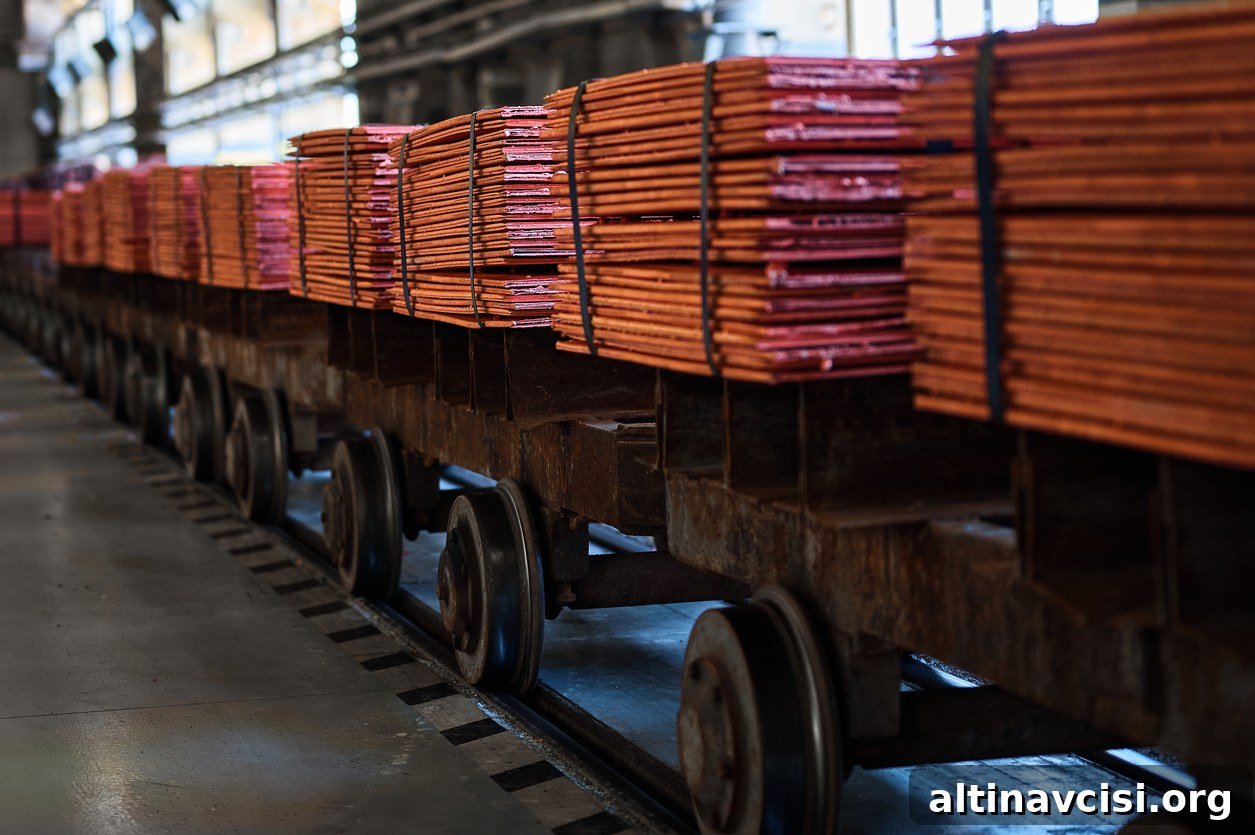
Despite the recent imposition of substantial U.S. tariffs on imported copper, Barrick Gold Corporation’s CEO Mark Bristow says the metal’s long-term fundamentals remain intact. Speaking from Zambia, Bristow acknowledged that the tariff announcement produced short-term market volatility, briefly sending U.S. copper futures to record levels, but he stressed that this does not alter the broader supply-demand dynamics for copper.
Bristow noted that demand for copper continues to outstrip available supply. Key drivers include rapid expansion of data center infrastructure, accelerating investment in clean energy technologies such as wind turbines and electric vehicles, and ongoing industrialization across emerging markets. These structural trends are increasing long-term consumption of copper for power transmission, electrical systems, and large-scale industrial applications.
In response to these market drivers, Barrick is advancing a major expansion at its Lumwana copper mine in Zambia. The company plans a roughly $2 billion investment to boost processing capacity and output, with the objective of roughly doubling production by 2028. That expansion is also intended to extend the mine’s economic life, supporting operations and regional employment through at least 2057.
Bristow outlined how companies and producers are adjusting to short-term policy changes while keeping a focus on long-term resource planning. He argued that a single tariff measure does not resolve the persistent gap between copper demand and supply. Instead, mining firms are prioritizing capital programs, longer mine lives, and efficiency upgrades to meet expected increases in consumption over the coming decades.
The Lumwana project exemplifies this strategy. By increasing capacity and improving operational resilience, Barrick aims to lock in steady output to serve growing global markets. Investments like this often involve multi-year development timelines and close coordination with local governments and communities to secure a stable regulatory, environmental, and social framework for sustainable production.
Market analysts have likewise noted that copper’s role in electrification and decarbonization secures it a central place in commodity markets for years to come. While tariffs, trade policy shifts, and short-term speculative moves can cause price spikes and dips, the broader consensus among many industry leaders is that copper’s medium- to long-term outlook remains robust as electrification and digital infrastructure expand worldwide.
In addition to production growth, the industry is exploring ways to strengthen supply chains and reduce bottlenecks. That includes improvements in ore processing, investment in exploration for new deposits, and adopting technologies that increase recovery rates and reduce environmental footprint. For major producers, these measures aim to bridge the supply gap while meeting rising environmental, social, and governance expectations.
For Zambia specifically, projects such as Lumwana have significance beyond commodity markets. They contribute to local employment, infrastructure development, and government revenues that can support broader economic development. Sustainable mine expansion typically requires careful planning to balance community needs, environmental stewardship, and long-term economic benefits.
In short, while President Trump’s tariff announcement prompted a sharp market reaction, Barrick’s leadership and industry observers emphasize that the long-term drivers of copper demand remain strong. Investment programs like Barrick’s $2 billion Lumwana expansion reflect a strategic response to enduring global trends: growing energy transition requirements, expanding digital infrastructure, and the industrialization of emerging economies, all of which are expected to sustain copper demand well into the coming decades.