When investing in precious metals, it’s important to distinguish between two main categories: bullion, whose value is driven primarily by its metal content, and numismatic coins, whose value depends largely on intangible factors such as age, rarity, year of issue, design, and the mint where they were struck.
- The numismatic market is complex, often illiquid, and demands a steep learning curve. Most precious metals investors avoid this by steering clear of collectible coins.
- Bullion is straightforward, liquid, and easy to value: its worth is mainly determined by the type and weight of the metal.
For the majority of precious metals investors, the choice is clear: invest in bullion and avoid collectible or numismatic coins unless you understand the specifics of that specialized market.
Simple and transparent vs. complex and opaque:
- Bullion offers a clear value proposition — a reliable store of wealth based on an easily verifiable metal weight and purity, with pricing that closely follows global spot markets.
- New investors who buy numismatic coins are often at a disadvantage, purchasing little-known issues whose value depends on subjective variables and the expertise of the seller.
Poor resale market:
- Bullion is widely recognized and highly liquid; resale usually finds significant demand at fair, widely accepted prices. Offers can be compared and the best chosen.
- The numismatic market is much smaller. Finding a buyer at a price you consider fair can be difficult because collectible prices vary significantly. Coin grading adds complexity: there are many possible grades, and even top grading firms sometimes disagree on a coin’s grade, requiring formal resolution processes.
Attractive to fraudsters:
- Numismatics attract misleading marketing. Some sellers overstate values and charge excessive premiums, making profitable resale unlikely for most buyers.
Bullion is primarily a long-term financial investment and store of value based on metal content. Buying coins or bars from a reputable dealer allows you to enjoy physical precious metals ownership while avoiding the risks and hassles of the numismatic market.
If you’re unsure whether a product is bullion or numismatic, read on to learn how to recognize the differences and avoid common pitfalls.
Bullion
Bullion provides a concrete value proposition. The value of a coin, bar, or round comes mainly from the mass and purity of the metal and the current spot price. This intrinsic or melt value is universally recognized, making bullion a time-tested, tradable investment that works well for passing wealth to heirs. Even common bullion pieces are often well-crafted.
Most bullion coins are produced by national mints and are called sovereigns. There are also modern bullion rounds, which are typically more generic and trade near their metal content value. Some rounds may be considered collectible bullion and carry higher premiums, depending on various factors.
Numismatics
Numismatics covers the study and collection of coins, currency, and related items. In investment terms, numismatic coins gain value not just from their metal but from rarity, collectability, historical significance, and condition.
Collecting numismatics can be enjoyable and educational, but it requires deep due diligence to avoid costly mistakes. Numismatic coins are not a straightforward hedge or substitute for pure metal holdings.
Unlike bullion, which has a per-ounce price quoted continuously, numismatic pricing depends on shifting and subjective factors: demand for a specific type, market timing, condition and rarity, age, country of origin, and auction dynamics. A numismatic coin is ultimately worth what a buyer is willing to pay in a market that can be illiquid.
| Key point: The numismatic market is far less liquid than the bullion market. Finding buyers or sellers at a price you consider fair may be difficult. |
Price guides, books, and websites can offer reference values, but they are only guidelines. Without regular updates or current market activity, such references have limited usefulness. Ultimately, there are no guarantees for what you will pay or receive for any given numismatic coin.
Commemoratives (Semi-Numismatics — the Grey Area)
Commemorative coins are issued to mark events and are often produced in limited runs by private mints or occasionally by national mints. They are marketed to create a sense of scarcity, allowing sellers to charge premiums above bullion value.
These coins are frequently promoted with lofty promises about future appreciation, but that potential rarely materializes because demand is usually limited to a niche audience. Buyers generally seek commemoratives as keepsakes rather than investment-grade collectibles.
Because commemoratives are produced new and identical, terms like “Mint State” or “Brilliant Uncirculated” are less meaningful for them. Expect little chance of realizing more than bullion value when reselling unless you become highly familiar with the market or derive personal, intangible value from ownership.
Buying Numismatics: A Primer
If your primary goal is preserving investment value, avoid numismatics. If you pursue collecting for enjoyment, educate yourself. Historically, collectors relied on local shops and shows and often had to judge coin condition themselves, a subjective process that led to disputes.
Two major innovations changed collecting: independent grading services and the Internet.
Grading
Independent grading services provide professional, third-party assessments of a coin’s condition. Leading services include PCGS and NGC, both widely accepted and rated highly by professional organizations. ANACS is an older grading service whose coins typically trade at lower premiums compared with PCGS or NGC.
Lower-tier grading firms or in-house seller gradings are often less reliable and can reduce a coin’s market value. Even with top-tier graders, opinions can differ, especially for high-grade coins where small distinctions create large price differences.
Certified Acceptance Corporation (CAC) reviews coins already graded by PCGS or NGC and applies a sticker when it agrees with the grade. CAC-stickered coins often command higher prices because they have passed an additional review.
Collectors can submit coins for grading, but it involves fees and time, and results may be disappointing. Dealers routinely submit coins for grading, so buying already-graded coins is often more convenient and less risky.
The Grading Procedure
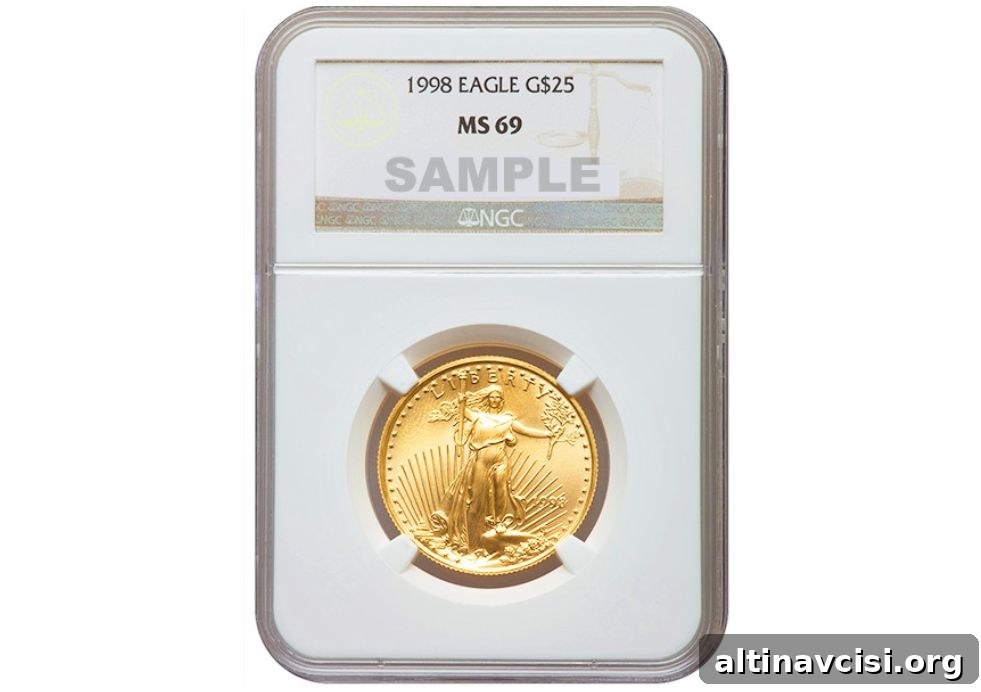
When a coin is submitted, at least two graders evaluate it. If they disagree, a finalizer decides the grade. After grading, coins are encapsulated in tamper-evident plastic “slabs,” with the grade and serial number printed on a label. Grading and slabbing have greatly reduced fraud and brought more transparency to the hobby.
Determining Grade
Grades reflect wear and circulation. The highest condition categories are Uncirculated or Mint State, and Proof coins—produced with special striking for collectors—have mirror-like finishes. Modern grading follows a 1–70 scale where 1 is poor and 70 is perfect, with many descriptive categories in between (Poor, Fair, Very Good, Fine, Very Fine, Extremely Fine, About Uncirculated, Uncirculated/Mint State, and Proof).
Grades are subjective and depend on factors like wear, strike quality, clarity, scratches, blemishes, and toning. High-grade distinctions can be subtle yet create large price differentials.
Age, Rarity and Mint
Age, rarity, and the mint of origin are key value drivers:
Age – Older coins tend to be more valuable if they survive in good condition, since many were melted or worn over time.
Rarity – Small mint runs or historical melt-downs increase a coin’s scarcity and value.
Mint – Mint marks indicate where a coin was struck; coins from smaller mints are often more desirable and valuable.
The Internet
The Internet, particularly auction sites, transformed coin collecting by making specific items easier to find. Online marketplaces let buyers bid or buy immediately, and detailed photos allow close inspections. Graded, slabbed coins reduce risk when buying online, and platforms provide seller feedback and price histories to help identify fair values.
If a desirable coin isn’t on an auction site, dealers often list inventory on their own websites. Research vendor reputations before buying, and use online price references to avoid overpaying. The Internet has reduced opportunities for unscrupulous dealers compared to pre-Internet days.
Summing Up
Collecting numismatic coins can be rewarding and is far less risky today than in the past, but the market behaves like any collectible: prices fluctuate and liquidity can be limited. Building a collection is enjoyable if you appreciate the history and research, but numismatics should not be viewed as interchangeable with bullion as an investment.
Bullion remains the more reliable store of intrinsic value. It can usually be bought or sold to any precious metals broker for the spot price plus or minus a modest dealer fee. For investors seeking a dependable store of value in gold and silver, bullion is typically the better choice.