Daily News Nuggets | Today’s top stories for gold and silver investors
March 12th, 2026 | Brandon Sauerwein, Editor
The Price of War: Iran War Tops $11 Billion in Week One
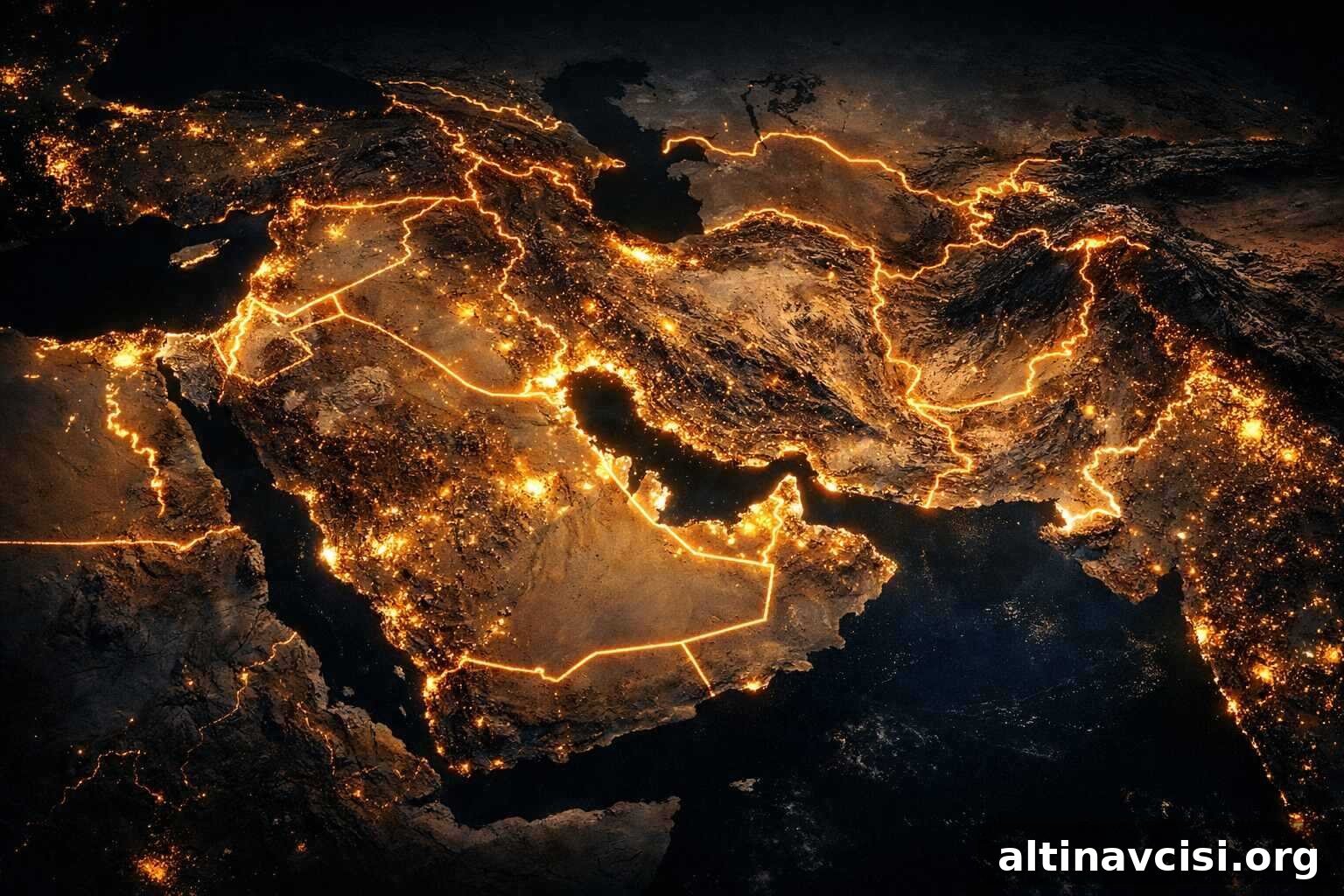
The Iran conflict has moved into its second week as U.S. and Israeli strikes expand across the region. With uncertainty over how long and how far the campaign will go, investors are moving into safe-haven assets and gold prices are reacting higher.
Pentagon estimates show the first week of the war already exceeded $11.3 billion in direct costs, covering air and naval strikes, missile defenses, logistics, and added troop deployments across the Middle East. That figure will rise as operations continue and supply chains feel the strain.
Modern high-tech warfare consumes expensive munitions and air-defense intercepts quickly. Add fuel, maintenance, and force projection expenses, and the price tag grows fast. History is clear: large conflicts widen fiscal deficits and inject market uncertainty, prompting capital flows into assets that don’t rely on political stability or government credit. Gold has long played that role, and current market moves suggest investors are taking notice.
The Edge Every Investor Needs
Smarter precious metals investing starts here. The Nuggets Newsletter brings essential market insights, Fed updates, global trends, educational videos, and timely analysis to help you navigate volatile markets.
$200 Oil? Tehran Issues Stark Energy Warning
An Iranian military spokesperson warned that oil prices could surge toward $200 per barrel if U.S. and Israeli strikes persist, framing the risk as a direct consequence of escalating instability in the region. That scenario underscores how geopolitical shocks can quickly translate into energy-market disruption.
Recent attacks on regional infrastructure and shipping routes have already pushed oil above $100 per barrel. Much of the market concern centers on the Strait of Hormuz — the narrow route that connects Persian Gulf production to global markets. If shipping through the strait is restricted, the potential for a severe supply shock rises sharply.
A substantial spike in energy prices would reverberate through the global economy: higher transportation and production costs, renewed inflationary pressure, and greater market volatility. Those conditions historically drive investors into hard assets like gold. Current metal price movements suggest investors are preparing for that possibility.
Iran Leader Signals Hormuz Will Stay Closed
Iran’s new supreme leader, Ayatollah Mojtaba Khamenei, signaled a firm stance: the Strait of Hormuz should remain closed. That message implies Tehran may keep maximum pressure on global energy flows for as long as the conflict endures.
The strategic importance of the strait cannot be overstated. About one-fifth of the world’s oil supply transits that channel, with Persian Gulf producers relying on it to reach buyers in Asia, Europe, and the United States. There are no easy alternative routes for the bulk of that volume.
Tanker traffic has already slowed and attacks on shipping are increasing. A protracted closure would not only push oil prices higher but also deliver another inflation shock to an economy where central banks have limited room to maneuver. That dynamic would further favor tangible stores of value.
The Biggest Emergency Oil Release in History Didn’t Stop Prices From Rising
The International Energy Agency coordinated the largest strategic reserve release in its history — around 400 million barrels from stockpiles across more than 30 countries — aiming to calm markets after Iran-related disruptions to Hormuz shipping.
Despite the scale of the release, the market reaction was to push oil higher: WTI crude rose more than 4% on the announcement. That response suggests the disruption is larger than what emergency stock releases can quickly offset. Comparable past releases followed major crises such as the Gulf War, Hurricane Katrina, and Russia’s invasion of Ukraine; this event already ranks alongside those shocks while the conflict remains in its early stages.
When an unprecedented coordinated release fails to stem price rises, it indicates the depth of the supply disruption and the degree of market anxiety about future availability.
Gold Price Rises Amid Iran Conflict as Metals Continue Climb
Gold is trading back toward $5,200 as safe-haven demand strengthens amid the Iran conflict. Silver climbed roughly 2% to about $87 today. Both metals are up roughly 20% year-to-date, while major equity indices, including the S&P 500 and Nasdaq, sit in negative territory.
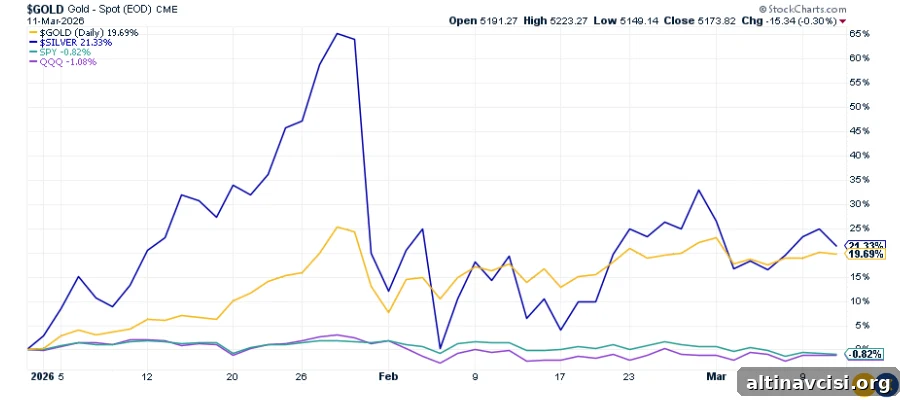
This rally is notable for its durability as much as for its size. Earlier in the year precious metals experienced two of their largest single-day declines, briefly testing investor confidence. Prices recovered, however, indicating that demand beneath the volatility remains intact.
Gold has held above $5,000 for about 30 days, suggesting a potential new support level rather than a short-lived speculative spike. Silver has tracked gold closely, attracting investors seeking both industrial exposure and monetary protection.
While equities have been pressured by war-related headlines, tariff uncertainty, and recession fears, gold and silver have quietly compounded gains. In a year marked by persistent uncertainty, the metals are acting as they historically do: preserving value and offering a hedge against macroeconomic and geopolitical risk.
Stay On Top of Gold & Silver Prices
Get important market alerts sent straight to your inbox.
You May Also Like
- February 2026 CPI Report Shows Inflation Calm Before Oil Shock Hits
- Ray Dalio Says Gold Is Still “The Safest Money”
- The CPI Report and Gold: Why Inflation Data Moves the Metal
- Gold Price Today: Why This Week’s News May Be Bullish for Gold
- Gold Price Outlook: What Could Push Gold to $6,300